
Description
-
Product Overview
Mixed Preservation Systems (Food Grade Blend) is a ready-to-use, regulatory-compliant blend of food-grade preservatives engineered for industrial-scale food and beverage, ingredient, and ingredient-supplier operations. It combines synergistic antimicrobial and antioxidant actives to extend shelf life, maintain product safety, and preserve sensory quality across wet and semi-solid matrices. The formulation reduces microbial risk, lowers spoilage-related waste, and simplifies preservative inventory by replacing multiple single-component additives. For large manufacturers and co-packers, this blend is a strategically important input that de-risks supply chains, accelerates formulation timelines, and supports regulatory conformity across major export markets.
-
Key Specifications & Technical Characteristics
-
Chemical composition: Proprietary blend of GRAS-listed preservative actives and food-grade carriers (typical components include organic acids, their salts, and approved antioxidants).
-
Active ingredient range: Formulated to deliver target active concentrations per customer specification (examples: 0.05–0.50% total active, adjustable under contract).
-
Purity/grade: Food grade; manufactured in GMP-compliant facility; meets applicable Codex and major regional standards for food additives.
-
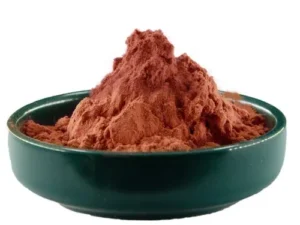
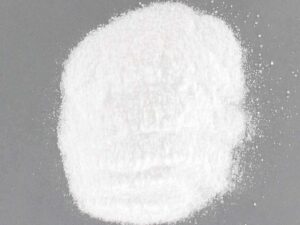
Physical characteristics: Homogeneous free-flowing powder or liquid concentrate options; color: off-white to pale straw (powder) or clear to light amber (liquid); typical bulk density (powder): 0.45–0.75 g/cm³; particle size (if powder): majority <500 µm.
-
Solubility & handling: Rapidly dispersible in water and aqueous formulations; pH-stable within typical food processing ranges (pH 3–7, vendor will specify exact stability profile).
-
Packaging options: Multi-tier packaging to support industrial buyers — 25 kg food-grade kraft bags with inner liner, 500 kg food-grade bulk bags (FIBCs), and 1000–1200 kg IBC/palletized totes for liquid concentrate.
-
Shelf life: 12–24 months typical when stored dry, sealed, and at ambient conditions (actual shelf life specified on COA).
-
Quality control documents: Certificate of Analysis (COA), Safety Data Sheet (SDS), and specification sheet provided with each batch.
-
Core Industrial Applications
-
Primary industries: Food and beverage manufacturers (dairy, sauces, ready-meals, beverages), ingredient and seasoning suppliers, pet food producers, and contract packers/co-packers.
-
Specific operational use cases: Shelf-life extension for refrigerated and ambient-stable products; microbial risk mitigation in high-moisture matrices; formulation simplification when replacing multiple preservatives; product reformulation to meet export regulatory requirements.
-
Performance vs alternatives: The mixed, synergistic formulation achieves broad-spectrum control at lower total loadings than single-agent systems, reducing sensory impact and enabling cost-in-use improvements. The blend’s tailored pH tolerance and solubility improve incorporation efficiency, lowering processing time and reducing in-line mixing adjustments.
-
Commercial relevance: Enables predictable shelf-life outcomes in continuous and batch processing lines, reduces product rework and spoilage-related recalls, and lowers total preservative inventory and procurement complexity.
-
Competitive Advantages
-
Quality consistency: Produced under GMP with batch-level COAs and routine microbiological and compositional testing to ensure uniform performance across deliveries.
-
Supply reliability: Scalable production and forward-stock programs reduce lead-time variability; multiple raw-material sourcing pathways mitigate single-supplier risk.
-
Logistics capability: Bulk and palletized packaging optimized for container shipping and inland transport; compatibility with existing ingredient-handling infrastructure (bag dump, pneumatic conveyance, liquid dosing systems).
-
Price competitiveness: Synergistic formulation reduces cost-in-use versus comparable single-preservative strategies; flexible packaging and MOQ tiers enable commercial optimization for both trial and full-scale runs.
-
Sustainability: Lower total additive usage and optimized supply-chain batching reduce carbon footprint per ton of preserved product; packaging options include recyclable liners and returnable IBCs for liquid concentrates.
-
Technical support: Application guidance, COA, SDS, HACCP/FSMA input, and on-request technical service to support dose optimization, regulatory dossier prep, and stability testing.
-
Commercial & Supply Information
-
Minimum order quantity (MOQ): BULK 20 MT.
-
Loading capacity (MT per container): Approximate loading capacities (subject to mode and packaging specifics):
-
20 ft container (dry bulk/palletized 25 kg bags): ~18–20 MT.
-
40 ft container (palletized 25 kg bags or FIBCs): ~24–26 MT.
-
20 ft container (liquid IBCs/totes): ~18–20 MT depending on tare and fill density.
-
-
Ordering and documentation: Each shipment accompanied by COA, SDS, commercial invoice, and packing list; lead times and Incoterms negotiable at contract stage.

Reviews
There are no reviews yet.