
Description
Product Overview
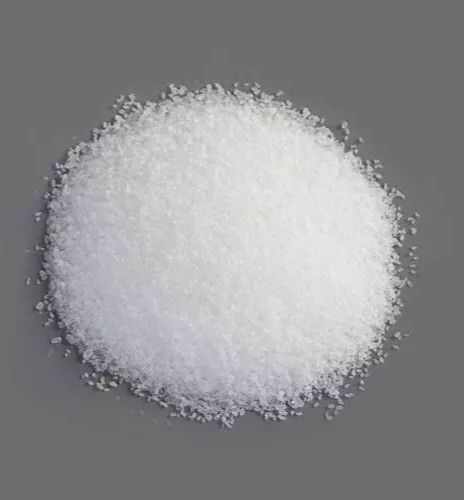
Glucono Delta Lactone (E575) is a high-purity, food- and industry-grade acidulant and chelating agent produced to meet rigorous industrial specifications. Primarily used as a slow-release acidifier, sequestrant and pH regulator, it enables controlled acidification in food processing, pharmaceuticals, polymer chemistry, water treatment and metal finishing. The product delivers predictable, gradual pH adjustment and effective calcium chelation, reducing process variability and improving product quality. Its strategic importance arises from wide cross-industry applicability, ease of handling (solid, non-corrosive), and compatibility with automated dosing systems, making it a preferred choice for large-scale, cost-sensitive operations.
Key Specifications & Technical Characteristics
-
Chemical identity: Glucono Delta Lactone (GDL), CAS 90-80-2; empirical formula C6H10O6.
-
Active ingredient: Glucono delta-lactone (E575) as the functional compound.
-
Purity/grade: Technical/industrial grade ≥ 99.0% (other grades available on request; food/pharma grades subject to certification).
-
Assay and impurities: Meets specification for moisture, insolubles, and heavy metals (spec sheet provided on request).
-
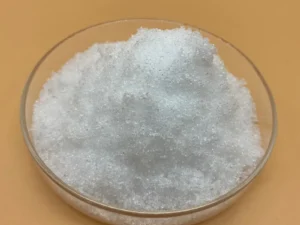
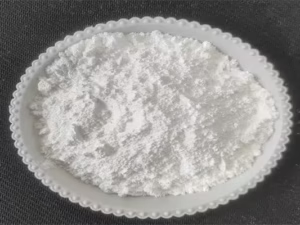
Physical form: Free-flowing crystalline powder.
-
Color: White to off-white.
-
Particle size: Typical D50 100–300 µm (custom milling or sieving available).
-
Bulk density: Approx. 600–800 kg/m3 (tap density varies with packing).
-
Solubility: Soluble in water; hydrolyzes to gluconic acid on dissolution.
-
pH (1% aqueous solution): Typically 2.8–3.5 (dependent on concentration and grade).
-
Packaging options: 25 kg sealed multi-wall paper sacks with inner PE liner; 500 kg FIBCs (big bags); 20 MT bulk in jumbo ISO-compatible containers; tailored packaging for pharmaceutical applications.
-
Shelf life: 24 months when stored in original, unopened packaging in a cool, dry place away from moisture and contaminants.
-
Storage conditions: Store under dry conditions, ambient temperature (recommended 5–25°C), avoid prolonged exposure to humidity.
Core Industrial Applications
-
Food & Beverage: Controlled acidification in dairy (to make tofu, certain cheeses), bakery (pH control), beverage stabilization, and as an alternative to direct acids for gradual pH lowering to improve texture and reduce syneresis.
-
Pharmaceuticals & Nutraceuticals: pH adjustment in formulations, excipient for controlled-release systems, and stabilizer in certain API processes where gradual acidification is required.
-
Water Treatment & Metal Finishing: Chelation of hardness ions and pH regulation to reduce scaling and improve plating uniformity; useful in closed-loop systems for predictable acid release.
-
Polymers & Adhesives: Catalyst or pH modifier in resin curing and cross-linking processes that benefit from staged acid release.
-
Leather & Textile Processing: pH control in tanning and dyeing steps where gradual lowering avoids fiber damage.
Why it outperforms alternatives -
Predictable, slow hydrolysis provides controlled acidification versus instant acids that can overshoot target pH.
-
Solid, non-corrosive handling reduces equipment corrosion and storage hazards compared with liquid acids.
-
Effective calcium chelation reduces scale and improves process yields where hardness is an issue.
-
Custom particle sizing and packaging enable integration into automated dosing and continuous processes, improving operational efficiency.
Competitive Advantages
-
Quality consistency: Produced under controlled, ISO-aligned manufacturing processes with batch traceability and certificates of analysis available for every lot.
-
Supply reliability: Regular production scheduling, safety stocks, and multi-modal logistics options to support continuous industrial sourcing.
-
Logistics capability: Available in 20 MT bulk loading for containerized shipment; flexible packaging sizes to match production-scale and line-feeding requirements.
-
Price competitiveness: Economies of scale on bulk purchases (20 MT+), competitive freight optimization, and contract pricing for long-term supply agreements.
-
Sustainability: Solid form reduces transport weight/volume relative to aqueous acid solutions per unit of active acid delivered; reduced spill risk and simpler waste handling. Suppliers can provide sustainability data on request.
-
Technical support: Application engineering support, product technical data sheets, handling and safety documentation (SDS), and on-request lab samples for process trials.
Commercial & Supply Information
-
Minimum order quantity (MOQ): BULK 20MT.
-
Loading capacity (MT per container): Standard 20 MT per 20-foot container (ISO dry bulk or palletized big bags), subject to packing configuration and local transport regulations.
Reviews
There are no reviews yet.