
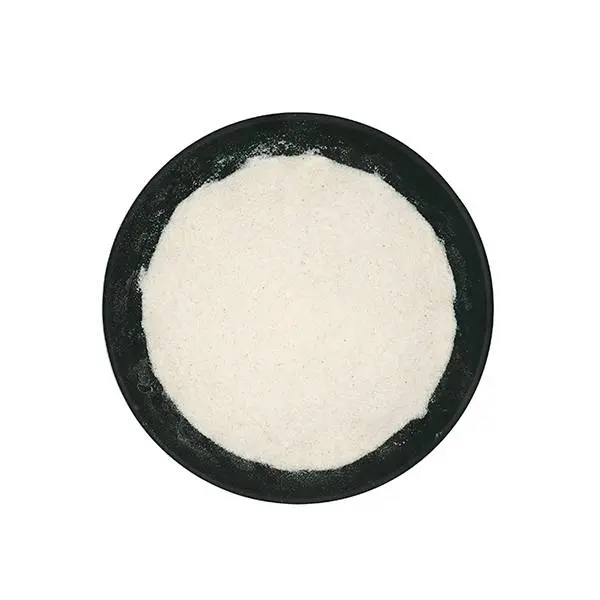
Description
-
Product Overview
Trisodium Citrate (E331) is a high-purity, industrial-grade sodium citrate salt used broadly as a buffering agent, sequestrant, and chelating agent in chemical processing and formulation. Its primary industrial use spans water treatment, food & beverage formulation, pharmaceuticals, detergents, and metal finishing where precise pH control and metal ion complexation are required. The product delivers predictable buffering capacity, reliable chelation of divalent cations, and excellent solubility, enabling process stability, reduced scaling, and consistent product quality. Strategically, Trisodium Citrate is a low-risk, cost-efficient raw material that improves process yields, reduces downstream maintenance costs, and supports regulatory compliance across multiple high-value industrial supply chains.
-
Key Specifications & Technical Characteristics
-
Chemical composition: Trisodium citrate, formula C6H5Na3O7 (trisodium 2-hydroxypropane-1,2,3-tricarboxylate).
-
Purity/grade: Industrial/technical grade; typical assay ≥ 99.0% (w/w).
-
Moisture content: ≤ 1.0% (typical specification).
-
Heavy metals: Pb, As, Cd within industrial specification limits; certificate of analysis provided per batch.
-
Physical form: Free-flowing crystalline powder or granular white to off-white solid.
-
Particle size: Typical distribution 100–400 µm (custom milling available on request).
-
Bulk density: Approx. 600–800 kg/m³ (tapped bulk density depends on packing).
-
Solubility: Highly soluble in water; rapid dissolution, forming stable aqueous buffers.
-
pH (1% aqueous solution): Typically 7.0–9.0 depending on concentration.
-
Packaging options: 25 kg multiwall kraft bags with inner PE liner, 500 kg FIBC (big bags), or bulk isotainers / pneumatic-tanker delivery for large volumes.
-
Shelf life: 24 months when stored in sealed packaging, dry conditions, away from direct sunlight and reactive contaminants.
-
Documentation: Full Certificate of Analysis (CoA), Safety Data Sheet (SDS), and product specification sheet provided with every shipment.
-
Core Industrial Applications
-
Water treatment & boiler scale control: Used as a sequestrant to chelate calcium and magnesium, reducing scale formation and improving heat-exchanger efficiency. Preferred for predictable dosing and minimal corrosion risk.
-
Food & beverage manufacturing: Functions as an acidity regulator, emulsifier, and preservative agent in beverage formulations, dairy processing, and canned goods (meets E331 regulatory usage where applicable). Chosen for clean flavor profile and regulatory acceptability.
-
Pharmaceuticals and personal care: Serves as a buffer and stabilizer in formulations, injectable and oral preparations, and topical products. Offers tight pH control and high purity for consistent batch-to-batch performance.
-
Detergents and cleaning agents: Acts as a water softener and builder to enhance surfactant performance, lower formulation costs, and improve cleaning efficiency at lower temperatures.
-
Metal finishing and electroplating: Provides complexation of metal ions for controlled deposition processes and reduced precipitation; improves bath life and surface quality.
-
Chemical manufacturing: Employed as an intermediate or processing aid where pH control and chelation improve reaction selectivity and yield.
Why it performs better than alternatives:
-
Predictable buffering capacity across common process pH ranges yields more stable formulations than many organic acids or simple salts.
-
Strong chelation efficiency for divalent cations reduces scaling and improves equipment uptime compared with non-chelating alkalinizers.
-
High solubility and rapid dissolution enable faster process startup and reduced mixing energy relative to larger-particle alternatives.
-
Competitive Advantages
-
Quality consistency: Tight in-house QC with batch CoA ensures assay, moisture, and impurity profiles meet industrial tolerances consistently.
-
Supply reliability: Sourced from established producers with robust production capacity and multiple supply lanes to mitigate disruption risk.
-
Logistics capability: Flexible packaging (25 kg bags, FIBCs, bulk isotainers), consolidated LCL and full-container load options, and support for pneumatic offloading for bulk deliveries.
-
Price competitiveness: Economies of scale and optimized sourcing deliver market-competitive unit pricing for bulk contracts and long-term supply agreements.
-
Sustainability benefits: Long shelf life and efficient dosing reduce waste; available from suppliers with environmental management systems (ISO 14001) on request.
-
Technical support: Application guidance, dosing calculators, stability data, and regulatory documentation provided to support rapid qualification and scale-up.
-
Regulatory readiness: Product documentation aligned with food/pharma/industrial regulatory expectations (CoA, SDS, origin certificates), facilitating supplier qualification.
-
Commercial & Supply Information
-
Minimum order quantity (MOQ): BULK 20 MT.
-
Loading capacity (MT per container):
-
20 ft container (palletized): up to 20 MT (25 kg bag format, pallet-stacked), depending on pallet configuration and weight limits.
-
20 ft container (FIBC/bulk): up to 20 MT typical.
-
40 ft container (FIBC/bulk): up to 24–26 MT depending on packaging and stowage.
-
-
Lead times: Available on request; typical lead time for bulk orders 2–6 weeks depending on destination and contract terms.
-
Minimum documentation with shipment: Commercial invoice, packing list, CoA, SDS; additional certificates (origin, phytosanitary, etc.) available per buyer requirements.



Reviews
There are no reviews yet.