
Description
Product Overview
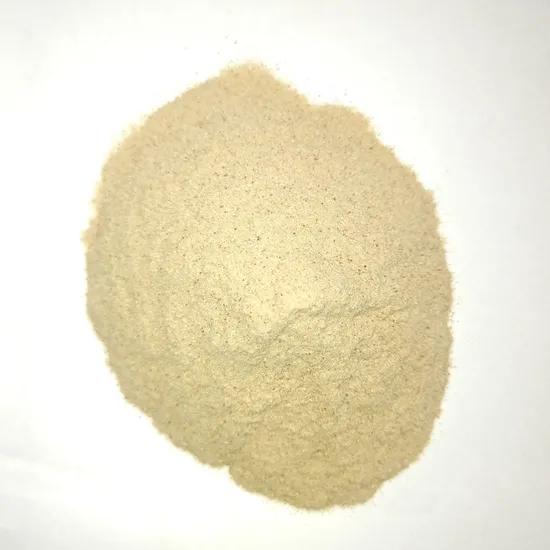
Sodium Alginate (E401) is a high‑purity, water‑soluble polysaccharide extracted from brown seaweed, supplied in a free‑flowing powder form for industrial use. It functions primarily as a rheology modifier, stabilizer, film former and gelling agent across food, pharma, textiles, ceramics, and oilfield chemical processes. The product delivers consistent viscosity control, fast hydration, and reliable gel strength, enabling predictable process performance and product quality. For global manufacturers and formulators, sourcing this grade reduces process variability, lowers waste and rework, and supports scale-up and regulatory compliance objectives.
Key Specifications & Technical Characteristics
-
Chemical composition: Sodium salt of alginic acid (sodium alginate, E401).
-
Active content: ≥ 95% total polysaccharide (typical assay).
-
Purity/grade: Industrial/food‑grade options available on request (complies with E‑number E401 where specified).
-
Moisture content: typically ≤ 12% (batch certificate provided).
-
pH (1% aqueous solution): 6.5–8.0 (typical).
-
Viscosity (1% solution, Brookfield at 25°C): customizable grades from 50–3,000 mPa·s (select grade to match application).
-
Particle form: free‑flowing powder.
-
Particle size: typical D50 100–300 µm (custom milling available).
-
Bulk density: 350–550 kg/m3 (packaging dependent).
-
Solubility: readily soluble in cold and hot water with controlled hydration characteristics.
-
Heavy metals: within industrial limits; certified values supplied on COA.
-
Microbiological limits: supplied with COA for food‑grade lots; industrial lots meet standard microbial specifications.
-
Packaging options: 25 kg kraft paper bags with PE liner, 500–1,000 kg FIBC (big bags), and bulk tanker or pneumatic bulk loading for large orders.
-
Shelf life: 24 months when stored in cool, dry conditions in original sealed packaging.
-
Documentation: Certificate of Analysis (COA), Safety Data Sheet (SDS), and technical datasheet provided with each shipment.
Core Industrial Applications
-
Food & Beverage: Gelling, thickening and stabilizing in prepared foods, sauces, dairy analogues and encapsulation (e.g., spherification). Delivers consistent texture and improved yield versus native starches and carrageenan under a wide pH range.
-
Pharmaceuticals & Nutraceuticals: Matrix former for controlled‑release tablets, binder in granulations, and suspension stabilizer in liquids. Offers predictable viscosity and clean release compared with synthetic polymers.
-
Textile & Paper: Sizing and printing paste rheology control for improved print definition and reduced bleed. Provides higher film strength and wash‑off control compared with alternative binders.
-
Ceramics & Foundry: Binder and thickener in casting slips and molding compounds. Enhances suspension stability and surface finish, reducing defects and post‑processing.
-
Oilfield & Drilling Fluids: Fluid loss control and rheology modification under demanding downhole conditions. More biodegradable and lower environmental impact than some synthetic polymers.
-
Adhesives & Coatings: Improves viscosity stability and film formation in water‑based coatings; better renewability and regulatory profile versus petroleum‑derived thickeners.
Why it performs better than alternatives
-
Broad effective pH and temperature range enables use in diverse process conditions where starches or carrageenans degrade.
-
Tailorable viscosity grades allow formulation optimization, reducing overdosing and raw‑material costs.
-
Natural, renewable origin with favorable biodegradability profile supports sustainability goals and regulatory acceptance.
Competitive Advantages
-
Quality consistency: Batch‑controlled production with COA ensures repeatable functional performance across large runs.
-
Supply reliability: Established sourcing and inventory planning reduce lead‑time variability; scalable volumes for continuous manufacturing.
-
Logistics capability: Multiple packaging formats, pneumatic bulk loading and containerized shipment options minimize handling costs and simplify plant intake.
-
Price competitiveness: Competitive bulk pricing for 20 MT+ contracts, flexible commercial terms for long‑term agreements.
-
Sustainability: Derived from renewable seaweed feedstock; lower VOCs and improved biodegradability compared with many synthetic thickeners.
-
Technical support: Access to formulation guidance, application notes, and troubleshooting from experienced technical service; COA, SDS and regulatory documentation supplied with each shipment.
Commercial & Supply Information
-
Minimum order quantity (MOQ): BULK 20 MT.
-
Loading capacity (MT per container):
-
20 ft container (bulk FIBC): up to 18–20 MT depending on bagging and stowage.
-
40 ft container (bulk FIBC): up to 24–26 MT depending on bagging and stowage.
-
Bulk pneumatic loading: loading capacity and logistics arranged per contract, typical truck/tanker loads 20–25 MT.
-

Reviews
There are no reviews yet.