
Description
-
Product Overview
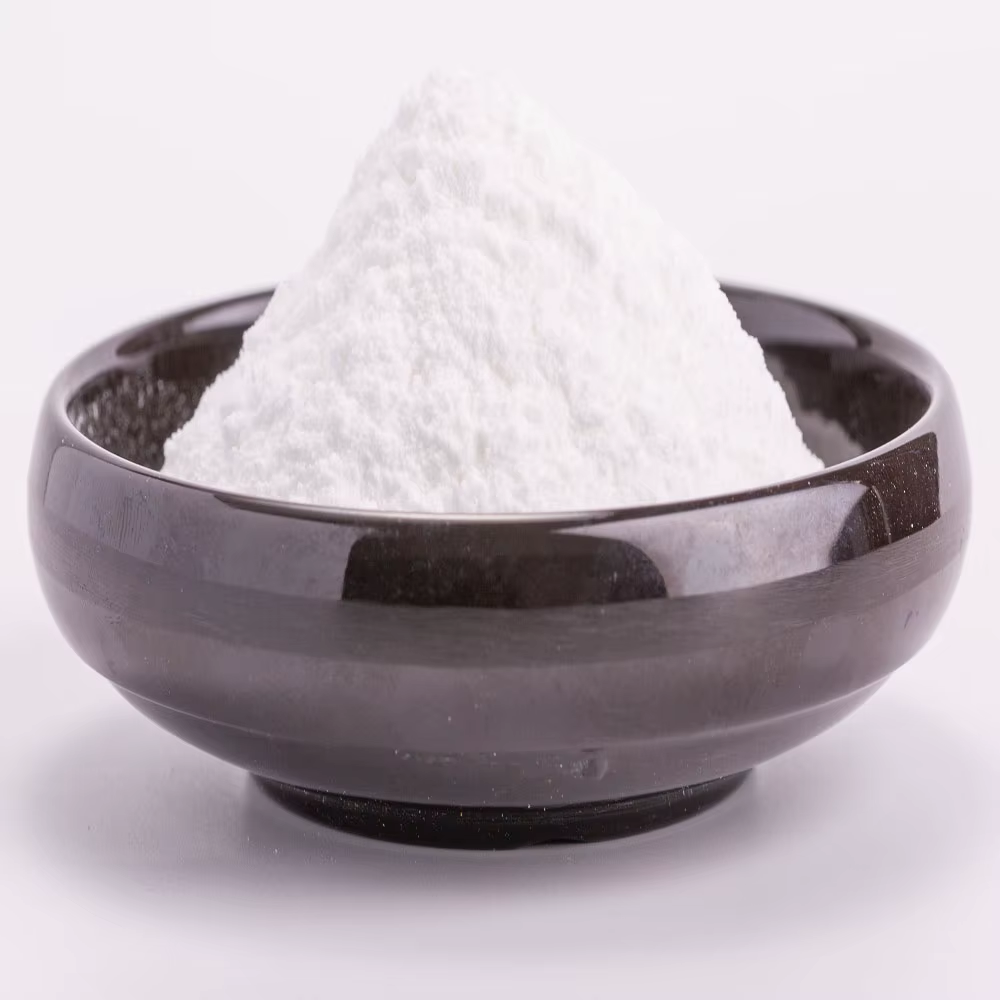
Microcrystalline Cellulose (E460) is a pharmaceutical- and industrial-grade powdered cellulose derivative produced by controlled hydrolysis of alpha-cellulose. It functions primarily as an inert filler, binder, disintegrant, and flow-improving excipient in solid-dosage formulations and as a rheology modifier, extender, and carrier in a wide range of industrial applications. Its key value proposition is consistent particle morphology and compressibility that enable predictable compaction, uniform dosing, and reliable processing at scale. Strategically, E460 is a foundational raw material for formulators and manufacturers seeking to reduce batch variability, accelerate production throughput, and meet stringent regulatory and quality requirements across pharmaceuticals, nutraceuticals, adhesives, coatings, and specialty chemical supply chains.
-
Key Specifications & Technical Characteristics
-
Chemical composition: Purified microcrystalline cellulose (polymeric β-1,4-linked D-glucose units), free of reactive functional groups; conforms to E460 identity.
-
Grade/purity: Pharmaceutical/industrial grade with typical purity ≥ 99.5% (insoluble cellulose basis).
-
Moisture content: Typically 4–8% (specifiable upon request).
-
Particle form: Fine, free-flowing powder; non-fibrous microcrystalline particles.
-
Median particle size (D50): 20–50 µm (custom sieving/particle distributions available).
-
Bulk density (loose): 0.20–0.35 g/cm³; tapped density and bulk density specifications available per batch.
-
Specific surface area: Typical range 0.5–2.0 m²/g (dependent on grade).
-
pH (1% aqueous slurry): ~6.0–7.5.
-
Loss on ignition/ash: Compliant with pharmacopeial limits; low inorganic residue.
-
Heavy metals: Meets pharmacopeial heavy metal limits (Pb, As, Cd, Hg) — certificates available.
-
Microbiological limits: Total plate count and yeast/mold controlled to industry standards; absence of specified pathogens guaranteed for pharma-grade lots.
-
Packaging options: 25 kg multi-wall paper bags with PE liner; 500–1000 kg FIBC (bulk bags); pneumatic tanker or silo loading for large-volume customers; customized packaging available.
-
Shelf life: 24 months when stored in original, unopened packaging under cool, dry conditions (relative humidity <60%).
-
Regulatory status: Complies with E460 designation; can meet USP/NF and EP monograph attributes on request; compliant with relevant food and pharmaceutical regulatory requirements when specified.
-
Core Industrial Applications
-
Pharmaceuticals & Nutraceuticals: Tablet and capsule formulations (binder, filler, disintegrant), controlled-release matrices, dry granulation and direct-compression processes. Provides superior compactibility and low lubricant sensitivity versus many starches and inorganic fillers.
-
Personal Care & Cosmetics: Thickener, opacifier carrier for powders and pressed cosmetics; improves texture and application properties with minimal skin reactivity.
-
Food & Beverage (where food-grade E460 specified): Anti-caking agent, carrier for powdered flavors and encapsulates, texturizer in powdered formulations.
-
Paints, Coatings & Adhesives: Rheology modifier and extender that improves spreadability, reduces binder demand, and enhances film formation.
-
Polymer & Composite Industries: Functional filler and flow modifier in masterbatches and bio-composites to reduce cost and tune mechanical properties.
-
Industrial Processing Uses: Dry blending flow aid, dust suppressant in bulk solids handling, and carrier for catalysts or active powders.
Why it outperforms alternatives: Microcrystalline cellulose combines inert chemical behavior with predictable compressibility and particle morphology, delivering consistent dosing and tablet strength at lower binder loadings than many starches, and without the abrasiveness or moisture sensitivity of many inorganic fillers. This yields higher first-pass yield, reduced rejection rates, and lower downstream corrective processing costs.
-
Competitive Advantages
-
Quality consistency: Tight in-process controls and batch-to-batch analytical traceability ensure reproducible particle size distribution, moisture, and compressibility metrics.
-
Supply reliability: Dedicated production capacity with forecast-driven allocation, safety-stock policies, and the ability to scale to multi-100 MT monthly commitments.
-
Logistics capability: Multiple packing formats, containerized and bulk loading options, FOB and DDP shipping support, and experience handling regulated pharma-grade consignments.
-
Price competitiveness: Cost-efficient raw-material sourcing and scalable production deliver competitive unit pricing for bulk purchasers and long-term contracts.
-
Sustainability: Sourced from renewable cellulose feedstocks with processes optimized to minimize chemical effluent; options for certified sustainable sourcing available on request.
-
Technical support: Comprehensive documentation including Certificate of Analysis (CoA), Material Safety Data Sheet (MSDS/SDS), pharmacopeial compliance statements, and application support (compression profiling, formulation optimization) from technical service teams.
-
Commercial & Supply Information
-
Minimum order quantity (MOQ): BULK 20 MT.
-
Loading capacity (MT per container):
-
20-foot container (FCL): up to 20 MT (in 25 kg bags, approx. 20,000 kg depending on packing configuration and export regulations).
-
40-foot container (FCL): up to 24–26 MT for palletized 25 kg bags or up to 26–28 MT in optimized bulk bag configurations (subject to weight/volume limits and packaging choice).
-
-
Typical lead time: Production lead time and shipping schedules available on request; expedited allocations possible for contracted customers.
-
Commercial terms: Pricing, Incoterms, and long-term supply agreements available upon inquiry; tiered pricing for volume commitments and multi-year contracts.


Reviews
There are no reviews yet.