
Description
-
Product Overview
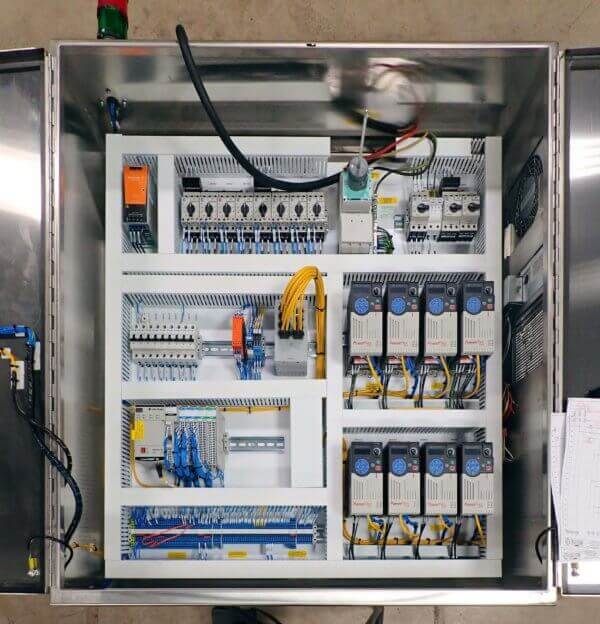
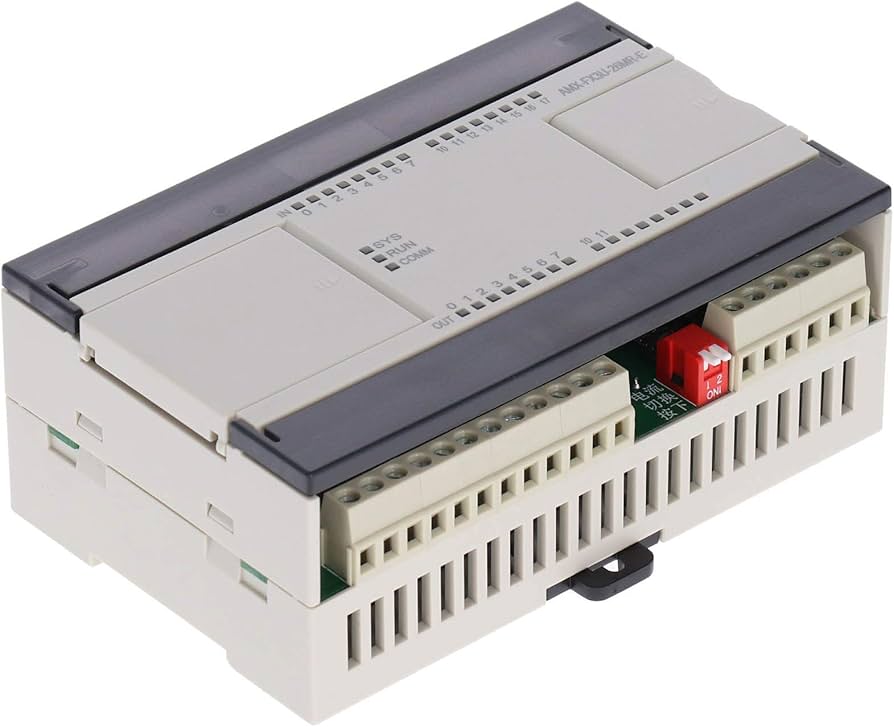
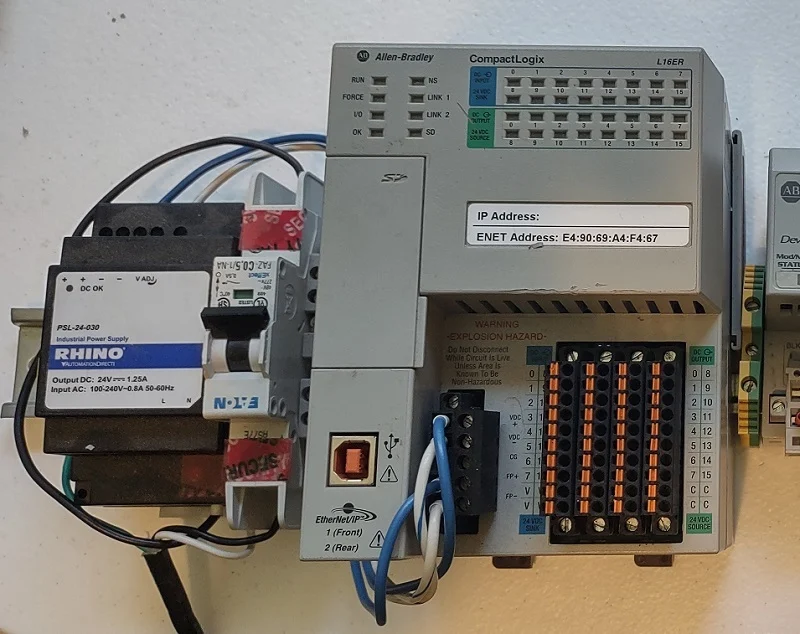
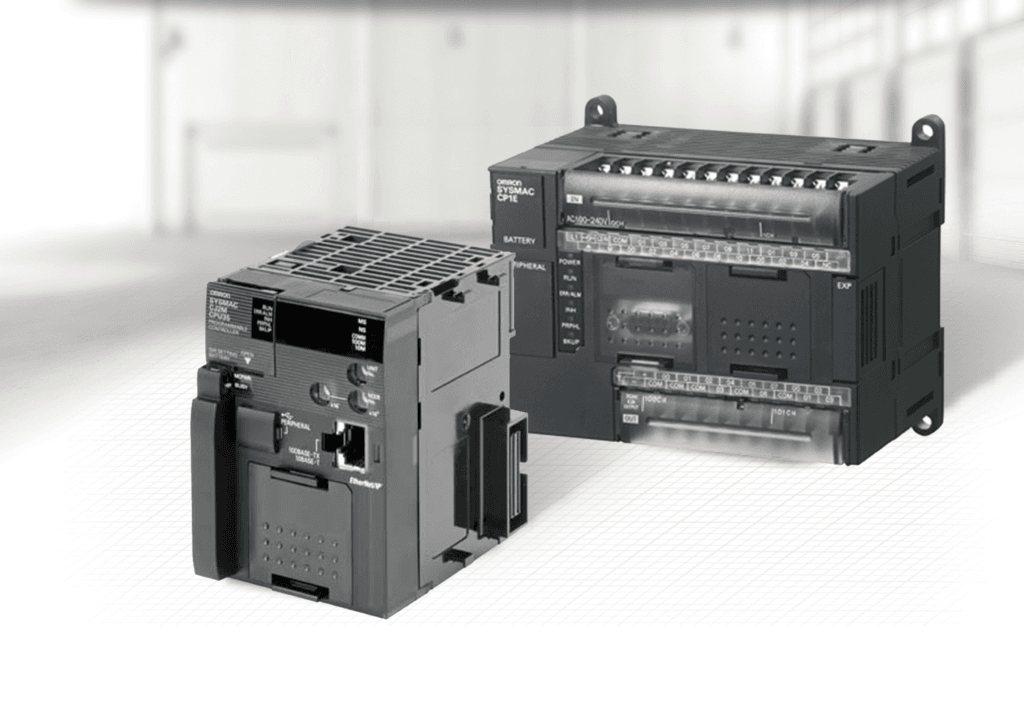
The PLC control system (industrial grade) is a high-reliability programmable logic controller engineered for demanding industrial automation and process-control environments. Designed for real-time sequencing, safety interlocks, and complex I/O orchestration, it centralizes machine logic, monitoring, and communications to optimize plant productivity. Its key value proposition is deterministic control with industrial-grade robustness—minimizing unplanned downtime, simplifying integration with SCADA/DCS and fieldbus networks, and accelerating commissioning. Strategically, this PLC delivers operational continuity and measurable OEE improvements for large-scale manufacturers, utilities, and infrastructure operators where control precision and uptime directly impact revenue and safety.
-
Key Specifications & Technical Characteristics
-
Controller family: Industrial-grade modular PLC with CPU, power module, local I/O racks, and communication modules.
-
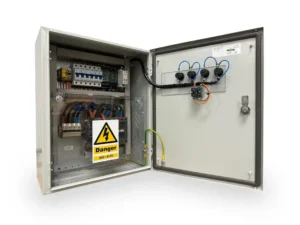
Materials & construction: IP65/67-rated metal housing options (aluminum alloy or stainless steel), conformal-coated PCBs for high-humidity environments.
-
Environmental rating: Operating temperature range -20 °C to +60 °C; storage -40 °C to +85 °C; operating humidity 5–95% non-condensing.
-
CPU performance: Deterministic cycle times down to 0.5 ms per instruction (model-dependent); multi-tasking with real-time OS.
-
Memory & program capacity: Flash program memory 512 KB–8 MB; data retention with battery-backed RTC; expandable memory via industrial SD cards.
-
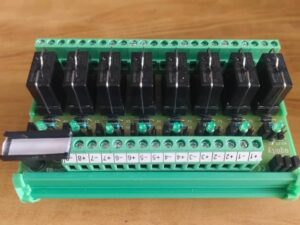
I/O types & density: Modular support for digital (TTL/24 VDC), analog (±10 V, 0–20 mA/4–20 mA), thermocouple/RTD inputs, high-speed counters, PWM outputs; typical rack capacities up to 512 discrete I/O or mixed I/O configurations.
-
Communication interfaces: Ethernet (10/100/1000Base-T), Profinet, EtherNet/IP, Modbus TCP/RTU, Profibus DP, DeviceNet, CANopen; optional fiber optic modules for galvanic isolation and long-distance runs.
-
Signal isolation & protection: Opto-isolated I/O, surge protection, transient suppression, programmable watchdog timers.
-
Safety & redundancy: SIL-capable safety modules (SIL2/SIL3-ready depending on configuration); hot-swap power and I/O redundancy options; dual-CPU redundancy available.
-
Power requirements: 24 VDC nominal (18–30 VDC) or 110–230 VAC variants; low-power modes for stand-by.
-
Physical characteristics: DIN-rail or panel mountable; typical CPU module footprint 120 × 100 × 75 mm (model-specific); weight 0.7–6.0 kg depending on configuration.
-
Response & determinism: Hardware-based interrupts, cycle-synchronous I/O, jitter <100 µs for time-critical tasks.
-
Certifications & compliance: CE, UL508, IEC 61131-3 programming standard compatibility, RoHS, ATEX/IECEx options for hazardous locations.
-
Software & programming: IEC 61131-3 compliant IDE (ladder, structured text, function block), integrated simulation, version control, secure firmware update, OPC UA server for industrial interoperability.
-
Cybersecurity features: Role-based access control, secure boot, encrypted communication (TLS/SSL), audit logs.
-
Packaging options: Individual boxed modules; industrial racks; OEM bulk crates; wooden export pallets; shock- and moisture-resistant inner packaging.
-
Shelf life & reliability: No chemical shelf life; MTBF typically >200,000 hours (model- and environment-specific), supported by accelerated lifecycle testing.
-
Core Industrial Applications
-
Primary industries: Oil & gas, petrochemical, power generation, water & wastewater, mining and minerals, food & beverage, pharmaceuticals, automotive, heavy manufacturing, and building management.
-
Specific operational use cases:
-
Continuous process control: PID loops, cascade control, and advanced control strategies in refineries and chemical plants.
-
Discrete manufacturing: High-speed sequencing, part tracking, robotics coordination on automotive and electronics lines.
-
Infrastructure and utilities: Pump station management, power distribution automation, and remote telemetry for water/wastewater networks.
-
Safety and interlocking: Emergency shutdown logic, access control of hazardous equipment, and machine safeguarding.
-
Remote & distributed control: Edge PLCs in geographically distributed assets with secure telemetry to central SCADA/DCS.
-
-
Why it outperforms alternatives:
-
Deterministic I/O and low-latency cycle times reduce control jitter and improve process stability versus general-purpose controllers.
-
Industrial-grade construction and conformal coating extend lifetime in corrosive, dusty, or high-humidity environments compared with commercial-grade PLCs.
-
Modular I/O and wide protocol support simplify integration and lower retrofit costs versus proprietary systems.
-
Redundancy and SIL-capable options provide measurable safety and availability gains versus single-node controllers.
-
-
Competitive Advantages
-
Quality consistency: Factory-calibrated modules, batch-tested firmware, and traceable lot control deliver repeatable performance across large deployments.
-
Supply reliability: Production planning with safety stocks, regional distribution centers, and contract manufacturing scale to support multi-MT project rollouts and Just-In-Time replenishment.
-
Logistics capability: Export-ready packaging, containerized bulk shipments, and project freight coordination (FCL/LCL) with hazardous-area handling where required.
-
Price competitiveness: Tiered pricing for volume orders, long-term supply agreements, and total-cost-of-ownership optimization through extended service intervals.
-
Sustainability: RoHS-compliant materials, power-efficient modes that reduce energy draw, and recyclable metal housings for end-of-life recovery programs.
-
Technical support & documentation: Comprehensive datasheets, wiring diagrams, application notes, IEC 61131-3 code libraries, cybersecurity hardening guides, and 24/7 enterprise support options including remote diagnostics and on-site commissioning teams.
-
Strategic sourcing: Combination of product longevity, strong spare-part availability, and global lifecycle support positions this PLC as a low-risk, high-value component for enterprise control architectures.
-
Commercial & Supply Information
-
Minimum order quantity (MOQ): BULK 20MT
-
Loading capacity (MT per container): Typical 20-foot container capacity up to 21–22 MT depending on packaging density and regulatory packing constraints; 40-foot container capacity up to 24–26 MT. Final loading optimized per order packaging and palletization specifications.
Reviews
There are no reviews yet.