
Description
1. Product Overview
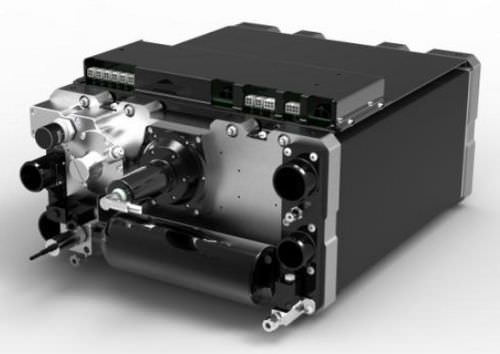
The HFCM-30 is a high-performance perfluorosulfonic acid (PFSA) composite membrane engineered for proton exchange membrane fuel cells (PEMFCs). Designed for stationary power generation and heavy-duty fuel cell electric vehicles (FCEVs), it delivers exceptional proton conductivity at low relative humidity while maintaining structural integrity under thermal cycling. As the hydrogen economy scales, HFCM-30 solves the critical industry bottleneck—balancing ionic throughput with chemical durability—making it a strategic enabler for OEMs seeking to lower total cost of ownership (TCO) in zero-emission power systems.
2. Key Specifications & Technical Characteristics
-
Chemical composition: PFSA ionomer reinforced with expanded polytetrafluoroethylene (ePTFE) composite
-
Purity level: ≥99.9% active material; metal ion contaminants (Fe, Cr, Ni) <5 ppm
-
Physical characteristics:
-
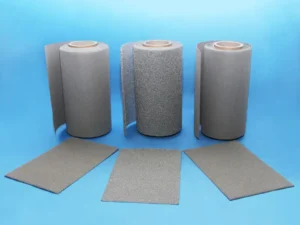
Form: Continuous roll-cast film
-
Color: Transparent to off-white
-
Thickness: 15 ± 1.5 µm (calibrated)
-
Areal density: 12–14 g/m²
-
Equivalent weight (EW): 720–750 g/eq
-
-
Packaging options: Vacuum-sealed anti-static liner with desiccant; 100 m, 300 m, or 500 m rolls; cassette-wound for automated stacking
-
Shelf life: 18 months when stored at 5–30°C, <50% RH in original packaging
3. Core Industrial Applications
-
Primary industries: Heavy-duty FCEV manufacturers (truck, bus, rail); stationary fuel cell power systems (backup generators, data center UPS); marine hydrogen propulsion.
-
Specific operational use cases: High-current-density membrane electrode assemblies (MEAs) for continuous 80–95°C operation; dry-feed cathode environments where water management is constrained; freeze-start applications down to -30°C.
-
Performance advantages over alternatives: HFCM-30 delivers >30% lower high-frequency resistance (HFR) than cast-only PFSA membranes at 40% RH, enabling a 15–20% reduction in platinum loading in the catalyst layer. Its ePTFE reinforcement reduces in-plane swelling to <5% (vs. 15–20% for unreinforced membranes), extending MEA lifespan to >15,000 hours in dynamic cycling—directly lowering replacement frequency and stack downtime.
4. Competitive Advantages
-
Quality consistency: Lot-to-lot thickness variation ≤2%; ionic exchange capacity (IEC) controlled within 0.95–1.05 meq/g. Each roll includes a certificate of analysis (CoA) with accelerated stress test (AST) data.
-
Supply reliability: Dual-source raw material chain; 24/7 climate-controlled warehousing in Asia, Europe, and North America; ≤10 business day lead time for contracted volumes.
-
Logistics capability: Damage-free roll edge protection and nitrogen-purged shipping containers for moisture-sensitive deliveries.
-
Price competitiveness: Tier-2 volume pricing at 30–40% below top-tier Japanese competitors, with no performance trade-off in proton conductivity or oxidative stability (tested via ex-situ Fenton’s test <150 ppm fluoride release over 500h).
-
Sustainability & documentation: Full REACH, RoHS, and Conflict Minerals compliance; product carbon footprint (PCF) available per ISO 14067; eligible for green hydrogen supply chain credits under EU CBAM.
5. Commercial & Supply Information
-
Minimum order quantity (MOQ): 20 MT (approx. 1,330 rolls of 300 m length, or equivalent master cartons)
-
BULK 20MT loading capacity: 20 MT exactly per standard 20-ft dry container (maximum net weight) — optimized for full-container load (FCL) freight efficiency. Each palletized master carton = 450 kg net; 44 pallets per container.
Reviews
There are no reviews yet.