
Description
1. Product Overview
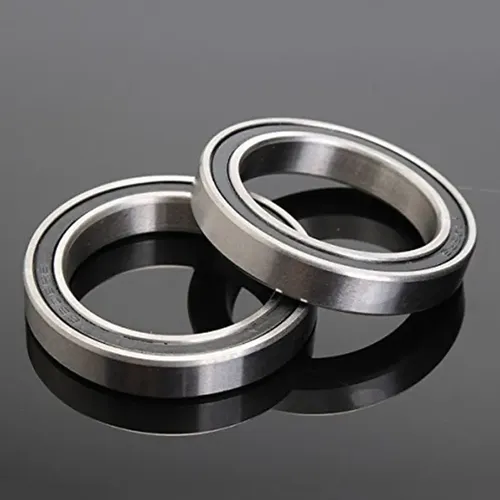
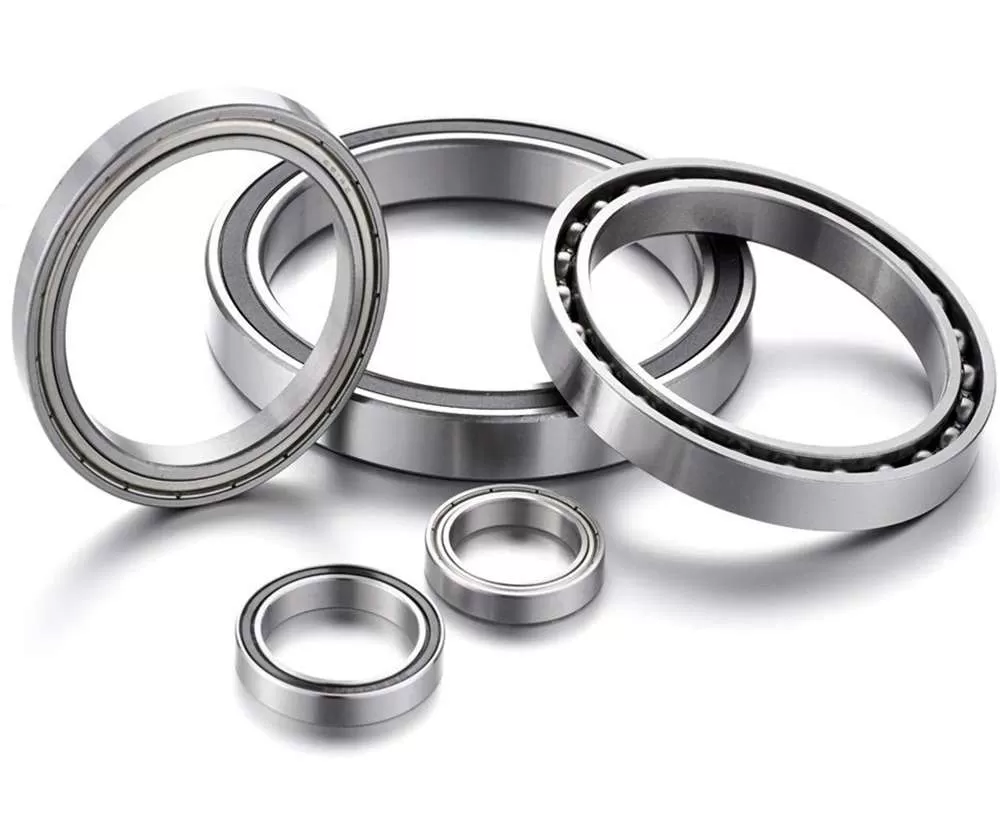
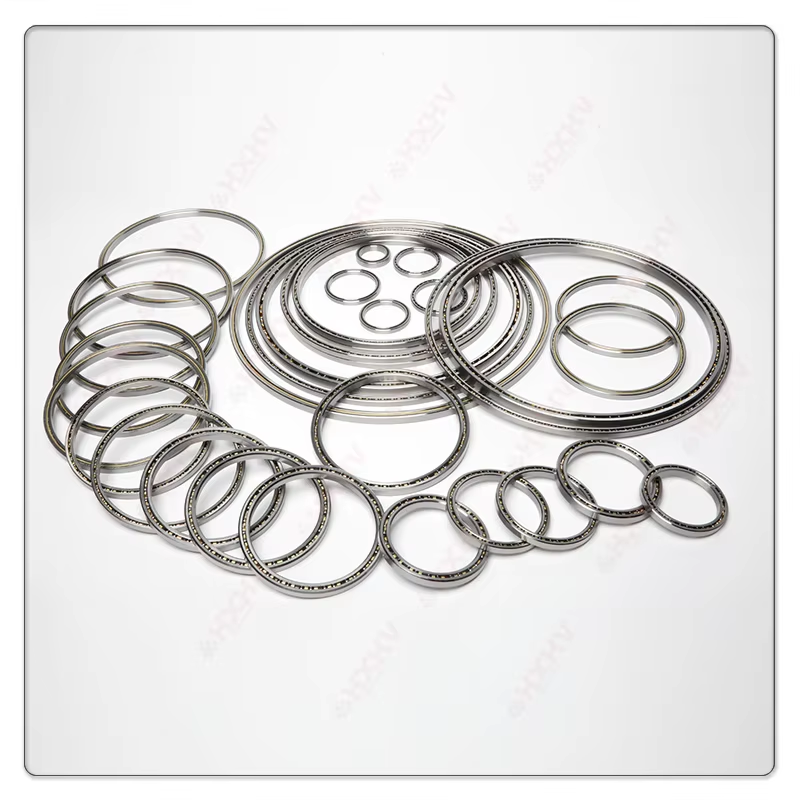
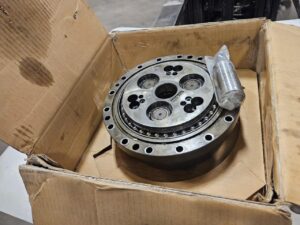
Robot Joint Bearings (Thin-Section Bearings) are precision-engineered components designed to provide rotational accuracy and load support in space-constrained robotic articulations. These bearings are primarily used in industrial articulated robots, collaborative robots (cobots), medical robotics, and aerospace actuation systems. Their key value proposition lies in reducing weight and cross-section by up to 60% compared to standard bearings while maintaining high stiffness and positioning repeatability. Strategically, they are critical enablers for compact, energy-efficient, and high-precision robotic systems—directly impacting cycle times, payload capacity, and long-term maintenance costs in automated production lines.
2. Key Specifications & Technical Characteristics
-
Material Composition: High-carbon chromium bearing steel (GCR15 / 100Cr6) or stainless steel (440C / 9Cr18) for corrosion-resistant variants; heat-treated to HRC 58–62.
-
Geometric Accuracy: P5 or P4 (ABEC 5 / 7) precision grades; radial runout ≤ 0.005 mm; axial runout ≤ 0.003 mm.
-
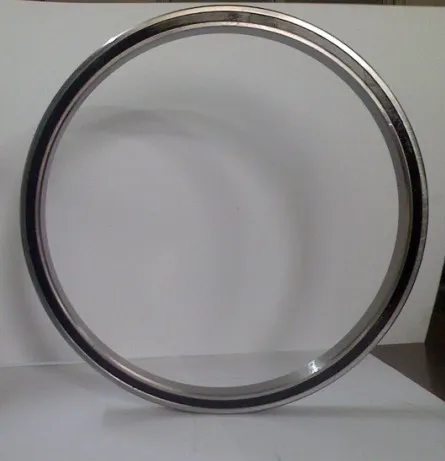
Physical Characteristics: Thin-section ring profile (equal cross-section across bore sizes); outer diameters from 40 mm to 600 mm; ring cross-sections typically 5 mm – 15 mm; available in open, shielded (2RS), or sealed configurations.
-
Lubrication & Purity: Grease-packed with low-outgassing, wide-temp grease (operating range: -30°C to +120°C); cleanliness per ISO 4406 class 14/12/10.
-
Packaging Options: Individual VCI anti-corrosion wrapping; industrial-grade cartons for quantities ≤ 200 units; wooden spools or reinforced crates for bulk orders.
-
Shelf Life: 5 years in unopened, dry storage (≤ 65% RH, 10–30°C); relubrication interval every 2,000–4,000 operating hours depending on load cycle.
3. Core Industrial Applications
-
Primary Industries: Industrial robotics, collaborative robotics, medical robotics (surgical arms, imaging gantries), aerospace (actuators, gimbals), and semiconductor handling equipment.
-
Specific Use Cases:
-
6-axis robot wrists & elbows: Enables smooth, high-repeatability motion with reduced inertia for faster path speeds.
-
Cobot joints: Provides low friction torque (≤ 0.02 N·m per unit) for safe torque sensing and backdrivability.
-
Automated guided turntables: Thin profile allows integration into low-profile rotary stages for assembly cells.
-
-
Performance vs. Alternatives: Compared to standard deep-groove bearings, Robot Joint Bearings reduce overall arm weight by ~35%, lowering actuator power requirements by up to 20%. Superior raceway surface finish (Ra ≤ 0.08 µm) reduces wear particles and extends maintenance intervals 2–3× longer than conventional thin-ring designs.
4. Competitive Advantages
-
Quality Consistency: 100% dimensional inspection via CNC vision systems; traceable lot codes for every production batch; conformance to ISO 492 and JIS B 1514.
-
Supply Reliability: Dual manufacturing lines (Asia + EU backup) guarantee 98% on-time delivery; safety stock held for 60+ standard SKUs.
-
Logistics Capability: Global 5–7 day express for LCL; 14–21 day sea freight with shock-indicating labels on all pallets.
-
Price Competitiveness: 18–25% lower total landed cost compared to EU/JP Tier 1 brands, with same performance tier (P5 equivalent).
-
Sustainability & Technical Support: Zinc–nickel trivalent passivation (RoHS-compliant); full 3D CAD models, load-life calculations, and 24/7 engineering support included.
5. Commercial & Supply Information
-
Minimum Order Quantity (MOQ): 500 units per SKU (or $3,000 value, whichever higher) for standard P5 grade; 1,000 units for P4/440C stainless.
-
BULK 20MT Loading Capacity: 4,000–8,000 units per 20FT container (dependent on outer diameter range; typical mix: 70% ≤ 150mm OD, 30% 150–300mm OD).
-
Container Utilization: One 20FT container = 28–32 pallets; each pallet max weight 650 kg. For 20MT net bearing weight, total shipping volume ~22–24 m³, allowing mixed SKU consolidation.
Reviews
There are no reviews yet.