


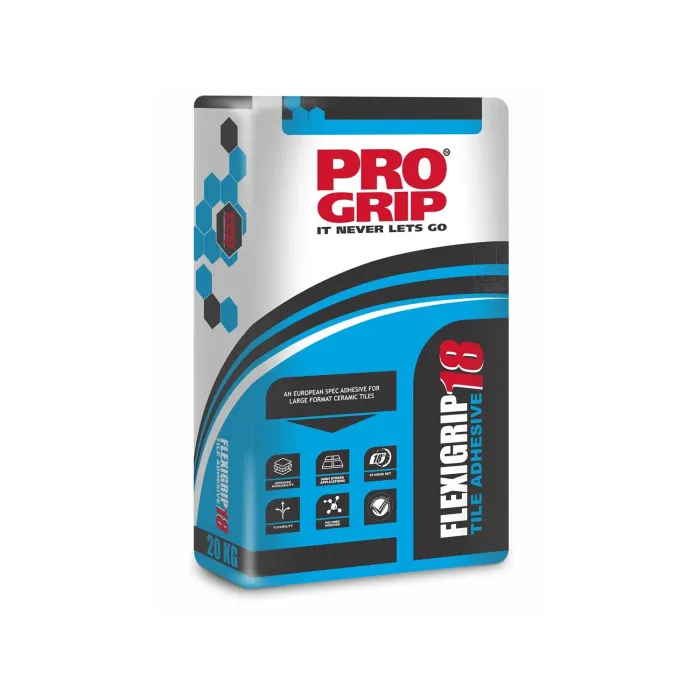
Description
1. Product Overview
Tile Adhesives are high-performance, cementitious or polymer-modified bonding compounds engineered for the permanent installation of ceramic, porcelain, and natural stone tiles in demanding residential, commercial, and industrial environments. Their primary industrial use lies in construction and interior finishing, enabling rapid, high-strength tiling on vertical and horizontal substrates. The key value proposition is superior bond strength combined with slip resistance and moisture tolerance, reducing long-term debonding failures and rework costs. As global construction prioritizes speed and durability, these adhesives are strategically critical to achieving predictable, code-compliant tile assemblies in high-traffic and wet-area applications.
2. Key Specifications & Technical Characteristics
-
Chemical composition: Portland cement base with redispersible polymer powder (RDP), cellulose ether, and starch ether additives
-
Purity level: Active polymer content ≥ 3% (C1TE grade) or ≥ 6% (C2TE grade); free of asbestos, lead, and soluble heavy metals
-
Physical characteristics: Dry powder; gray or white; particle size ≤ 0.6 mm; bulk density 1.2–1.5 g/cm³; open time ≥ 20 min; adjustable slip resistance ≤ 0.5 mm
-
Packaging options: 20 kg multi-wall paper sacks with PE liner; 1,000 kg big bags; custom heat-sealed polywoven bags for tropical shipments
-
Shelf life: 12 months from production date when stored in dry, covered conditions (RH ≤ 70%, temp 5–35°C)
3. Core Industrial Applications
-
Primary industries: Commercial construction, residential development, industrial flooring, infrastructure (tunnels, stations), and prefabricated panel manufacturing
-
Specific use cases: Fixing large-format porcelain panels (up to 60×60 cm) on interior walls and floors; exterior balconies and wet rooms; bonding stone cladding on concrete backer boards; mechanized tile installation lines in prefab housing
-
Performance vs. alternatives: Compared to conventional cement-sand mortar, tile adhesives eliminate soaking of tiles, reduce bed thickness by 50%, and offer 3× higher tensile bond strength (>1.0 MPa after water immersion). Polymer modification ensures flexibility to absorb substrate movement, preventing tile popping or grout cracking.
-
Efficiency & cost advantage: Faster application (thin-bed method: 3–6 mm vs. 15–20 mm for sand-cement), 30% lower material consumption per m², and zero curing wait time for foot traffic after 24 hours — directly lowering installed system cost by 15–20%.
4. Competitive Advantages
-
Quality consistency: ISO 9001:2025-certified production; every batch tested for bond strength (EN 12004), open time, and freeze-thaw stability; statistical process control (SPC) data available on request
-
Supply reliability: Redundant raw material suppliers (3+ per critical additive) and 6-month rolling forecast buffer stock; 98.5% on-time-in-full (OTIF) rate across 40+ countries
-
Logistics capability: Bagged or bulk container loading with in-house fumigation and moisture-barrier lining; direct dispatch from port-side warehouses in Rotterdam, Jebel Ali, Singapore, and Houston
-
Price competitiveness: Direct sourcing of cement and polymers via long-term contracts, passing 8–12% cost advantage vs. regional distributors; volume-based tiered pricing
-
Sustainability: Low-VOC formulation (<1 g/kg), no hazardous air emissions during application; 30% recycled content in packaging; carbon-neutral shipment option available via carbon offset program
-
Technical support: Full EN 12004 / ISO 13007 test reports; application guides in 12 languages; on-call field engineer for large projects (>50,000 m²)
5. Commercial & Supply Information
-
Minimum order quantity (MOQ): BULK 20MT (mixed SKUs allowed, minimum 5 MT per grade)
-
Loading capacity (MT per container): 25 MT per 20’ dry container (palletized, 2,000 × 20 kg bags); or 27 MT per 20’ container (big bags, 1 MT each)
Reviews
There are no reviews yet.