
Description
1. Product Overview
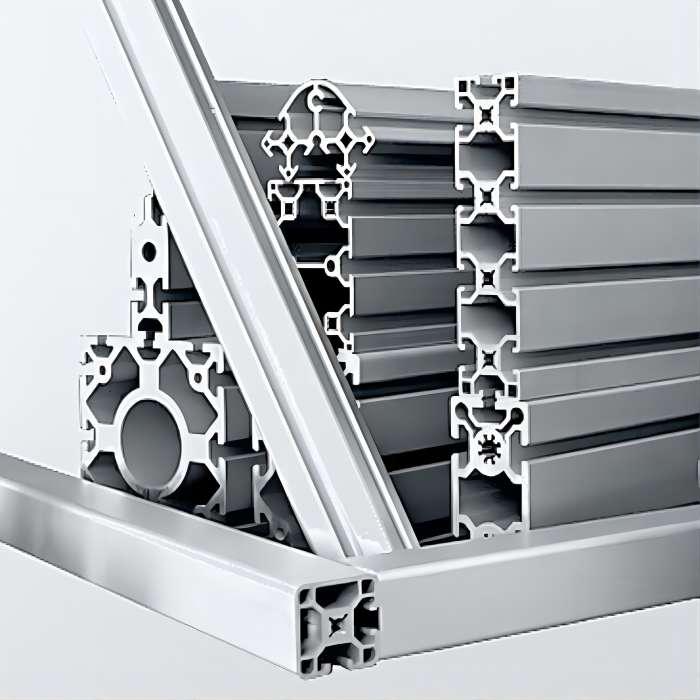
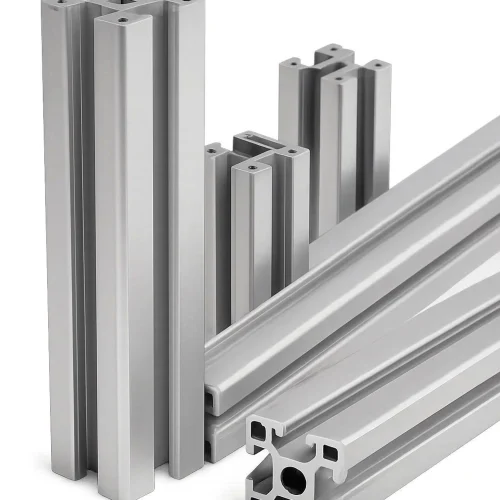
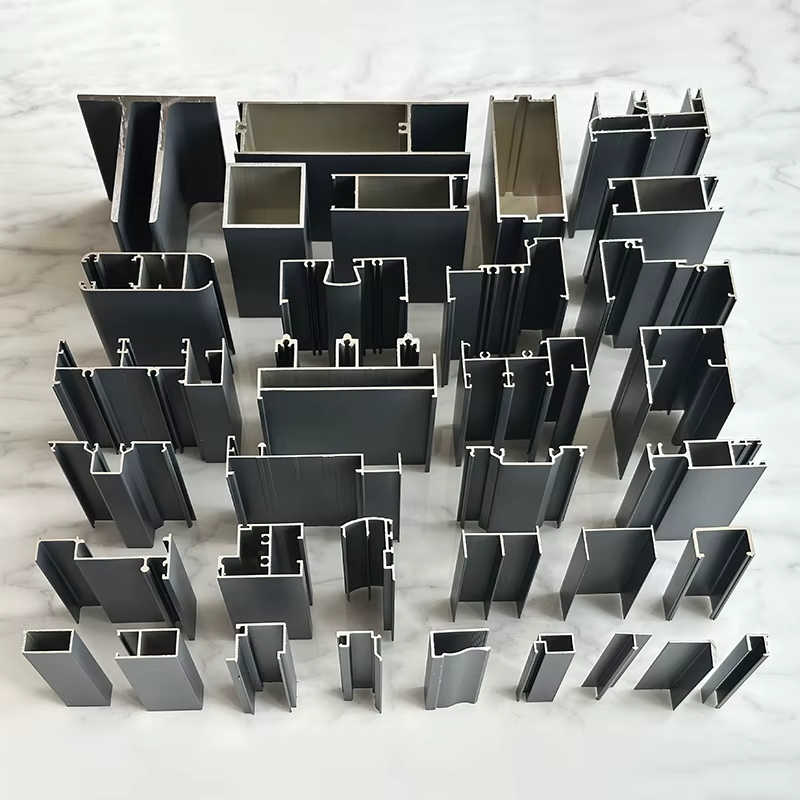
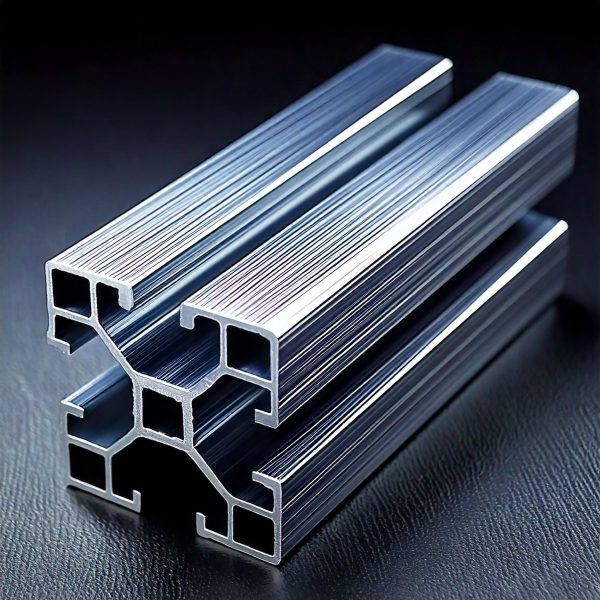
Aluminium Profiles 6063 are precision-extruded, heat-treated architectural and industrial-grade shapes, primarily used for lightweight structural framing, trim, and decorative enclosures. The key value proposition is an exceptional combination of high corrosion resistance, superior surface finish, and excellent extrudability, enabling complex cross-sections with tight tolerances. Strategically, this alloy is the global benchmark for applications requiring both formability and moderate strength—serving as a critical enabler for energy-efficient buildings, EV battery trays, solar module frames, and automated manufacturing systems.
2. Key Specifications & Technical Characteristics
-
Chemical Composition (EN 573-3 / ASTM B221): Si 0.20–0.60%, Fe max 0.35%, Cu max 0.10%, Mn max 0.10%, Mg 0.45–0.90%, Cr max 0.10%, Zn max 0.10%, Ti max 0.10%, others each max 0.05% – balance Al 6063.
-
Temper & Mechanical Grade: T5 (aged from extrusion heat) or T6 (solution heat-treated + artificially aged). Tensile strength: min 205 MPa (T6); Yield strength: min 170 MPa (T6); Elongation: min 8%.
-
Physical Characteristics: Bright mill finish, anodizing-quality (AQ) or powder-coat ready; density 2.70 g/cm³; available in custom solid, semi-hollow, and hollow profiles up to 7.5 m length (customizable to 12 m).
-
Packaging Options: Individual interleaved paper + shrink-wrapped bundles, wooden crates for sea freight, or reusable steel racks for JIT delivery.
-
Shelf Life: Indefinite when stored indoors (15–30°C, <80% humidity) with no contact to aggressive chemicals or dissimilar metals.
3. Core Industrial Applications
-
Building & Construction (curtain walls, window/door frames, shopfitting): Outperforms 6060 in post-extrusion straightness and anodizing uniformity; provides 30% faster installation vs steel due to lighter weight and pre-cut machinability.
-
Solar Photovoltaic Mounting Structures: Superior corrosion resistance in coastal and desert environments compared to galvanized steel; lowers lifetime maintenance cost by 40–60% due to no red rust and full recyclability.
-
Automotive & E-Mobility (battery trays, busbars, crash management systems): Delivers higher thermal conductivity (approx. 200 W/m·K) than steel or polymer composites, enabling passive cooling for EV batteries; 50% mass reduction vs steel equivalent.
-
Industrial Automation (conveyor rails, machine guards, linear motion guides): Enables modular assembly with standard T-slot connectors, reducing fabrication lead time by up to 70% compared to welded steel structures.
4. Competitive Advantages
-
Quality consistency: ISO 9001:2025-certified extrusion lines with in-line laser measurement and eddy current testing; dimensional tolerances to EN 755-9: High Grade (±0.25 mm on critical faces).
-
Supply reliability: Three vertically integrated extrusion presses (2,500–4,000 tons) with dedicated aging ovens; 99.2% on-time in-full (OTIF) record over 18 months to North America, Europe, and SE Asia.
-
Logistics capability: In-house cut-to-length, CNC drilling, and deburring services; export-ready fumigated pallets; direct container loading from extrusion line to port.
-
Price competitiveness: Scrap recapture rate >95% in closed-loop recycling; passes 100% hydrostatic test for internal cavities; landed cost per meter 8–12% below European spot averages for equivalent T6 temper.
-
Environmental & technical support: EPD (Environmental Product Declaration) available; full 3D STEP files and extrusion design consultation (draft angles, wall thickness optimization) provided free of charge.
5. Commercial & Supply Information
-
Minimum Order Quantity (MOQ): BULK 20MT per profile shape (mixed sizes allowed within same alloy/temper; maximum 5 different cross-sections per order).
-
Loading capacity: 22–24 MT per 20 ft standard container (depending on bundle density and profile length up to 5.8 m); 18–20 MT per 40 ft container (for lengths 5.9–7.5 m).

Reviews
There are no reviews yet.