
Description
1. Product Overview
Tin Ingots (99.85%+) are high-purity, virgin-grade metal casts essential for electronics soldering, alloy production, and chemical processing. Their primary industrial use lies in manufacturing lead-free solder pastes, tinplate for food packaging, and specialized alloys such as bronze and bearing metals. The key value proposition is exceptional corrosion resistance, ductility, and consistent low impurity levels, directly improving end-product reliability and reducing manufacturing rejects. Strategically, tin is a critical raw material for global decarbonization (EV battery soldering) and digital infrastructure, with supply chain transparency becoming a competitive necessity.
2. Key Specifications & Technical Characteristics
-
Chemical composition (max impurity limits):
-
Sn: ≥ 99.85%
-
Pb: ≤ 0.05%
-
Fe: ≤ 0.015%
-
Cu: ≤ 0.03%
-
Sb: ≤ 0.02%
-
As: ≤ 0.005%
-
Bi: ≤ 0.01%
-
Total impurities: ≤ 0.15%
-
-
Purity grade: 99.85%+ (STI-3 equivalent / ASTM B339 Grade B)
-
Physical characteristics:
-
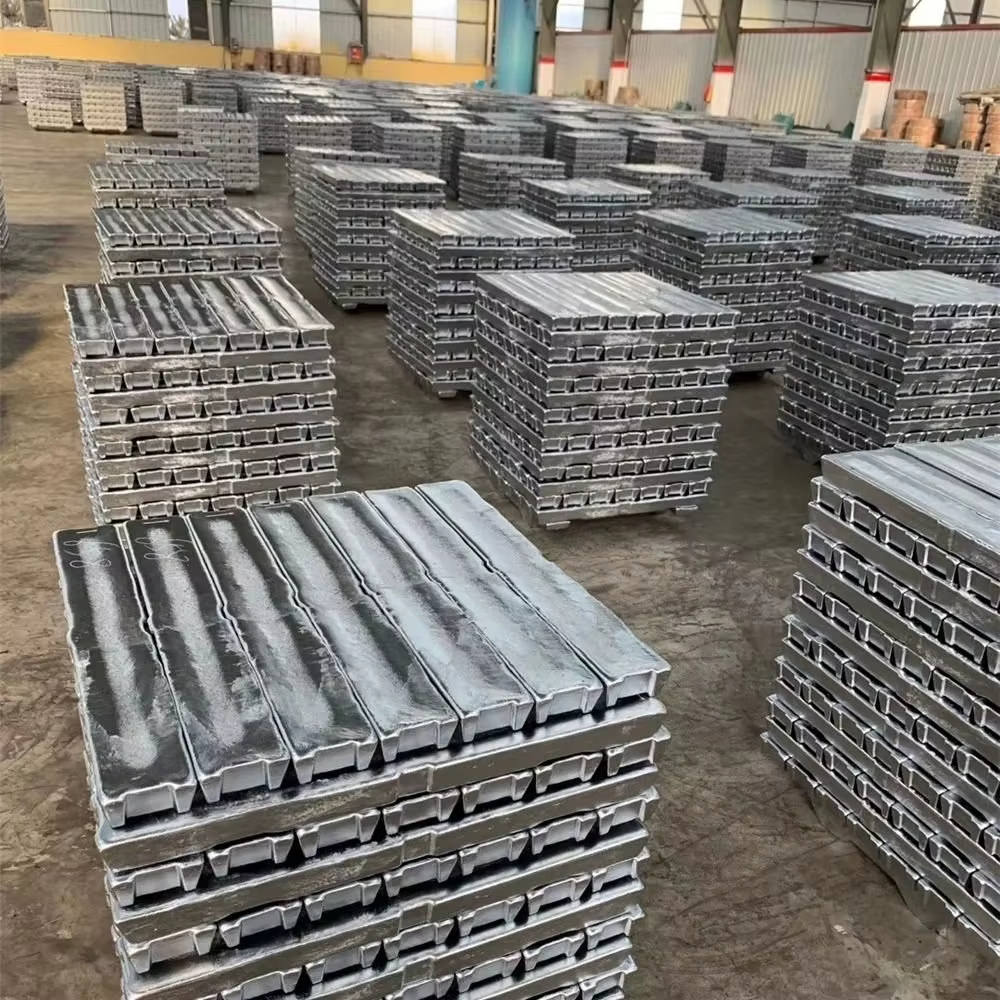
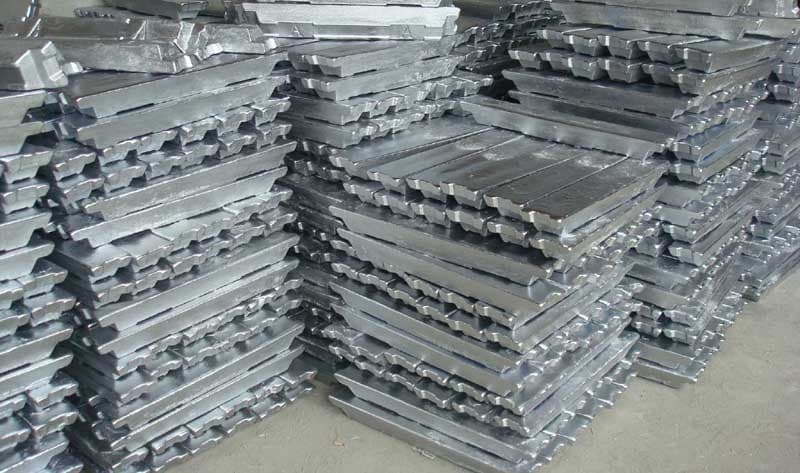
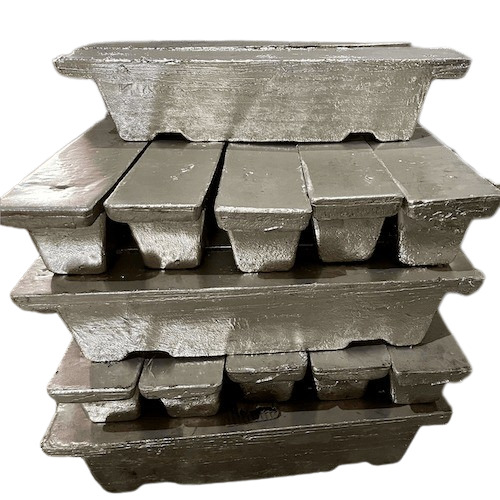
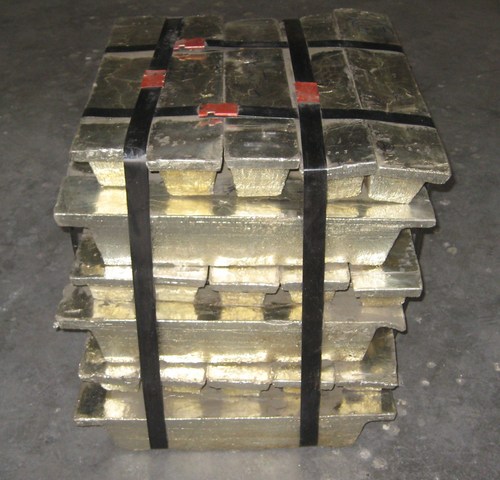
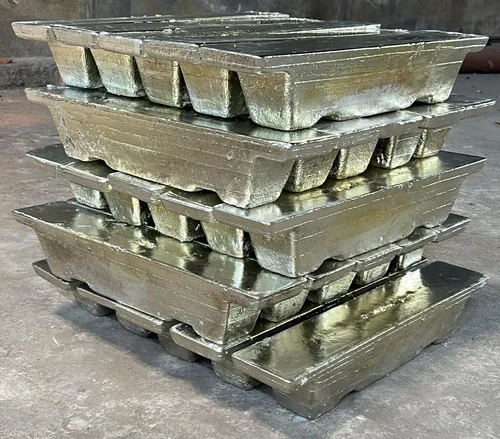
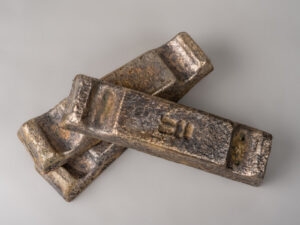
Form: Approx. trapezoidal or small loaf ingots
-
Weight per ingot: 12–25 kg (customizable down to 1 kg)
-
Color: Bright silver metallic surface, slight oxidation allowable per ASTM
-
Density: ~7.29 g/cm³ at 20°C
-
-
Packaging options:
-
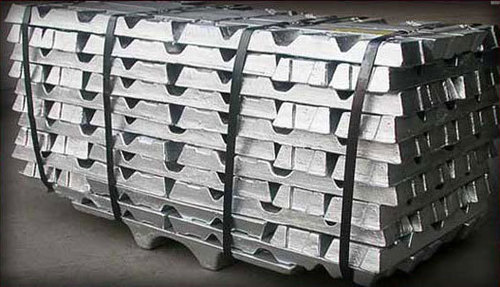
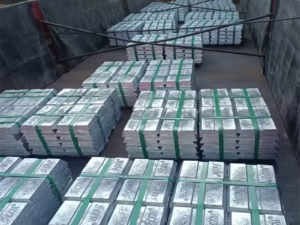
Steel-strapped palletized ingots (1 MT per pallet)
-
Shrink-wrapped & fumigated wooden crates
-
Big bags (2 MT) for automated handling
-
-
Shelf life: Unlimited when stored indoors (15–25°C, dry, non-acidic environment); no degradation in performance
3. Core Industrial Applications
-
Electronics manufacturing (lead-free solder):
Preferred for Sn-Ag-Cu (SAC) alloys due to lowest oxide formation and stable wetting angles → reduces solder voids by ~30% vs. 99.9% purity grades. -
Tinplate for food & beverage cans:
Superior corrosion uniformity vs. lower-grade tin ensures 24+ months of acidic food contact without pitting → directly lowers can failure warranty claims. -
Specialized alloys (bronze, Babbitt bearings):
Consistent grain structure improves machinability and fatigue strength in heavy-load bearings (e.g., wind turbines, marine engines) → extends component life by 15–20%. -
Chemical intermediates (stannous chloride, stabilizers for PVC):
Low arsenic and lead content meets RoHS and REACH compliance without post-refining → saves buyers testing costs per batch.
4. Competitive Advantages
-
Quality consistency: Every ingot lot is spectrometer-tested; certified CoA provided; non-destructive positive material identification (PMI) available.
-
Supply reliability: Multi-source refined tin strategy (Southeast Asia, South America, secondary recycled material) buffers against single-region disruptions. 12–15 kT annual controlled capacity.
-
Logistics capability: Export-wrapped to resist 40°C/90% RH for 90 days. Direct LCL/FCL from Penang, Batam, and Santos ports. Lead time: 14–21 days to major industrial zones globally.
-
Price competitiveness: Transparent LME-plus pricing with volume-based discounts for contracts >100 MT/month. No mid-term spot volatility surcharge.
-
Sustainability & documentation: Conflict-free smelter certification (CFSP); ISO 14001; ready Scope 3 emissions data for buyer ESG reporting. Recycled content option (30–70% post-consumer tin) available.
-
Technical support: Metallurgical consultation on solder alloy optimization and tin bath management included for contracts >500 MT/year.
5. Commercial & Supply Information
-
Minimum order quantity (MOQ): 20 metric tons (MT) (breakable into mixed packaging if requested)
-
Loading capacity per standard 20′ container: 25 MT (net weight) – floor-loaded or palletized with dunnage
-
Note: 40′ HC container capacity: up to 25 MT only (volume not limiting; weight-limited per container payload)
Reviews
There are no reviews yet.