
Description
1. Product Overview
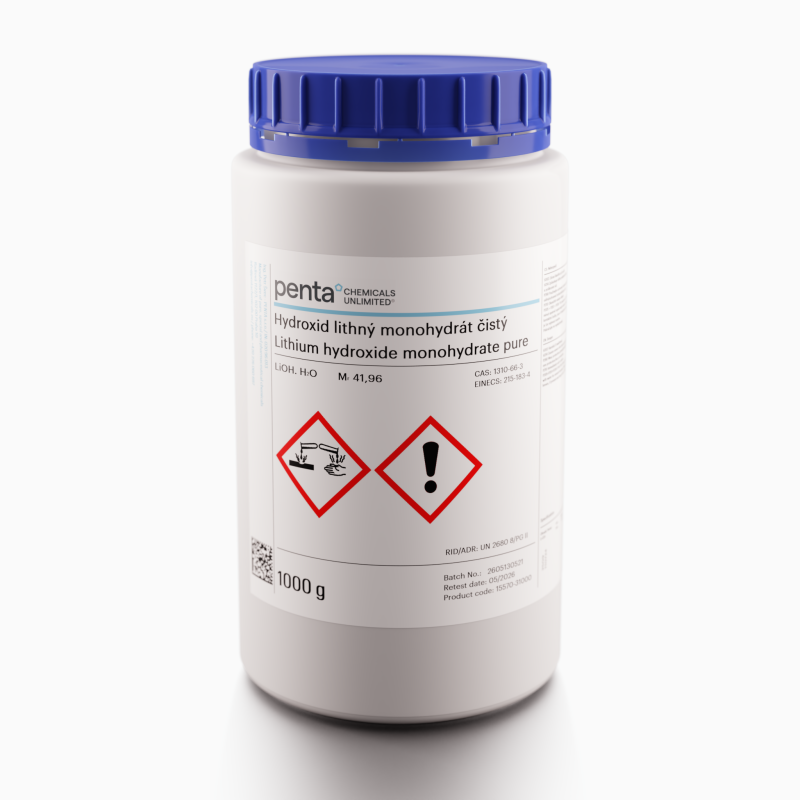
Lithium Hydroxide Monohydrate is a high-purity, inorganic chemical compound essential for the production of advanced cathode materials in lithium-ion batteries, particularly nickel-rich chemistries (NCM 811, NCA). Its primary industrial use lies in enabling high-energy-density electric vehicle (EV) batteries and high-performance grease formulations. The key value proposition is its superior electrochemical stability and lower melting point compared to lithium carbonate, delivering higher reactivity and consistency for battery manufacturers. Strategically, it is critical to the global energy transition, serving as the preferred lithium source for next-generation, long-range EV batteries where energy density and thermal stability are non-negotiable.
2. Key Specifications & Technical Characteristics
-
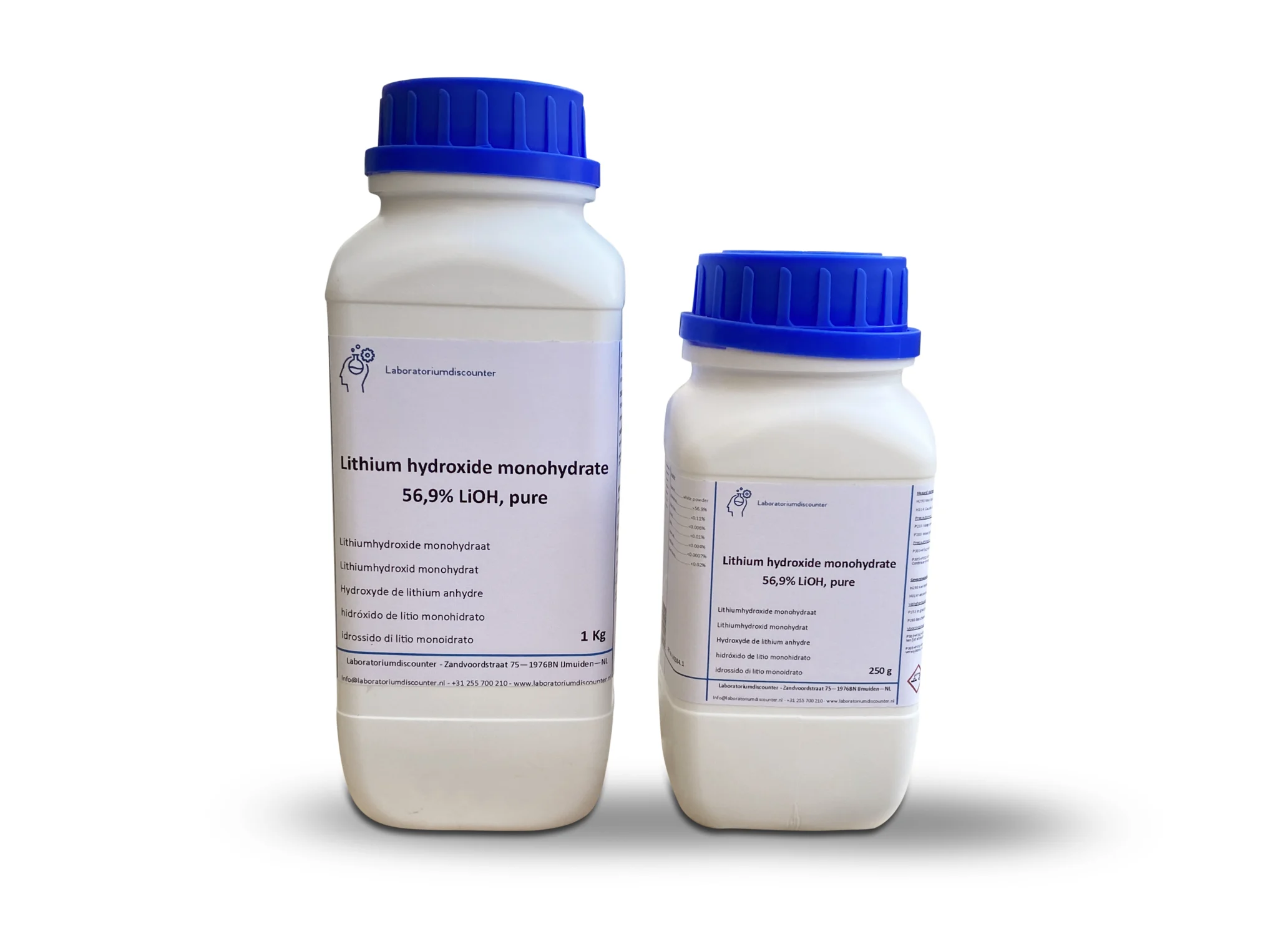
Chemical Composition: LiOH·H₂O (CAS No. 1310-66-3)
-
Purity Grade: Battery Grade ≥ 99.0% (min. 99.5% typical); Technical Grade ≥ 98.0% available for lubricants
-
Physical Characteristics:
-
Form: White, free-flowing crystalline powder or granular
-
Particle Size (D50): 6–12 µm (Battery Grade, optimized for cathode slurry mixing)
-
Bulk Density: 0.8–1.0 g/cm³ (tapped)
-
Key Impurity Limits (max): Na ≤ 0.005%; Ca ≤ 0.01%; Fe ≤ 0.0008%; SO₄²⁻ ≤ 0.01%; CO₂ ≤ 0.5%
-
-
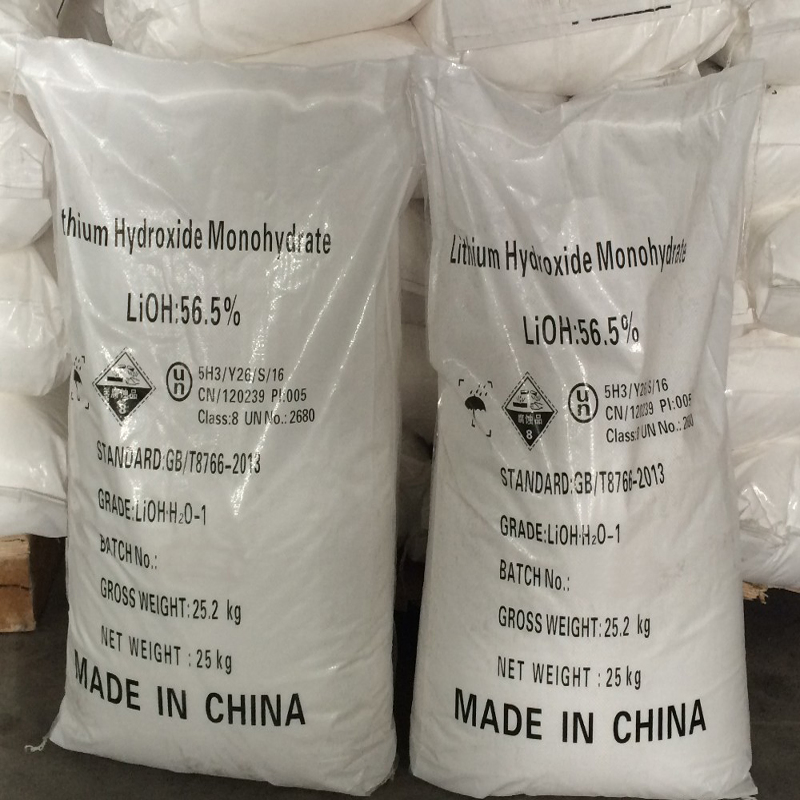
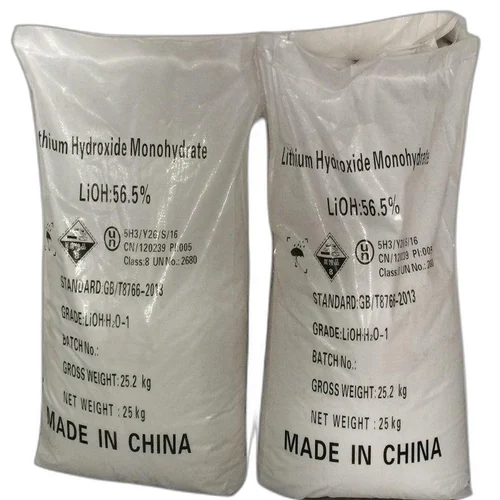
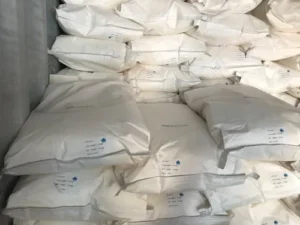
Packaging Options: 25 kg multi-layer moisture-barrier bags (sealed with PE liner), 1 MT super sacks, or custom bulk bagging with desiccant layers
-
Shelf Life: 12 months from date of manufacture when stored in original sealed packaging under 25°C / ≤60% relative humidity
3. Core Industrial Applications
-
Primary Industry: Electric Vehicle (EV) Lithium-Ion Battery Manufacturing
-
Use Case: Cathode precursor synthesis for NCM (nickel-cobalt-manganese) 811 and NCA (nickel-cobalt-aluminum) chemistries.
-
Performance Advantage vs. Li₂CO₃: Lower decomposition temperature (425°C vs. 720°C) reduces calcination energy costs by ~30% and yields finer, more uniform cathode particles, boosting cycle life by 15–20%.
-
-
Secondary Industry: High-Performance Lubricating Greases (Lithium Complex Greases)
-
Use Case: Thickening agent for automotive and industrial greases requiring extreme pressure resistance.
-
Advantage: Superior water resistance and dropping point (>260°C) compared to calcium or sodium soap-based greases, enabling longer relubrication intervals in heavy machinery.
-
-
Tertiary Industry: Air Purification (CO₂ Scrubbers) for submarines and spacecraft
-
Use Case: Chemical absorption of carbon dioxide in closed-loop life support systems.
-
Efficiency: 1 kg of LiOH·H₂O absorbs approximately 0.9 kg of CO₂ — higher gravimetric capacity than alternative hydroxides.
-
4. Competitive Advantages
-
Quality Consistency: Lot-to-lot CoV (coefficient of variation) < 2% for all critical impurities, certified via ICP-OES and ISO 17025-accredited batch testing. Each certificate of analysis (COA) includes particle size distribution and magnetic foreign matter count (<50 ppb ferrous particles for battery grade).
-
Supply Reliability: Vertically integrated supply chain with two dedicated production lines (annual capacity > 20,000 MT). Typical lead time: 4 weeks from contract confirmation.
-
Logistics Capability: UN Class 8 hazardous material specialists; direct container loading with nitrogen-purged moisture barrier packaging. Real-time tracking via digital logistics dashboard.
-
Price Competitiveness: Fixed-month pricing contracts with indexed adjustment to lithium spot market (Fastmarkets / S&P Global). Volume discounts for >500 MT annual commitments.
-
Sustainability: Zero liquid discharge (ZLD) manufacturing process; carbon footprint declaration available per product batch. Scope 1 & 2 emissions verified by third party.
-
Technical Support: Dedicated application engineers for cathode formulation optimization; free sample (1 kg) with full characterization report within 5 business days.
5. Commercial & Supply Information
-
Minimum Order Quantity (MOQ): 20 metric tons (MT) – one full container load for contract pricing; trial orders from 5 MT available at spot price +15%
-
Bulk Loading Capacity per 20FT Container: 20 MT net weight (18–22 MT depending on packaging type – 25 kg bags on pallets or 1 MT super sacks)
Reviews
There are no reviews yet.