



Description
1. Product Overview
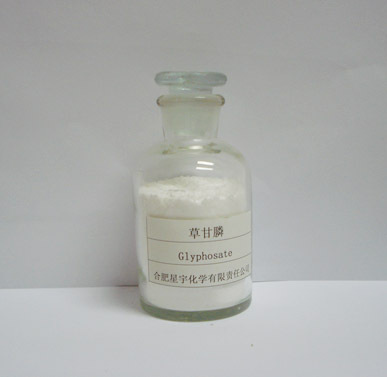
Glyphosate Herbicide Technical Grade is a non-selective, systemic broad-spectrum herbicide active ingredient manufactured for industrial formulation into end-use products. Its primary application is large-scale agriculture, forestry, and industrial vegetation control, where it serves as the foundational molecule for glyphosate-based formulations. The key value proposition is its unmatched efficacy in controlling annual and perennial weeds at a low cost per acre, backed by decades of field validation. Strategically, it remains indispensable for global food security, enabling no-till farming and efficient pre-harvest desiccation.
2. Key Specifications & Technical Characteristics
-
Chemical composition: N-(phosphonomethyl)glycine, technical grade, present as free acid or IPA salt equivalent
-
Purity level: ≥95% minimum (typical 95–97% w/w, acid basis)
-
Physical characteristics: White to off-white crystalline powder; bulk density 0.5–0.7 g/cm³; particle size 90% through 40 mesh
-
Packaging options: 25 kg woven bags with inner PE liner, 500 kg big bags, or 1000 kg supersacks
-
Shelf life: 36 months in original unopened packaging under dry, ambient conditions (20–30°C)
3. Core Industrial Applications
-
Primary industries: Agricultural chemical formulation, crop protection, forestry management, industrial vegetation control, nursery and turf production
-
Specific use cases: Manufacturing of water-soluble granules (SG), soluble concentrates (SL), and isopropylamine salt formulations; pre-plant burndown; post-emergence systemic weed control in glyphosate-tolerant crops; non-crop area sterilization
-
Performance advantage vs alternatives: Significantly higher systemic translocation efficiency than glufosinate or paraquat; lower cost per hectare; rainfast within 2–4 hours; no soil residual activity, allowing immediate replanting
-
Efficiency & cost advantage: Enables formulators to achieve stable tank-mix compatibility and consistent biological kill rates at lower active ingredient loads compared to off-spec inputs
4. Competitive Advantages
-
Quality consistency: Batch-to-batch purity variation ≤0.5% via HPLC testing; meets FAO and WHO specifications
-
Supply reliability: Dedicated manufacturing capacity of 50,000 MT/year with redundant supply lines; 24/7 logistics control tower
-
Logistics capability: Direct ex-warehouse stock in Rotterdam, Houston, Shanghai, and Santos; door-to-door tracking
-
Price competitiveness: Long-term fixed-price contracts available for 12-month horizons with quarterly adjustment floors
-
Environmental benefits: Low-VOC production process; no heavy metal catalysts used; supports reduced tillage and carbon sequestration
-
Technical support: Full SDS, CoA, stability data, and formulation guideline documents provided with each shipment
5. Commercial & Supply Information
-
Minimum Order Quantity (MOQ): 20 metric tons (one full 20-foot container equivalent)
-
Loading capacity: 20–25 MT per 20-foot dry container (depending on packaging: 20 MT for palletized big bags, 25 MT for compacted supersacks)
Reviews
There are no reviews yet.