

Description
Product Overview
Feed-grade monocalcium phosphate (MCP) is a highly bioavailable source of phosphorus and calcium, essential for optimizing bone development, growth efficiency, and feed conversion in livestock and aquaculture. It is primarily used in compound feed, premixes, and mineral supplements to prevent deficiencies and improve animal performance. By delivering superior digestibility and low heavy-metal content, MCP reduces environmental phosphorus excretion while maximizing nutritional uptake. Its strategic importance lies in enabling feed manufacturers to meet tightening global regulations on phosphorus emissions and animal health standards.
Key Specifications & Technical Characteristics
-
Chemical composition: Ca(H₂PO₄)₂·H₂O, typical P content 22–23%, Ca content 15–18%
-
Purity: ≥98% feed-grade, free of dioxins, melamine, and non-target contaminants
-
Physical form: White or slightly gray free-flowing powder or fine granule, particle size 90% through 0.5mm sieve, bulk density 0.8–1.0 g/cm³
-
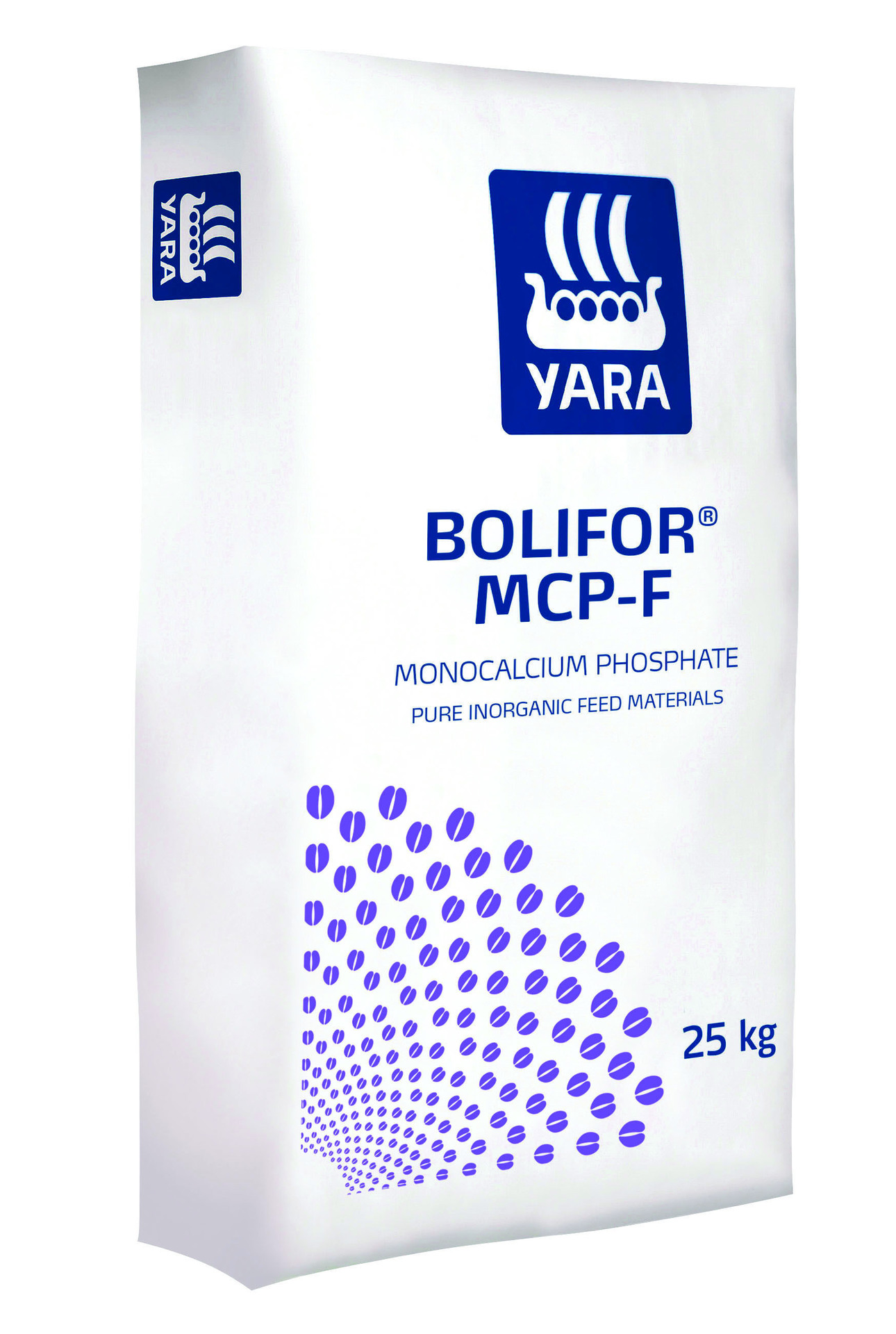
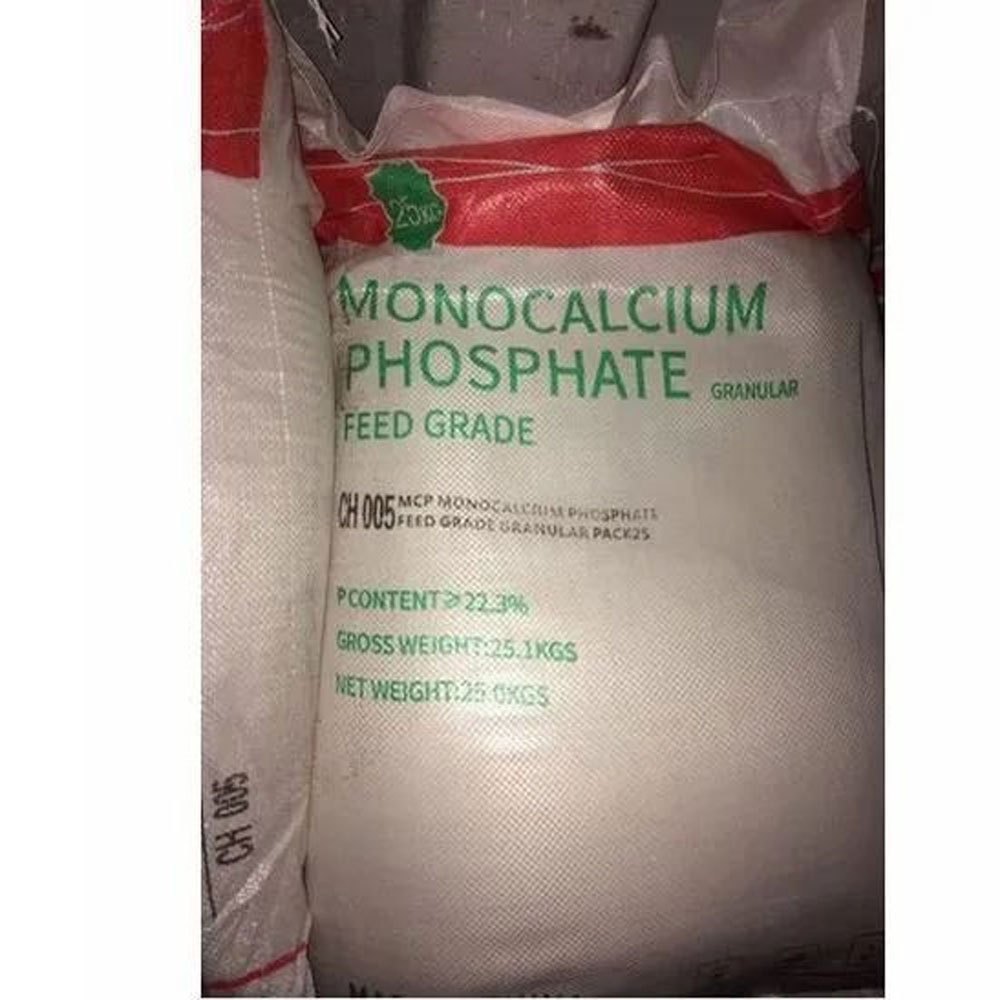
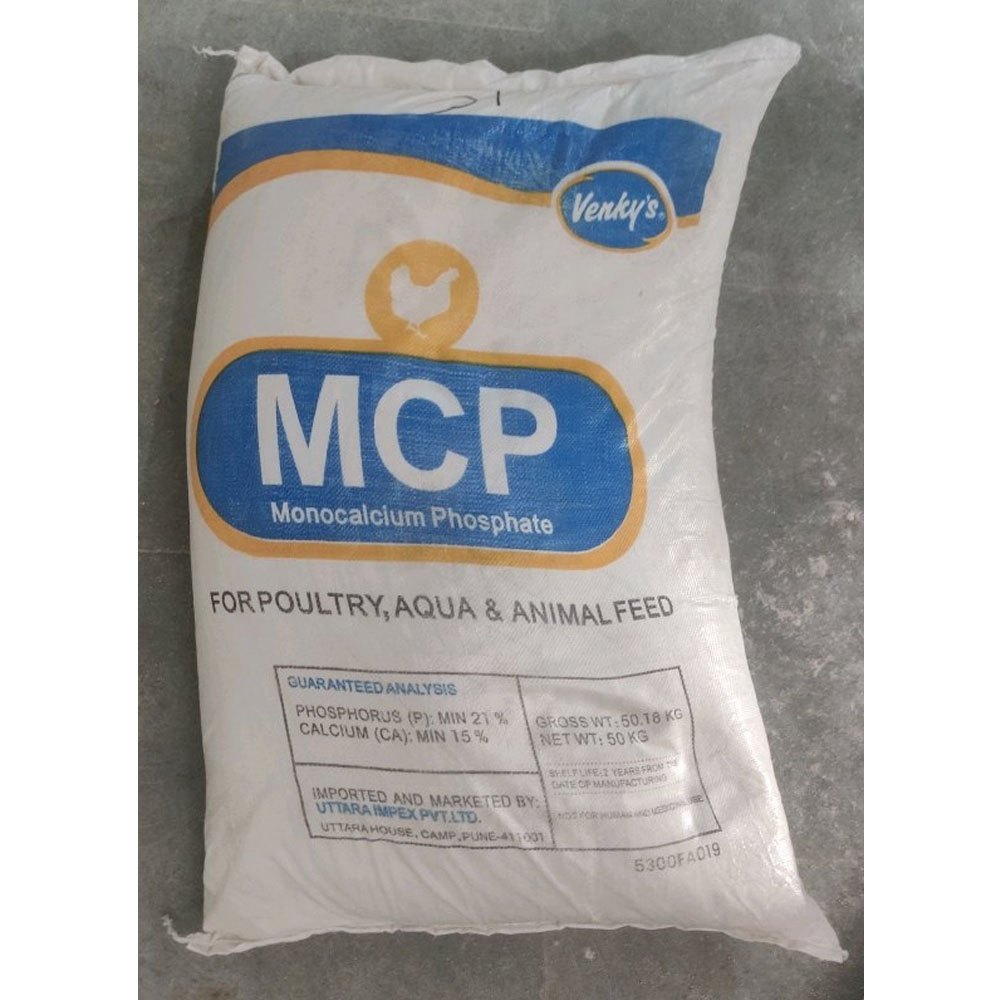
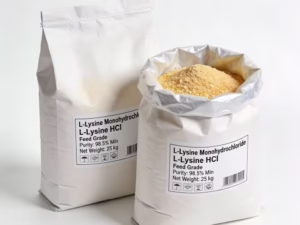
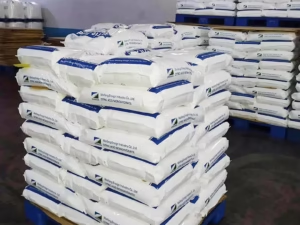
Packaging options: 25 kg multi-layer paper/PP bags, 1 MT big bags, or bulk tanker for large-scale silo delivery
-
Shelf life: 24 months when stored in dry, ventilated conditions (humidity ≤65%, temperature ≤35°C)
Core Industrial Applications
-
Poultry & swine feed: Prevents rickets and osteomalacia, improves eggshell quality and litter size; outperforms dicalcium phosphate (DCP) by 8–12% higher phosphorus digestibility
-
Aquafeed (salmon, shrimp, tilapia): Reduces water-soluble phosphorus loss → lowers eutrophication risk and pond treatment costs
-
Ruminant mineral blocks: Formulated with controlled acidity to avoid rumen degradation, ensuring by-pass phosphorus availability
-
Premix manufacturing: Consistent particle size eliminates segregation, reducing production downtime and batch quality deviations
Competitive Advantages
-
Quality consistency: ISO 22000 & FAMI-QS certified, with every batch tested for fluorine (<0.18%), arsenic (<10 ppm), and cadmium (<5 ppm)
-
Supply reliability: Dual-sourced raw phosphate rock from Morocco and Jordan → geopolitical risk mitigation
-
Logistics capability: Just-in-time delivery network covering Southeast Asia, MENA, and Latin America with 98.7% on-time rate
-
Cost competitiveness: Vertical integration from phosphoric acid production yields 7–9% lower landed cost than merchant traders
-
Sustainability: Produced using gypsum stack recirculation and 30% renewable energy; carbon footprint data available upon request
Commercial & Supply Information
-
Minimum order quantity (MOQ): 20 MT (one dry bulk container)
-
Loading capacity: 20 MT per standard 20-ft dry container (palletized: 24 MT per 40-ft HC)
Reviews
There are no reviews yet.