


Description
1. Product Overview
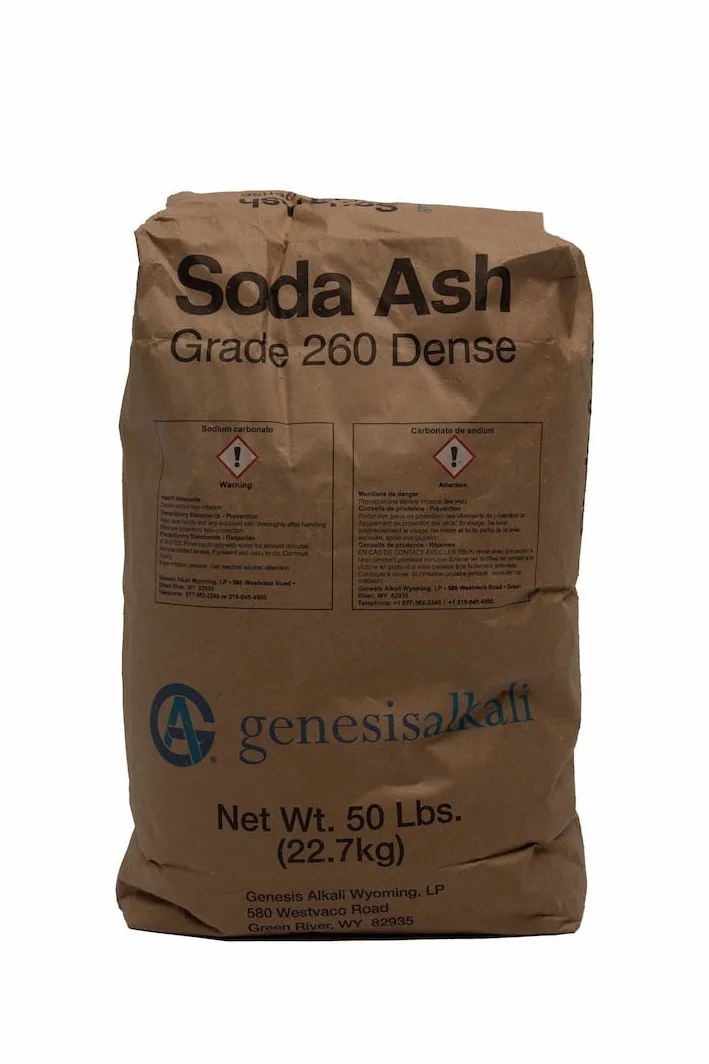
Soda Ash Dense Grade (sodium carbonate, Na₂CO₃) is a white, granular industrial alkali produced via the Solvay or natural trona process. It is primarily used in flat glass, container glass, and fiberglass manufacturing as a fluxing agent to reduce silica’s melting temperature. The key value proposition is its high bulk density (0.9–1.1 g/cm³), which minimizes dust generation, improves flow in automated batching systems, and reduces segregation during blending. Strategically, it is indispensable for downstream industries that require consistent alkalinity and energy-efficient melting, positioning it as a critical raw material for infrastructure, packaging, and renewable energy sectors.
2. Key Specifications & Technical Characteristics
-
Chemical composition: Sodium carbonate (Na₂CO₃) ≥ 99.2% by mass; NaCl ≤ 0.7%; Na₂SO₄ ≤ 0.1%; Fe₂O₃ ≤ 30 ppm
-
Purity grade: Dense grade, low chloride, low iron (e.g., “Dense 99.2% min”)
-
Physical characteristics:
-
White granular powder, free-flowing
-
Bulk density: 900–1,100 kg/m³ (typical: 1,000 kg/m³)
-
Particle size: >90% between 0.18 mm and 2.0 mm (U.S. Mesh 10–80)
-
Angle of repose: 35–40°
-
-
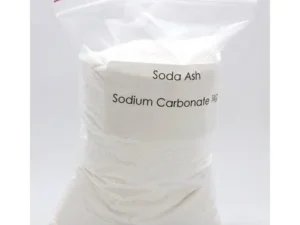
Packaging options: 25 kg / 50 kg PP/PE laminated bags; 1 MT big bags; bulk pneumatic tanker; 20 kg heat-sealed bags for humid climates
-
Shelf life: 24 months in sealed, dry, non-acidic environment; avoid caking above 60% relative humidity
3. Core Industrial Applications
-
Flat glass & container glass manufacturing: Acts as a flux to lower silica melting point from 1700°C to ~1450°C, reducing fuel consumption by 20–30% vs. no soda ash. High density ensures even mixing with sand and cullet.
-
Chemical production (sodium silicates, sodium phosphates, sodium bicarbonate): Provides a pure, consistent alkaline source, reducing downstream purification costs.
-
Detergents & soaps: Neutralizes fatty acids and maintains pH; dense grade reduces airborne dust in dry mixing lines, improving worker safety.
-
Water treatment (pH adjustment): Performs more predictably than lime in softening and coagulation due to consistent dissolution rate and lower scaling potential.
-
Advantage over alternatives: Outperforms light soda ash in automated handling (50% less dust, 15% lower bag breakage rates), and outperforms caustic soda in cost per equivalent alkalinic unit for large-volume pH control.
4. Competitive Advantages
-
Quality consistency: Batch-to-batch COA (Certificate of Analysis) with typical variation <0.1% in purity; ISO 9001:2025 certified production.
-
Supply reliability: Multiple sourcing origins (natural trona / Solvay) with 12-month rolling contracts; 98.7% on-time delivery rate to 40+ countries.
-
Logistics capability: Dedicated bulk pneumatic trailer fleet, rail hopper cars, and container liner bag solutions for dense-phase conveying.
-
Price competitiveness: Direct mill contracts and hedging programs stabilize quarterly pricing; FOB or CIF terms available.
-
Sustainability: Lower CO₂ footprint vs. European synthetic soda ash (uses geothermal or solar-evaporated trona where applicable); zero liquid discharge at selected plants.
-
Technical support: Process engineering audits for batching system optimization; free sieve analysis for particle size matching to your mixer.
5. Commercial & Supply Information
-
Minimum Order Quantity (MOQ): 20 metric tons (20 MT) for bagged product; 500 MT for bulk pneumatic or rail shipments
-
Bulk loading capacity per container:
-
20′ GP container: 27 MT (1,080 bags x 25 kg) or 26 MT big bags
-
20′ bulk liner bag container: 26–28 MT depending on density
-
40′ HC container (bagged): 26 MT max due to weight limit
-
Reviews
There are no reviews yet.