
Description
\
1. Product Overview
Bio-succinic acid is a high-purity, renewable platform chemical derived from sustainable fermentation of biomass, serving as a direct substitute for petrochemical-based succinic acid. Its primary industrial use is as a building block for polyesters, polyurethanes, plasticizers, solvents, and biodegradable polymers. The key value proposition lies in delivering identical or superior performance to fossil-based alternatives while enabling customers to reduce their carbon footprint by up to 90%. Strategically, this product is critical for enterprises future-proofing their supply chains against volatile petrochemical prices, tightening ESG mandates, and shifting consumer demand for bio-derived materials.
2. Key Specifications & Technical Characteristics
-
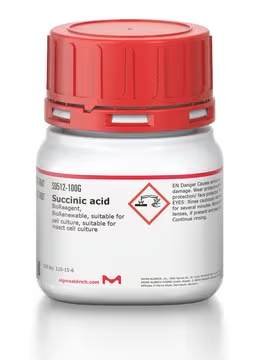
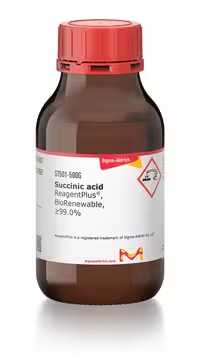
Chemical composition: Bio-succinic acid (C₄H₆O₄), ≥99.5% purity, meeting ASTM D6866 bio-based carbon content certification
-
Purity grade: Premium industrial grade (also available in polymer grade)
-
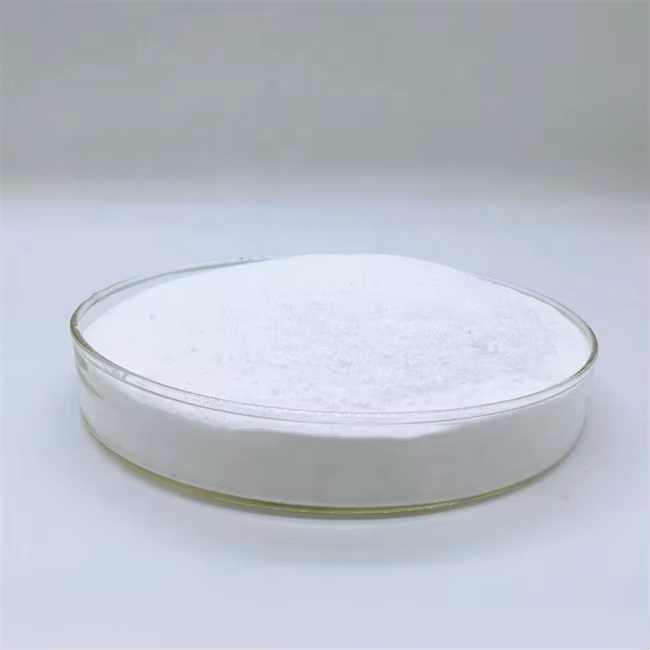
Physical form: White crystalline powder
-
Particle size distribution: 100% passing through 40 mesh; controlled fines (<5% below 200 mesh)
-
Bulk density: 0.75–0.85 g/cm³
-
Melting point: 185–187°C
-
Moisture content: ≤0.5% by weight
-
Ash content: ≤0.1%
-
Packaging options: 25 kg multi-wall paper bags with PE liner; 1,000 kg FIBC super sacks; bulk pneumatic tanker (powder)
-
Shelf life: 24 months from date of manufacture when stored in dry, ambient conditions (15–30°C) in sealed original packaging
3. Core Industrial Applications
-
Primary industries: Bioplastics, polyurethanes, coatings & adhesives, personal care, de-icers, and pharmaceutical intermediates
-
Specific use cases:
-
Polybutylene succinate (PBS) production – Fully biodegradable packaging, agricultural mulch films, and compostable tableware
-
Polyester polyols – High-performance polyurethane foams and elastomers with lower viscosity and faster processing
-
Plasticizers – Non-phthalate, bio-based plasticizers for PVC and engineered plastics
-
*1,4-Butanediol (BDO) intermediate* – For high-value engineering plastics and spandex fibers
-
-
Why it performs better than alternatives: Compared to petrochemical succinic acid, bio-succinic acid offers identical chemical reactivity with up to 20% lower process energy requirements in esterification reactions. It enables manufacturers to achieve “drop-in” replacement without retooling, while reducing downstream VOC emissions in coating formulations.
4. Competitive Advantages
-
Quality consistency: ISO 9001:2025 certified production with SPC-controlled batch-to-batch variation <2% RSD; each lot accompanied by CoA, GC purity trace, and heavy metals analysis (ICP-MS)
-
Supply reliability: Dual-sourced fermentation capacity across two continents; 99.5% on-time-in-full (OTIF) performance over 36 months
-
Logistics capability: Direct-to-plant pneumatic delivery or containerized shipments with real-time track-and-trace via digital logistics platform
-
Price competitiveness: Long-term fixed-price contracts available (12–36 months) with price adjustment mechanism tied to agricultural feedstock indices, not crude oil
-
Sustainability credentials: ISCC PLUS certified; carbon footprint 3.2 kg CO₂e per kg (vs. 32 kg for petrochemical route); zero hazardous waste in production
-
Technical support: In-house applications lab offering formulation optimization, compatibility testing, and regulatory documentation (REACH, TSCA, EPA)
5. Commercial & Supply Information
-
Minimum order quantity (MOQ): 20 MT (bulk order)
-
Loading capacity: 20 MT per 20-foot standard dry container (palletized 25 kg bags) or 22 MT per 20-foot container (FIBCs)

Reviews
There are no reviews yet.