
Description
-
Product Overview
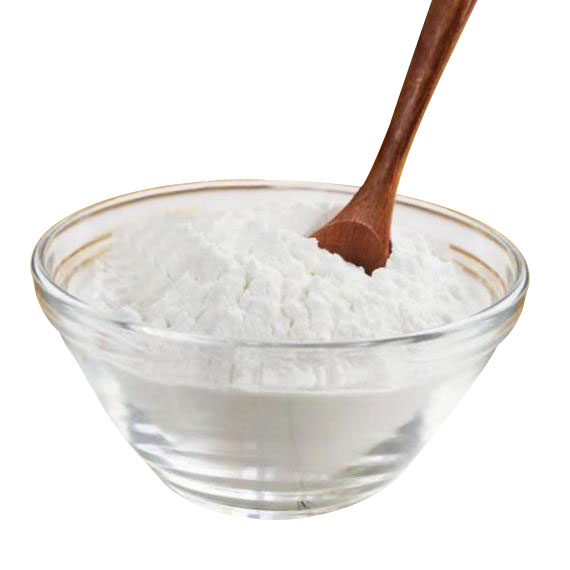
Modified Starch (E14xx series) is a family of chemically or physically modified food‑ and industrial‑grade starches engineered to deliver predictable rheology, enhanced stability, and tailored functional performance across high-volume processes. Primarily used as thickening, binding, film‑forming, stabilizing, and texture‑control agents in food processing, paper coating, adhesives, textiles, pharmaceuticals, and construction formulations, it replaces variable native starch with consistent, application‑specific performance. The key value proposition is reproducible process control—reliable viscosity, shear/thermal tolerance, and improved end‑product quality—reducing waste, rework, and energy or additive costs. Strategically, the E14xx series enables manufacturers and formulators to standardize formulations across plants and geographies, lowering total cost of ownership and accelerating time‑to‑market for new SKUs.
-
Key Specifications & Technical Characteristics
-
Chemical family: Modified starches derived from tapioca, maize (corn), or potato base; modifications include acetylation, cross‑linking, hydroxypropylation, and oxidization (E1410–E1442 range).
-
Active composition: Primarily polysaccharide (amylose/amylopectin) backbone with specific substituent groups per grade.
-
Typical purity/grade: Industrial/Food‑grade selectable; residual moisture and ash controlled per specification (typical dry matter ≥ 90–92%).
-
Functional grades: Viscosity stabilised (cross‑linked), instant/dissolvable (pregelatinized), film‑forming (acetylated/hydroxypropyl), oxidative (clarifying/bleaching) — supplied to match process demands.
-
Physical form: Powder/granule; color off‑white to creamy; free‑flowing granules for automated dosing.
-
Particle size: Typical D50 50–300 µm (grade dependent); low fines formulation available for reduced dust.
-
Bulk density: 0.45–0.70 g/cm³ (packaging and grade dependent).
-
Solubility & activation: Cold‑water soluble grades (pregelatinized) and heat‑activated grades available.
-
Thermal/shear tolerance: High‑stability cross‑linked grades maintain viscosity under high temperature and shear; denaturation thresholds specified per grade.
-
Residual reagents: Compliant with regulatory limits for food/pharma where applicable (certificate of analysis on request).
-
Packaging options: 25 kg paper‑poly bag, 500 kg FIBC (big bag), 20 MT bulk palletized, ISO tanker/cistern solutions for slurry forms.
-
Shelf life: 12–36 months depending on grade and storage (kept dry, <65% RH); shelf‑life stability data provided with COA.
-
Core Industrial Applications
-
Food & Beverage: Emulsification, viscosity control, freeze–thaw stability, sauce and dressing bodying, bakery crumb structure, and low‑fat formulations; chosen for clean label compatibility where permitted.
-
Paper & Board Coating: Enhances coating viscosity, improves ink holdout and surface strength, reduces raw material consumption by improving coating efficiency.
-
Adhesives & Paper Sizing: Provides predictable tack, adhesive strength, and open time for corrugating, lamination, and carton manufacture, outperforming native starch in shear stability.
-
Textiles & Sizing: Improves warp thread protection, film uniformity, and wash‑off characteristics with reduced energy usage in desizing.
-
Construction & Mortars: Acts as rheology modifier and water retention agent in gypsum, cement renders, and joint compounds, improving workability and reducing cracking.
-
Pharmaceuticals & Personal Care: Tablet binders, controlled‑release excipients, thickening agents in creams and gels where pharmacopoeial grades are specified.
Why it outperforms alternatives: -
Consistency: Modified chemistries deliver repeatable viscosity and setting behavior vs. native starch variability.
-
Process robustness: Cross‑linked and pregelatinized grades resist shear/thermal breakdown, maintaining product throughput.
-
Cost efficiency: Higher functional performance allows lower dosing vs. inferior thickeners; reduces downstream defects and reprocessing.
-
Regulatory/pathway flexibility: Food/pharma grades available with documentation to ease compliance.
-
Competitive Advantages
-
Quality consistency: Tight manufacturing controls and batch COAs ensure narrow specification tolerance for viscosity, moisture, and particle size.
-
Supply reliability: Multiple raw‑material sourcing, safety stock strategy, and regional warehousing reduce lead‑time risk for global buyers.
-
Logistics capability: Available in palletized 20 MT bulk shipments, FIBC, and slip‑sheeted pallets for efficient container utilization; optional vendor‑managed inventory for large accounts.
-
Price competitiveness: Economies of scale and grade‑tailoring enable competitive per‑kg costs at commercial volumes; value priced vs. specialty polymers when lifecycle costs are considered.
-
Sustainability: Options for native‑source traceability (non‑GMO where required), lower energy formulations (cold‑water soluble grades), and reduced VOC/solvent use compared with some synthetic thickeners.
-
Technical support: Detailed technical data sheets, application trials, rheology characterization, stability studies, and on‑site formulation assistance available to accelerate qualification.
-
Commercial & Supply Information
-
Minimum order quantity (MOQ) BULK: 20 MT.
-
Loading capacity (MT per container): Standard 20 ft container nominal capacity up to 20 MT (palletized/20 kg bag configuration), 40 ft container up to 24–26 MT depending on pallet and bag configuration; FIBC and bulk palletization optimized to maximize container load.

Reviews
There are no reviews yet.