
Description
-
Product Overview
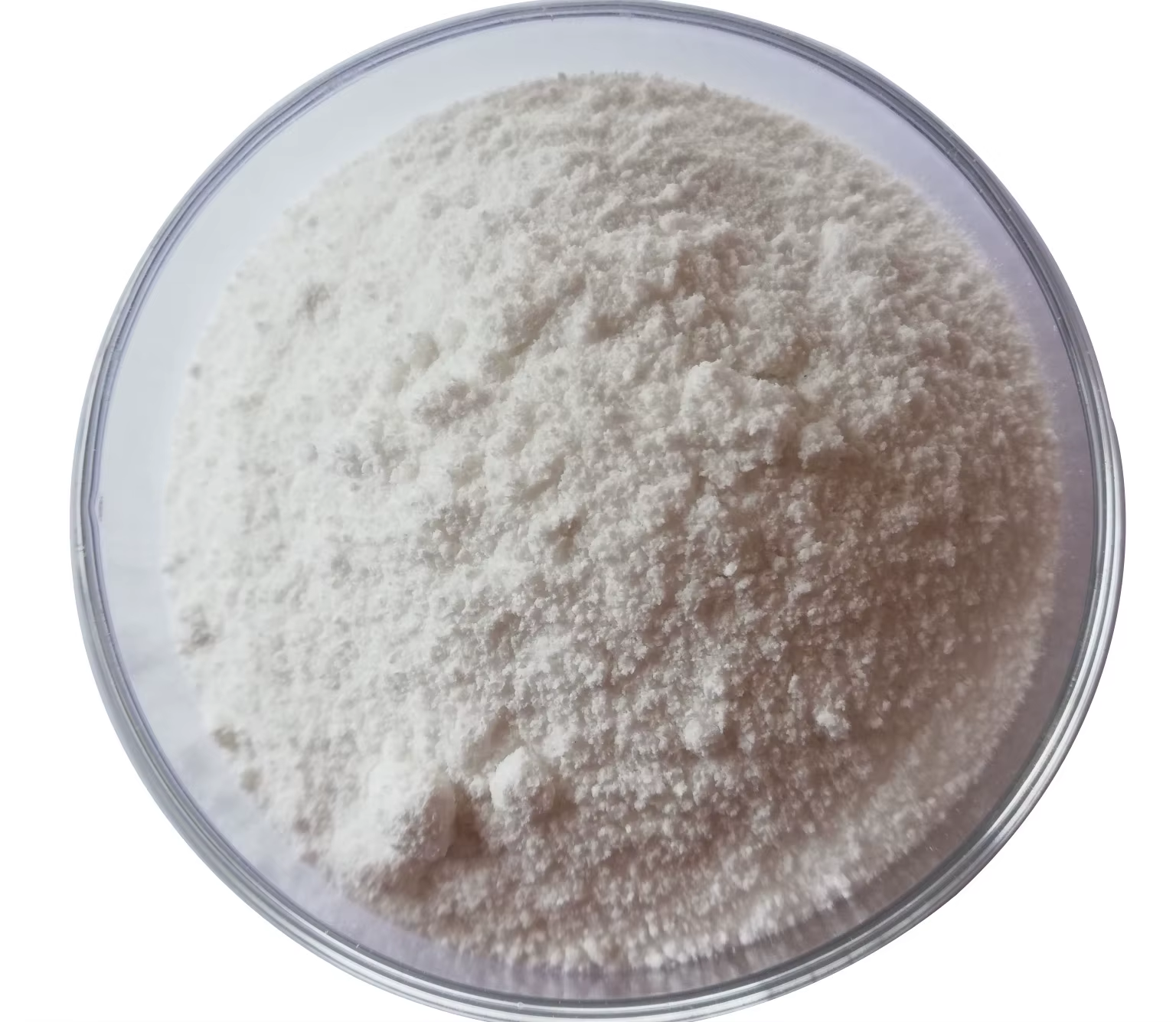
Calcium Lactate is a high-purity, industrial-grade calcium salt of lactic acid supplied as a free-flowing white powder. It serves as a reliable source of bioavailable calcium and a functional processing aid across food-grade, pharmaceutical precursor, water-treatment, and specialty chemical manufacturing. The product delivers consistent chemical performance (stability, solubility, and low residual impurities) that reduces process variability and downstream rework. As an easily handled, cost-effective calcium donor with strong supply-chain reliability, it is strategically important for manufacturers seeking to secure uninterrupted production, meet quality specifications, and optimize total cost of ownership.
-
Key Specifications & Technical Characteristics
-
Chemical composition: Calcium lactate, Ca(C3H5O3)2 (anhydrous or specified hydrated form on request)
-
Typical assay / purity: ≥ 96.0% (industrial grade); higher-purity grades available on request
-
Impurities: Low heavy metals (Pb, Cd, Hg below industry limits), low residual lactic acid; detailed certificate of analysis supplied per batch
-
Physical form: Free-flowing crystalline powder
-
Color: White to off-white
-
Particle size: D50 typically 50–250 µm (custom milling or sieving available)
-
Bulk density: 0.6–0.8 g/cm³ (tapped density on request)
-
Solubility: Readily soluble in water; solubility increases with temperature
-
pH (aqueous solution, typical): mildly acidic to neutral depending on concentration
-
Moisture content: ≤ 3.0% (hydrated variants specified separately)
-
Packaging options: 25 kg multi-wall paper bags with PE liner, 500 kg FIBCs (bulk bags), and options for palletised shrink-wrapped cartons
-
Shelf life: 12–24 months under recommended storage (cool, dry, sealed packaging); stability data available on request
-
Documentation: Certificate of Analysis (CoA), Safety Data Sheet (SDS), and optional Quality Release documentation per shipment
-
Core Industrial Applications
-
Food & Beverage: Used as a calcium fortificant, acidity regulator, and buffering agent in bakery, dairy, beverage, and confectionery formulations; supports label-friendly ingredient lists and predictable solubility vs. alternatives (e.g., calcium carbonate).
-
Pharmaceutical & Nutraceutical: Excipient and calcium source in tablets, syrups, and supplements where bioavailability and gentle gastric tolerance are required.
-
Water Treatment & Corrosion Control: Calcium source in dosing formulations for hardness adjustment and corrosion inhibition systems; stable handling reduces dosing variability.
-
Chemical Intermediates & Specialty Manufacturing: Precursor for lactate salts, complexation agents, and biodegradable formulations; beneficial where low heavy-metal profiles are required.
-
Construction Additives & Cement Chemistry: Used in specialty cements and admixtures to influence setting characteristics and improve product consistency where compatible.
Why it outperforms alternatives: -
Superior solubility and more predictable dissolution profile than many carbonate-based calcium sources, reducing settling and filtration issues.
-
Lower abrasivity and dust generation versus some mineral calcium sources, improving handling and process uptime.
-
Consistent low-impurity profile reduces risk of downstream contamination, rework, and formulation variability.
-
Competitive Advantages
-
Quality consistency: Batch-to-batch CoA and in-house QC protocols ensure narrow variance on assay, moisture, and particle size.
-
Supply reliability: Secured upstream sourcing and buffer inventories to support continuous deliveries for long production cycles.
-
Logistics capability: Flexible packaging (25 kg bags, FIBCs) and efficient loading processes to support containerized export and bulk shipments with on-time delivery performance.
-
Price competitiveness: Economies of scale for BULK orders and transparent commercial terms tailored for industrial procurement.
-
Sustainability: Manufactured with processes that minimize waste streams; available options for lower-carbon logistics and documentation to support customer ESG reporting.
-
Technical support: Application guidance, handling recommendations, and stability data provided; custom milling, sieving, and tailored packaging available per contract.
-
Commercial & Supply Information
-
Minimum order quantity (MOQ): BULK 20 MT
-
Loading capacity (MT per container): Standard 20-foot container up to 20 MT (bagged, palletised); 40-foot container up to 24–26 MT depending on packaging configuration; FIBC and bulk arrangements subject to packing plan and local regulations


Reviews
There are no reviews yet.