
Description
Product Overview
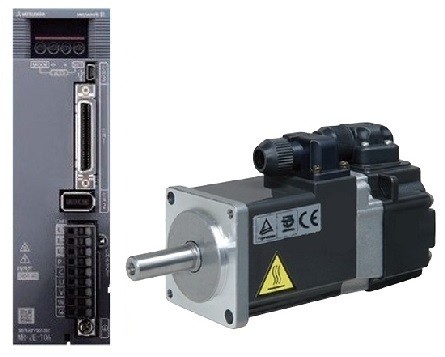
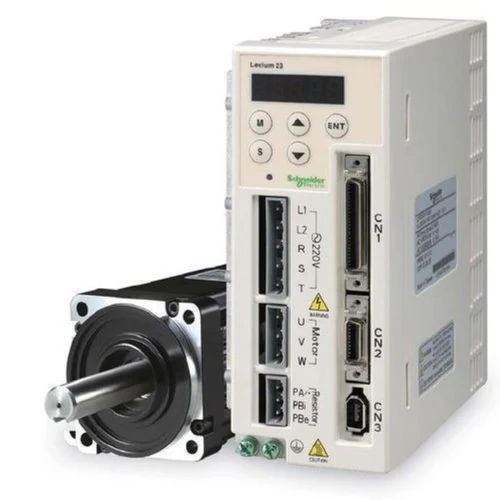
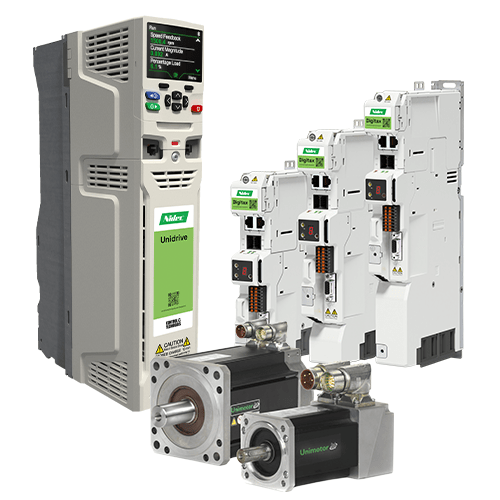
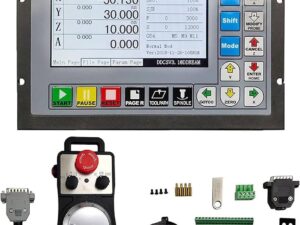
Industrial Servo Drive Motion Control is a high-performance electromechanical drive system designed to control servo motors with precision, responsiveness, and scalable integration for automated industrial machinery. Primarily used for motion control in robotics, CNC machining, assembly lines, and material-handling systems, it delivers deterministic positioning, velocity, and torque control across demanding applications. The product’s key value lies in sub-millisecond control loops, robust industrial networking (EtherCAT/Profinet), and modular power/IO options that reduce cycle times and increase throughput. Strategically, adopting this servo drive improves machine utilization, lowers downtime risk, and enables OEMs and end-users to meet higher automation and quality targets while simplifying global deployment.
Key Specifications & Technical Characteristics
-
Drive type: Closed-loop digital servo drive with integrated motion controller and multi-axis coordination.
-
Power range: 0.5 kW to 75 kW per axis (model-dependent).
-
Motor compatibility: Synchronous permanent-magnet (PM) and brushless DC (BLDC) servo motors.
-
Control performance: Control loop update ≤1 ms; position resolution up to 1 arc-second (dependent on encoder).
-
Communication interfaces: EtherCAT, Profinet, Modbus TCP, CANopen; optional industrial Ethernet convergence modules.
-
Protection & compliance: IP20 standard enclosure (optional IP54/IP65-rated cabinets), overcurrent, overvoltage, thermal, and short-circuit protections; CE, UL, and RoHS compliance.
-
Materials and construction: Base chassis and heat-sink: anodized aluminum alloy and cold-rolled steel; high-reliability electrolytic and film capacitors rated for industrial temperature cycles.
-
Thermal characteristics: Integrated forced-air or liquid-cool options; operating temperature range -20 °C to +55 °C (extended models available).
-
Encoder support: Incremental and absolute encoders, SSI, BiSS, and EnDat protocols.
-
Safety features: STO (Safe Torque Off) hardware support, optional SIL2/PLe functional safety modules.
-
Physical characteristics: Rack- or panel-mount form factors; typical module dimensions vary by power class (compact modules for ≤5 kW, modular cabinets for ≥10 kW); weight range 1.2 kg (smallest) to 45 kg (cabinet modules).
-
Packaging options: Palletized wooden crates for single units, steel-frame crates for cabinet systems, sealed humidity-barrier packaging for export.
-
Shelf life / storage: Non-operational storage recommended 12 months at 10–40 °C, <75% RH; battery-backed memory modules specified with 3–5 year expected life depending on maintenance.
Core Industrial Applications
-
Primary industries: Automotive manufacturing, semiconductor equipment, aerospace manufacturing, packaging and converting, metalworking (CNC), textiles, printing, pharmaceutical production, and logistics automation.
-
Specific operational use cases: Multi-axis CNC contouring, robotic pick-and-place and assembly, synchronized indexing for rotary transfer systems, gantry motion control for large-format manufacturing, high-speed labeling and packaging pistons, precision wafer handling and stage control.
-
Why it performs better: Deterministic fieldbus support and sub-millisecond loops enable tighter motion profiles and reduced settling times versus general-purpose inverters. Native multi-axis coordination and advanced feedforward algorithms minimize overshoot and improve throughput. High torque-to-inertia control combined with adaptive tuning reduces commissioning time and maximizes repeatability.
-
Efficiency, durability, cost advantages: Higher control fidelity lowers scrap and rework rates; energy recovery and optimized drive algorithms reduce power consumption in cyclic applications; ruggedized components and thermal management extend MTBF, reducing lifetime cost of ownership compared with lower-tier drives.
Competitive Advantages
-
Quality consistency: ISO/TS-aligned manufacturing processes, batch traceability for critical components, and factory-configured parameter validation ensure consistent performance across lots.
-
Supply reliability: Global distribution footprint with regional stocking centers, configurable lead-time SLAs, and options for contract manufacturing to secure long-term supply.
-
Logistics capability: Export-ready packaging, pallet optimization for ocean container loads, and coordinated customs documentation support for cross-border B2B trade.
-
Price competitiveness: Tiered pricing and volume discounts for OEM and systems integrator contracts; TCO-focused proposals that factor energy savings and reduced downtime.
-
Sustainability benefits: Designed for recyclability with segregated aluminum and steel modules, lead-free components, and power-efficient operation; compliant with major environmental standards.
-
Technical support & documentation: Comprehensive OEM-grade documentation including wiring diagrams, application notes, tuning wizards, PLC and HMI code samples, 24/7 technical hotline, and optional on-site commissioning and training packages.
Commercial & Supply Information
-
Minimum order quantity (MOQ): BULK 20 MT
-
Loading capacity (MT per container): Typical loading calculation by mass: one 20′ container ≈ 20 MT gross usable (subject to unit dimensions and packaging); one 40′ container ≈ 26–28 MT gross usable. Final loading depends on configured modules and crate dimensions; consult logistics team for palletization plans.
Reviews
There are no reviews yet.