

Description
1. Product Overview
TSR-20 (Technically Specified Rubber grade 20) is a standard-grade natural rubber produced from high-quality cup lumps or unsmoked sheets, processed under strict ISO 2000 specifications. It is primarily used in the production of heavy-duty tires, conveyor belts, shock absorbers, and automotive components where consistent viscosity and low dirt content are mission-critical. The key value proposition lies in its superior plasticity retention index (PRI), ensuring predictable curing behavior and reduced batch-to-batch variation. Strategically, TSR-20 serves as the workhorse grade for Asian and global tire manufacturers, balancing cost efficiency with robust mechanical performance in high-throughput compounding lines.
2. Key Specifications & Technical Characteristics
-
Material Components: 100% natural poly(cis-1,4-isoprene) from hevea brasiliensis latex, technically specified
-
Purity / Grade: TSR 20 (ASTM D2227 / ISO 2000:2019 compliant); Dirt content ≤0.05 wt%; Ash content ≤0.60 wt%
-
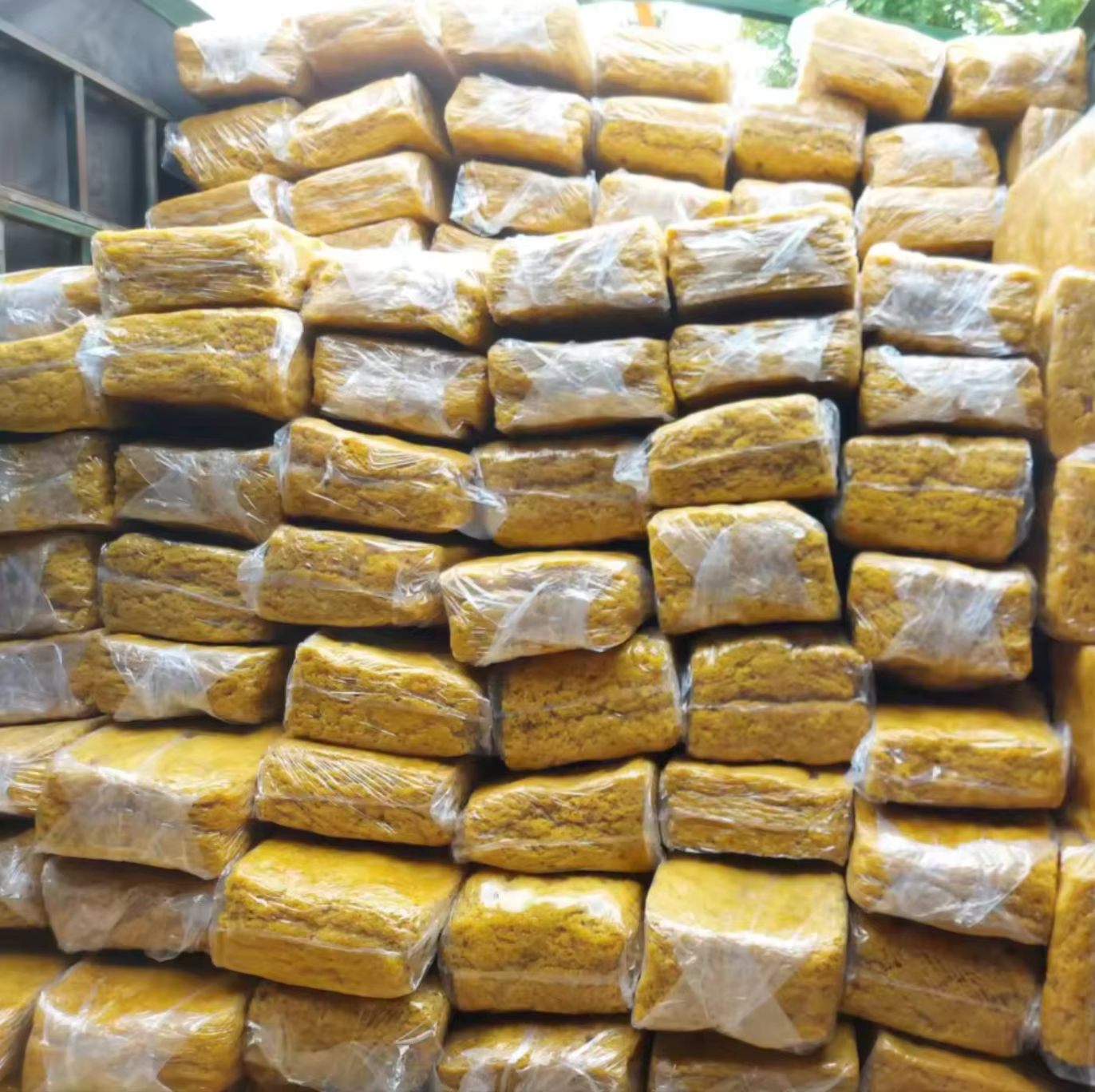
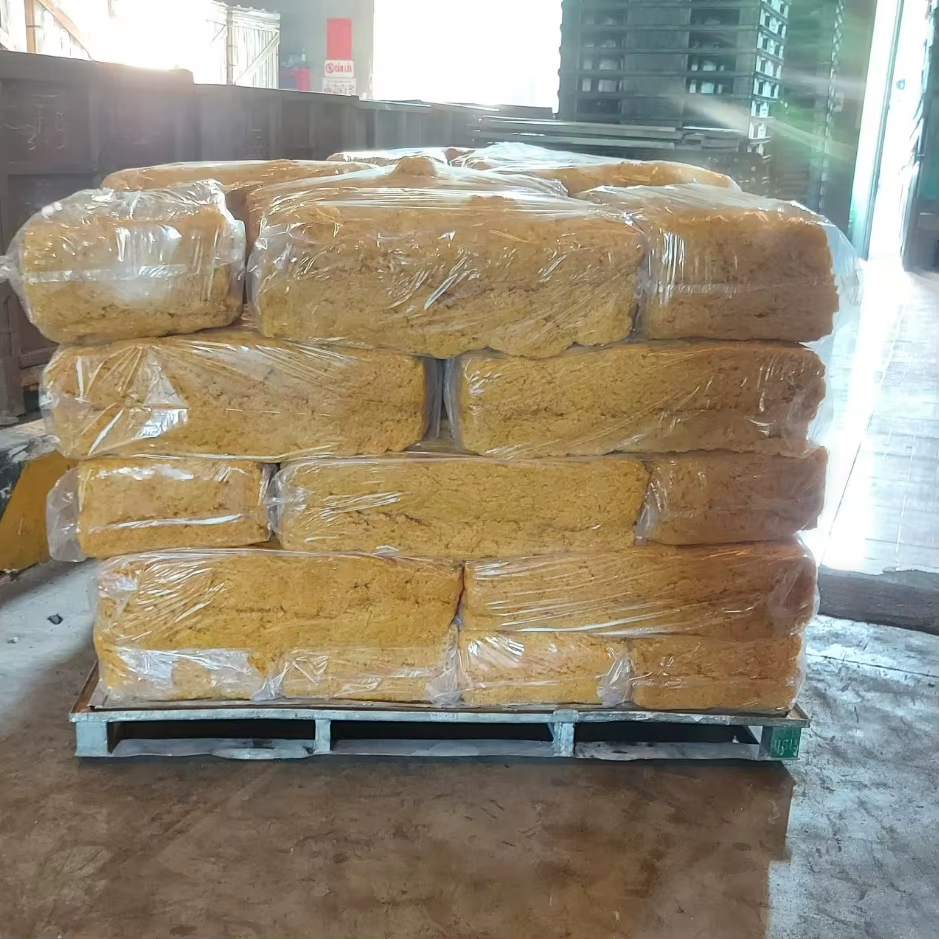
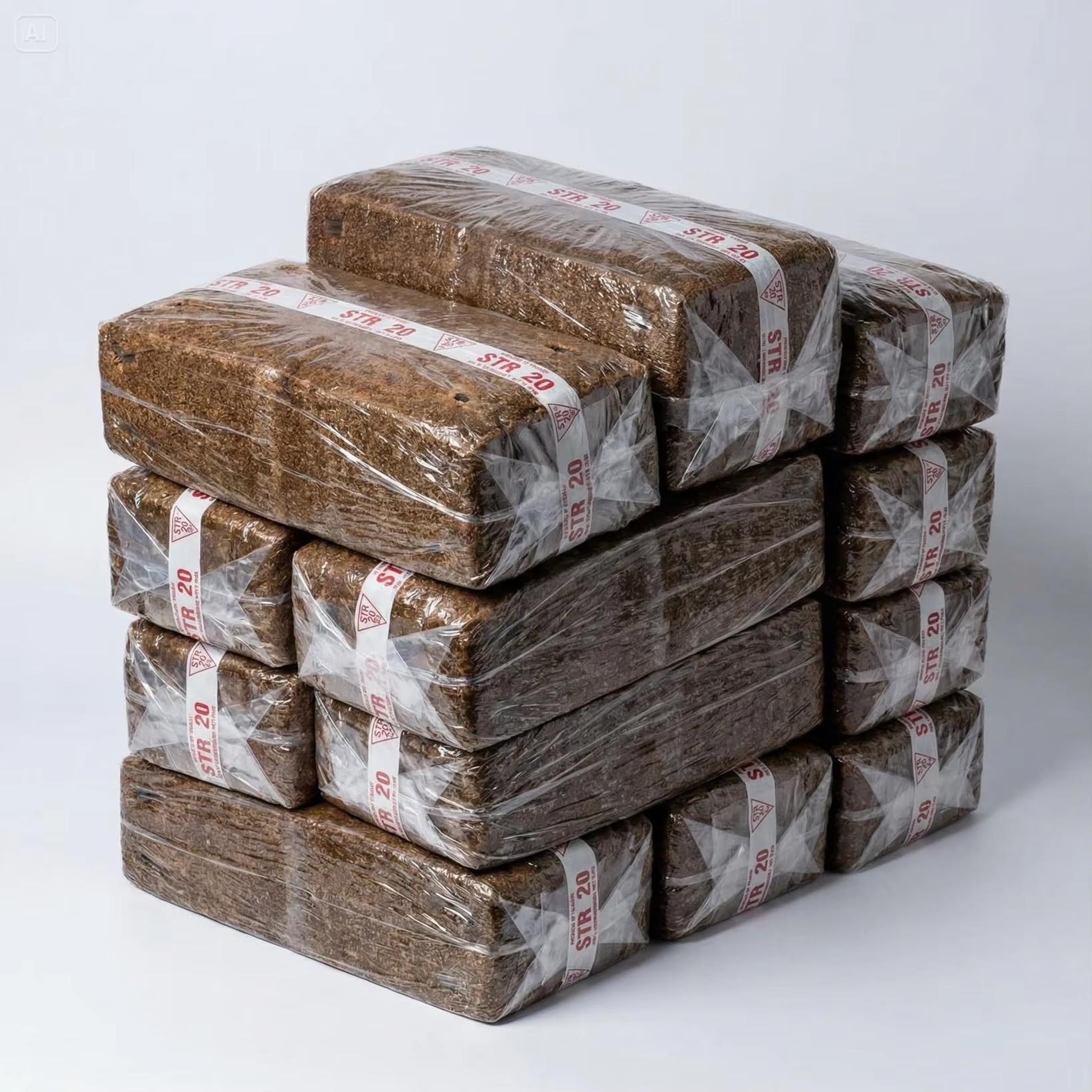
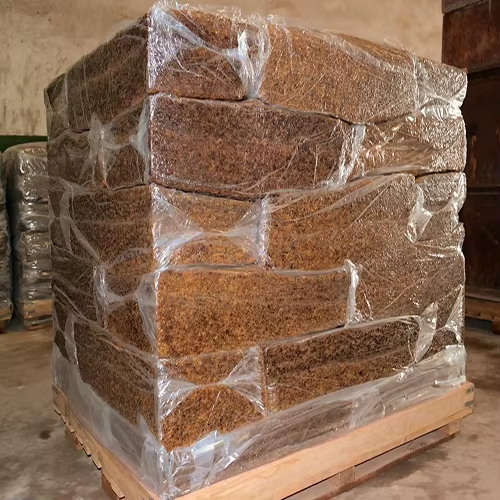
Physical Characteristics: Homogeneous solid block; color – light to medium brown; particle size – 33.3 kg rectangular bale; density approx. 0.92 g/cm³
-
Packaging Options: 33.3 kg polyethylene-wrapped bales; 1.2 MT shrink-wrapped pallets; 20.0 MT container-load break-bulk
-
Shelf Life: 12 months when stored in original packaging below 30°C, away from direct sunlight, oil, and ozone
3. Core Industrial Applications
-
Primary industries: Tire manufacturing (truck/bus radial, OTR), automotive rubber parts, conveyor belting, and vibration dampers
-
Operational use cases: As a lower-cost substitute for TSR-L in thick-section moldings; as the base polymer for all-steel radial truck tire treads and sidewalls requiring high tear resistance
-
Why it outperforms alternatives: Compared to synthetic polyisoprene, TSR-20 offers higher green strength and lower heat buildup under cyclic loading; compared to TSR-10, it provides better extrusion smoothness with only a 5–7% modulus trade-off
-
Cost advantage: 15–20% lower raw material cost than TSR-CV while maintaining sufficient Mooney viscosity (ML 1+4’ 70–85) for heavy-duty applications
4. Competitive Advantages
-
Quality consistency: SPC-controlled Mooney viscosity (target 78 ± 7) with PRI > 60 – enables shorter mixing cycles and fewer cure rejects
-
Supply reliability: Direct mill-gate allocation from 3 certified Indonesian/SIVBOK-supplier estates; 6,000 MT monthly capacity with safety stock in Singapore and Rotterdam
-
Logistics capability: Containerized 20 MT per TEU; door-to-door CFR/CIF to major SE Asia, China, India, and Europe ports within 21–35 days
-
Price competitiveness: Index-linked (SICOM TSR-20) minus $15/MT for spot ≥500 MT; volume linear discounts from 1,000 MT/month
-
Sustainability: Fully traceable to non-deforestation supply chains (EUDR-ready); carbon footprint data sheets available per ISO 14067
5. Commercial & Supply Information
-
Minimum order quantity (MOQ): 20 MT (full container load)
-
Loading capacity (MT per container): 20–21 MT per standard 20-ft general-purpose container (20,000 kg net bale weight)
Reviews
There are no reviews yet.