
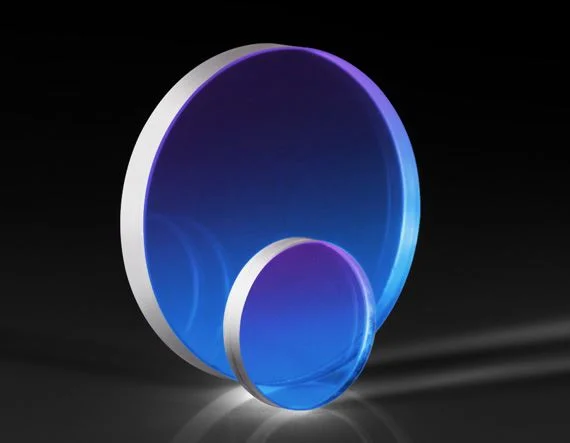
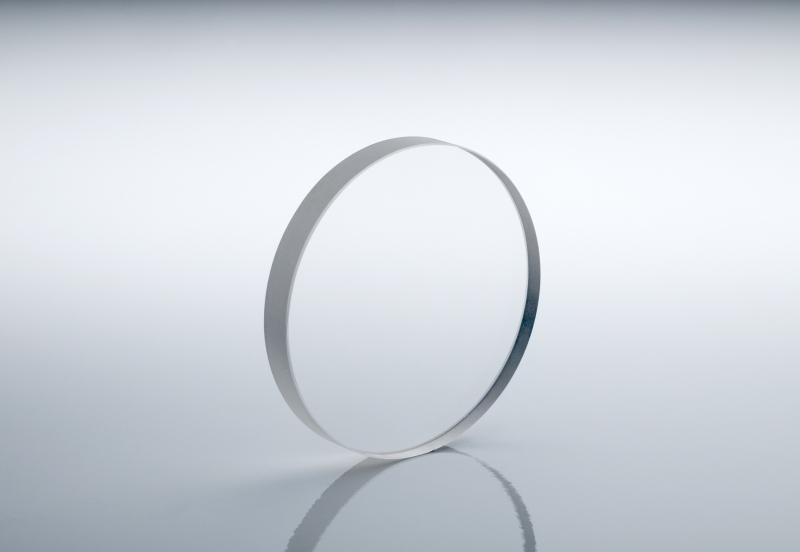
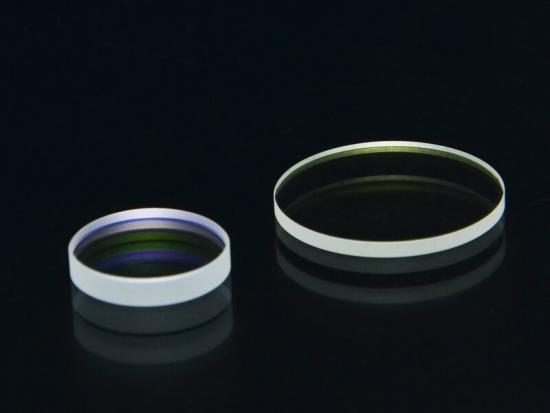
Description
1. Product Overview
Magnesium difluoride (MgF₂) optical grade is a high-purity, vacuum-deposited coating material essential for anti-reflective (AR) and high-transmission optical layers across the UV to IR spectrum (200 nm – 6 µm). Its primary industrial use lies in precision optics manufacturing, including lenses, prisms, and windows for laser systems, aerospace sensors, and semiconductor inspection equipment. The key value proposition is its uniquely low refractive index (n ≈ 1.38 at 550 nm) combined with exceptional mechanical hardness and laser-induced damage threshold (LIDT), enabling thinner, more durable coatings than competing fluorides. Strategically, MgF₂ is irreplaceable for deep-UV lithography and high-power laser optics, where material purity directly dictates system yield and operational lifetime.
2. Key Specifications & Technical Characteristics
-
Chemical composition: MgF₂ (≥ 99.99% optical grade), trace impurities < 50 ppm total metals (Fe, Cu, Cr, Ni, Co each < 5 ppm)
-
Purity level: 99.99% (4N) – 99.999% (5N) available on request
-
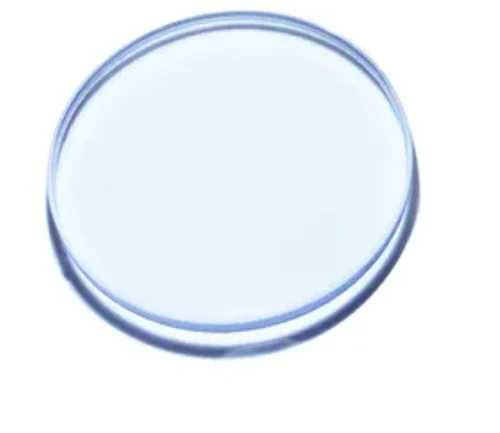
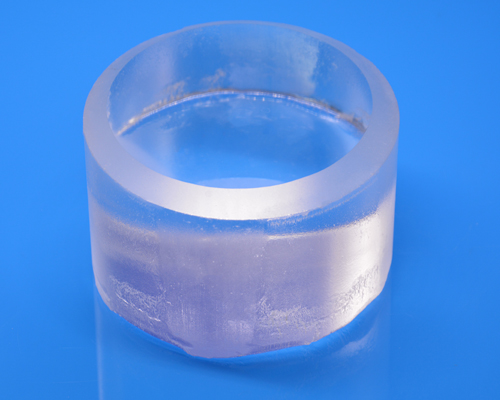
Physical form: Granules (1–6 mm), tablets (diameter 10–25 mm, height 5–15 mm), or custom-shaped sputtering targets
-
Appearance: Colorless, transparent to translucent crystalline solid
-
Refractive index: 1.38 @ 550 nm; 1.39 @ 250 nm; 1.37 @ 5 µm
-
Density: 3.18 g/cm³ (theoretical); deposited film density > 98% of bulk
-
Particle size distribution (granules): D50 = 3.5 mm ± 0.5 mm (sieve analysis ISO 3310-1)
-
Packaging options:
-
Vacuum-sealed PET/Al foil bags (1 kg, 5 kg) with desiccant
-
HDPE drums with inner liner (25 kg, 50 kg)
-
Custom IBC totes (500 kg) for high-volume buyers
-
-
Shelf life: 24 months unopened under dry, room-temperature storage (< 50% RH); no degradation if kept sealed
3. Core Industrial Applications
-
Semiconductor lithography optics: Used as a single-layer AR coating on fused silica and CaF₂ lenses in DUV steppers (193 nm and 248 nm). Outperforms SiO₂ due to lower absorption and higher LIDT (> 15 J/cm² at 193 nm, 10 ns pulse), directly reducing lens replacement frequency.
-
Aerospace & defense sensors: Anti-reflection coatings for ZnS and Ge windows in thermal imaging and LIDAR systems. MgF₂’s mechanical hardness (Mohs 5) resists erosion from dust and rain better than cryolite or thorium fluoride alternatives.
-
High-power fiber lasers: Optical coatings for pump combiner and output coupler optics. MgF₂ minimizes scatter loss (< 0.1% at 1 µm) and enables > 99.8% transmission, improving wall-plug efficiency by 3–5% versus conventional coatings.
-
Spectrophotometer & fluorescence optics: Precision cuvettes and beam-splitter coatings where UV transmission down to 200 nm is mandatory. No other fluoride offers comparable cost-to-transmission ratio in deep-UV.
4. Competitive Advantages
-
Quality consistency: Lot-to-lot refractive index variation < ±0.001 (tested via ellipsometry); each batch includes ICP-MS impurity certificate and UV-VIS-NIR transmission spectra.
-
Supply reliability: Dual-source raw material stock (China + Europe) with 3-month safety inventory. Average lead time: 10 working days ex-warehouse (Asia), 15 days (Europe/US).
-
Logistics capability: Specialized hazardous goods (non-dangerous but hygroscopic) shipping with climate-controlled containers; real-time tracking via global freight partners.
-
Price competitiveness: 12–18% lower than equivalent US/European 4N grades, with volume discounts from 200 kg/year contracts. No premium for tablet or granule forms.
-
Sustainability: Zero perfluorooctanoic acid (PFOA) in production; 95% of process water recycled; compliant with REACH, RoHS, and Conflict Minerals Regulation.
-
Technical support: Dedicated optical coating engineers available for process optimization (e-beam, thermal evaporation, sputtering). Free sample validation (100 g) with deposition recipe guidance.
5. Commercial & Supply Information
-
Minimum order quantity (MOQ): 25 kg (standard granules or tablets)
-
Bulk 20 MT capacity: Yes – available for annual supply agreements (20 metric tons per shipment, palletized)
-
Loading capacity per 20 ft container:
-
20 MT net weight (20 x 1,000 kg in HDPE drums or 500 kg IBC totes)
-
Container type: Dry van with desiccant-lined interior or reefer set at 20°C / <40% RH on request
-



Reviews
There are no reviews yet.