
Description
Tert-Butyl Carbamate: A Versatile Protecting Group in Organic Synthesis
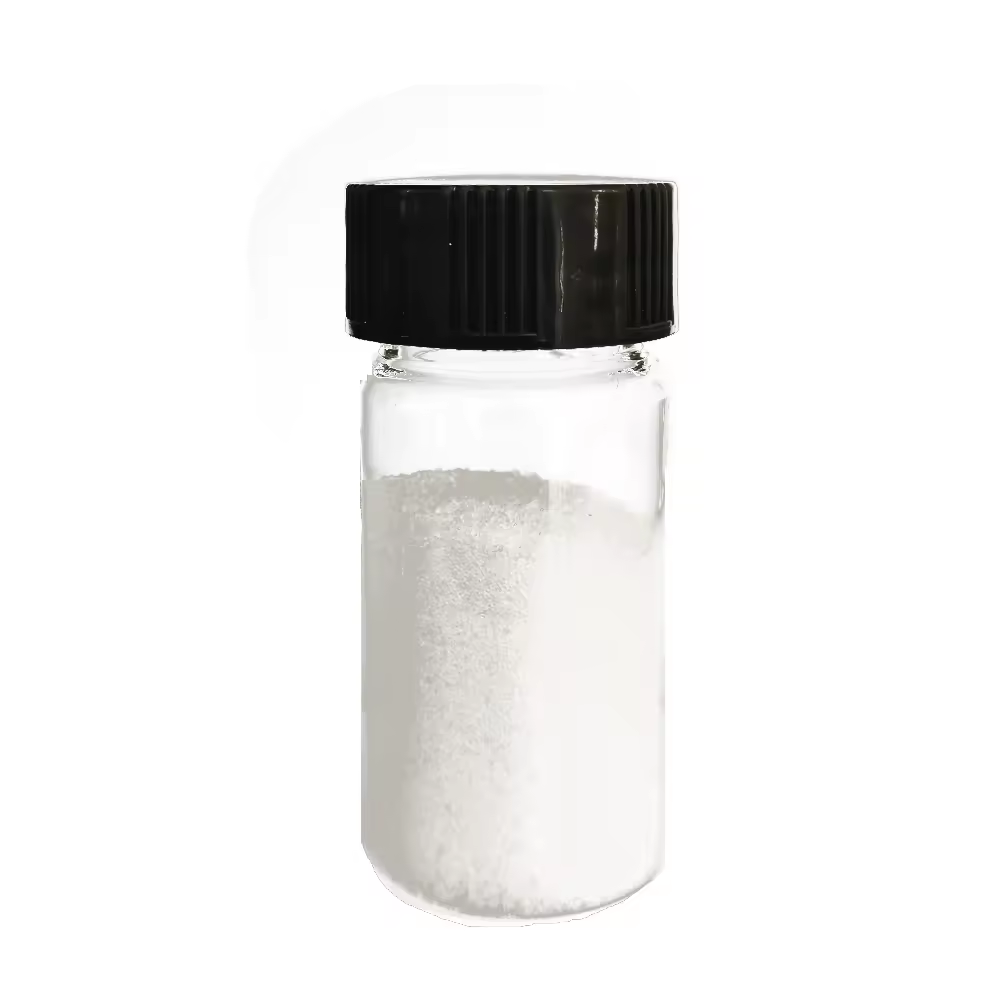
Tert-butyl carbamate, often referred to as Boc (t-Boc), is a widely used protecting group in organic chemistry, particularly for amines. Its chemical formula is (CH₃)₃C-O-CO-NH₂, and it is characterized by its bulky tert-butyl group attached to the carbamate functionality. Boc offers several advantages that make it a popular choice for protecting amines during complex syntheses.
Why Protect Amines?
Amines are highly reactive functional groups that can interfere with desired reactions in a molecule. This is especially true in peptide synthesis and other complex organic transformations. Protecting groups like Boc temporarily “mask” the amine, rendering it unreactive until it’s time to incorporate it into the final product.
Advantages of Boc Protection:
- Ease of Installation: Boc protection is typically achieved by reacting the amine with di-tert-butyl dicarbonate (Boc₂O) in the presence of a base. This reaction is generally high-yielding and proceeds under mild conditions.
- Stability: Boc-protected amines are stable to a wide range of reaction conditions, including basic, nucleophilic, and oxidative environments. This robust nature allows chemists to perform various transformations on other parts of the molecule without affecting the amine functionality.
- Selective Deprotection: One of the most crucial features of Boc is its selective removal under acidic conditions, commonly using trifluoroacetic acid (TFA) or hydrochloric acid (HCl). This deprotection method is orthogonal to other commonly used protecting groups, such as Fmoc (9-fluorenylmethyloxycarbonyl), making it possible to selectively remove Boc while leaving other protecting groups intact.
- Crystallinity: Boc-protected amines are often crystalline, which can be beneficial for purification and characterization.
- Commercial Availability: Tert-butyl carbamate and Boc₂O are readily available commercially, making them easily accessible to researchers.
Applications in Synthesis:
Boc protection is extensively employed in various areas of organic chemistry, including:
- Peptide Synthesis: Boc is widely used in solid-phase peptide synthesis (SPPS) to protect the N-terminus of amino acids. This allows for the sequential addition of amino acids to the growing peptide chain.
- Pharmaceutical Chemistry: Boc is crucial in synthesizing complex pharmaceutical compounds, as it allows for the selective modification of amine-containing molecules.
- Natural Product Synthesis: The protection and deprotection of amines are often necessary to synthesize complex natural products, and Boc plays a critical role in these processes.
- Materials Science: Boc-protected monomers can be used to prepare polymers with specific properties, such as pH sensitivity.
Limitations and Considerations:
While Boc protection is highly effective, it’s important to consider its limitations:
- Acidity: Boc deprotection requires acidic conditions, which may not be compatible with acid-sensitive functional groups in the molecule.
- Bulky Nature: The bulky tert-butyl group can sometimes hinder reactions, especially in sterically hindered environments.
- Alternative Protecting Groups: For acid-sensitive substrates or where steric hindrance is a concern, other protecting groups like Alloc (allyloxycarbonyl) or Cbz (benzyloxycarbonyl) might be more suitable.
Conclusion:
Tert-butyl carbamate (Boc) is a powerful and versatile protecting group in organic synthesis. Its ease of installation, stability, selective deprotection, and commercial availability make it an indispensable tool for chemists working on complex molecules. While it’s important to consider its limitations and alternative options, Boc remains a cornerstone of amine protection strategies in diverse fields, from peptide synthesis to pharmaceutical development.


Reviews
There are no reviews yet.