
Description
1. Product Overview
Electronic Grade Hydrofluoric Acid is a high-purity, ultra-clean inorganic acid specifically engineered for critical etching, cleaning, and conditioning processes in semiconductor and microelectronics manufacturing. Its primary industrial use lies in the fabrication of integrated circuits (ICs), memory chips (DRAM, NAND), and flat panel displays (FPDs), where it removes native oxides and contaminants at a sub-nanometer scale. The key value proposition is its exceptional purity—with parts-per-trillion (ppt) level trace metal control—which directly determines device yield, performance, and reliability. Strategically, this product is indispensable to global advanced manufacturing, as any impurity-driven defect can render an entire wafer batch unsellable, making it a high-stakes, mission-critical consumable.
2. Key Specifications & Technical Characteristics
-
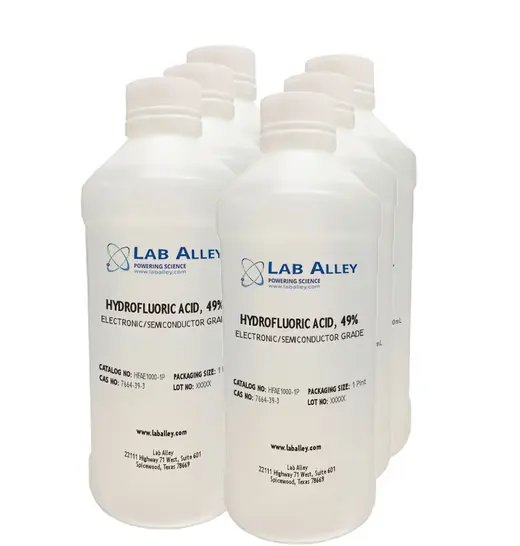
Chemical composition: Hydrogen fluoride (HF) in deionized water, typically 49% ±0.5% w/w concentration
-
Purity grade: EL (Electronic Grade), with options for EL-UP (Ultra-Pure) / SEMI C12 (international standard)
-
Trace metal impurities (typical maximum values):
-
Aluminum (Al): ≤0.05 ppb
-
Gold (Au): ≤0.02 ppb
-
Chromium (Cr), Copper (Cu), Iron (Fe), Nickel (Ni), Zinc (Zn): ≤0.1 ppb each
-
Anions (chloride, phosphate, sulfate, nitrate): ≤50 ppb each
-
Particles (≥0.2 µm): ≤20 particles/mL
-
-
Physical characteristics: Clear, colorless, fuming liquid; density approx. 1.15 g/cm³ (at 25°C); pungent, irritating odor
-
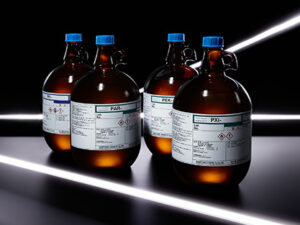
Packaging options:
-
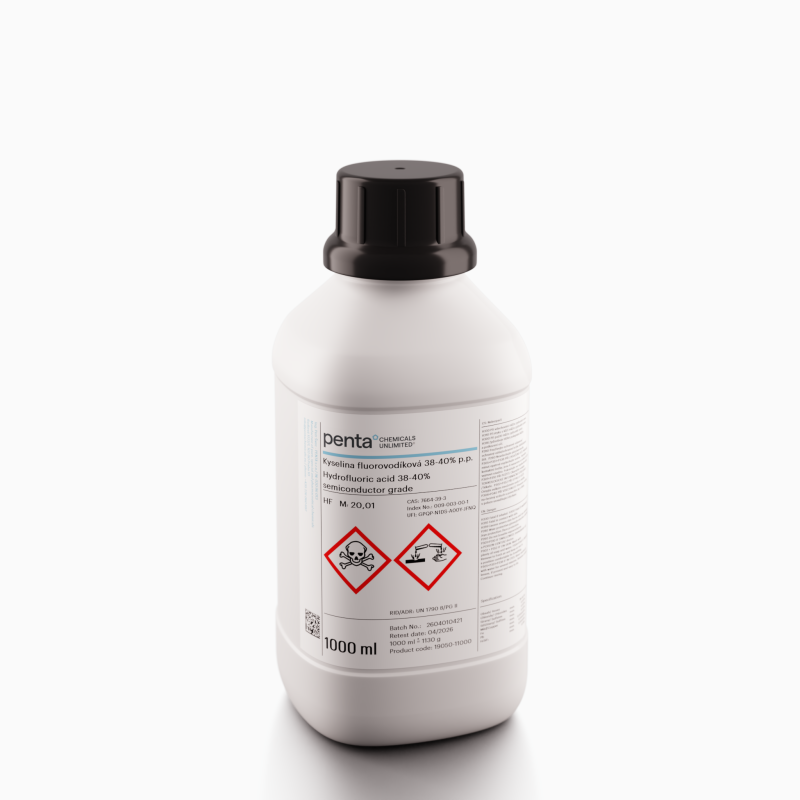
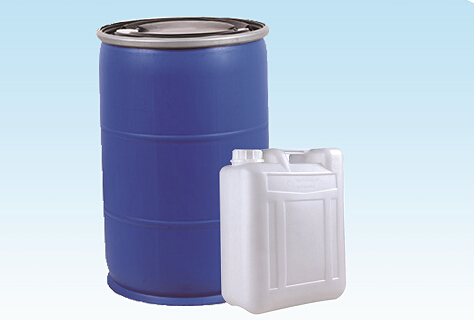
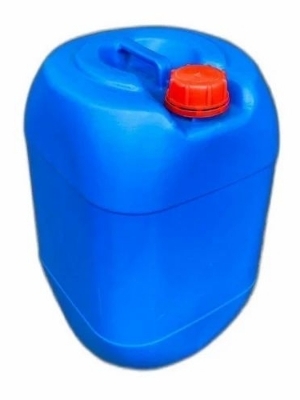
High-density polyethylene (HDPE) drums (200L / 55-gallon)
-
IBC totes (1,000L)
-
ISO tank containers (20,000L – 24,000L)
-
Quartz or PTFE-lined bulk tankers for ultra-high purity
-
-
Shelf life: 12 months from date of manufacture when stored unopened in original container at 5–30°C, away from direct sunlight and incompatible materials (glass, metals, alkalis)
3. Core Industrial Applications
-
Primary industries: Semiconductor foundries, memory manufacturers, integrated device manufacturers (IDMs), flat panel display (LCD/OLED) producers, solar cell (PV) manufacturers, and MEMS (Micro-Electro-Mechanical Systems) fabricators.
-
Specific operational use cases:
-
Silicon wafer cleaning (RCA clean step 2): Removes residual metallic contaminants and native oxide after alkaline clean.
-
Sacrificial oxide etching: Precision removal of SiO₂ layers prior to gate oxidation or epitaxial deposition.
-
Buffer Oxide Etch (BOE) production: A critical precursor for mixed etchants (HF + NH₄F) used in contact hole and via formation.
-
Quartzware reclaim: Cleaning of CVD (Chemical Vapor Deposition) reactor components to extend usable life.
-
-
Why this product performs better than alternatives: Lower-grade HF (e.g., industrial or reagent grade) contains metallic residues (Fe, Ni, Cu) that can precipitate onto wafer surfaces, causing junction leakage, threshold voltage shifts, or outright device failure. This Electronic Grade HF achieves >99.9999999% (7N+ purity), ensuring that the etch process leaves no detectable contamination.
-
Efficiency / cost advantage: Although priced higher than lower grades, the increase in die yield (often 3–8% per wafer batch) translates to millions in recovered revenue per fab line annually. Reduced defect density also lowers rework and scrap costs.
4. Competitive Advantages
-
Quality consistency: Statistical process control (SPC) with real-time in-line monitoring; each batch certified via ICP-MS (Inductively Coupled Plasma Mass Spectrometry) and ion chromatography (IC); full traceability to raw material sourcing.
-
Supply reliability: Dual-sourced fluorine gas feedstock; dedicated EL-grade production lines (no cross-contamination); safety stock held in three regional hub warehouses (Asia, North America, Europe).
-
Logistics capability: Fleet of passivated ISO tank containers with inert gas blanketing; real-time GPS tracking + temperature logging during transit; customs-cleared documentation for 50+ countries.
-
Price competitiveness: Long-term take-or-pay contracts available to hedge against HF market volatility; volume discounts at ≥100 MT/month.
-
Sustainability & safety: Zero liquid discharge (ZLD) manufacturing process for wastewater; recyclable packaging program for drums and IBCs; compliant with REACH, RoHS, and GHS (Globally Harmonized System) labeling.
-
Technical support: Includes Certificate of Analysis (CoA) per batch, SDS (Safety Data Sheet) in 12 languages, and direct access to application engineers for process integration assistance.
5. Commercial & Supply Information
-
Minimum order quantity (MOQ): 1 IBC tote (1,000 kg / 1 metric ton) for spot purchases; 20 MT per month for contract pricing.
-
BULK 20MT capacity: Standard ISO tank container holds net weight: 20,000 kg (20 metric tons) , gross weight approx. 24,000 kg.
-
Loading capacity per 20FT container (for drums):
-
80 drums of 200L each → 16 metric tons (max payload due to weight limits; drums are packed on pallets, 4 drums per pallet).
-
-
Incoterms available: EXW (warehouse), FOB (loading port), CIF (destination port), DDP (door-to-door).
-
Lead time: 14–21 days for bulk ISO tank orders (from order confirmation to loading); 7–10 days for IBC/drum orders from regional hubs.
Reviews
There are no reviews yet.