


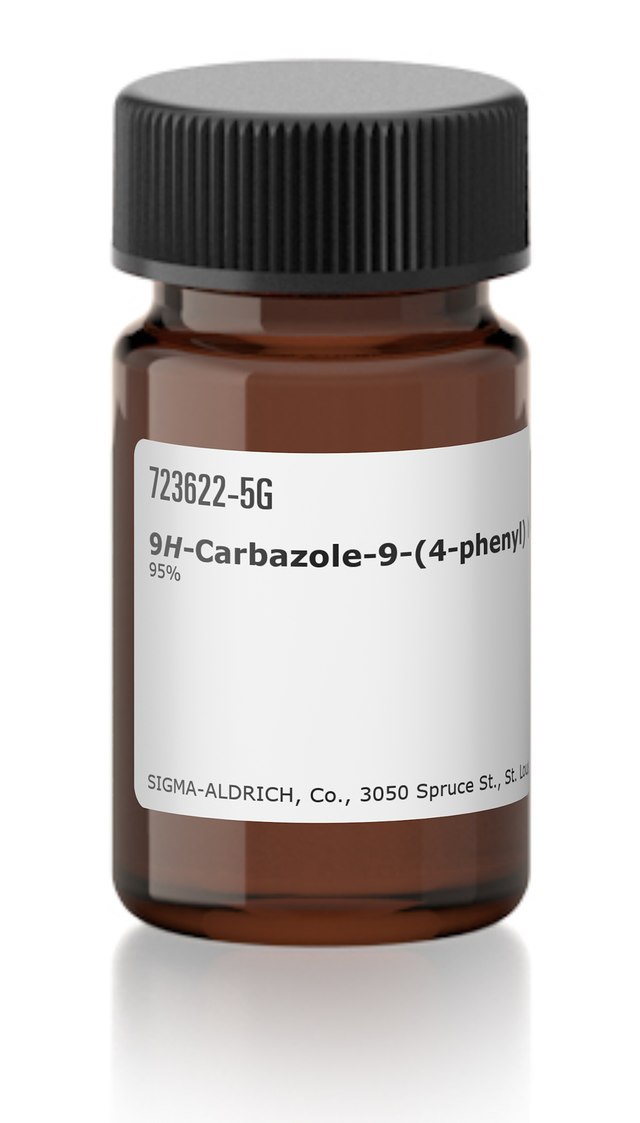



Description
Carbazole Derivatives: A Versatile Family of Organic Compounds
Carbazole, a heterocyclic aromatic organic compound, serves as the foundation for a diverse family of molecules known as carbazole derivatives. These derivatives boast a unique blend of structural rigidity, electronic properties, and chemical reactivity, making them valuable building blocks in various fields, ranging from materials science to pharmaceuticals.
The Carbazole Core: A Foundation of Stability and Functionality
The carbazole core structure is characterized by two benzene rings fused to a five-membered nitrogen-containing pyrrole ring. This planar, rigid structure contributes to the thermal and chemical stability inherent in many carbazole derivatives. The nitrogen atom, bearing a lone pair of electrons, provides a site for easy functionalization and allows for participation in various chemical reactions. The aromatic nature endows these compounds with unique electronic properties, making them excellent candidates for applications requiring electronic conductivity and light emission.
Synthesis and Functionalization: Tailoring Properties for Specific Applications
The synthesis of carbazole derivatives can be achieved through a variety of methods, including the Graebe-Ullmann reaction, Cadogan-Sundberg indole synthesis, and Buchwald-Hartwig amination. These synthetic routes allow for the introduction of different substituents at various positions on the carbazole core, enabling the fine-tuning of their properties.
Functionalization strategies often target the nitrogen atom, allowing for the attachment of alkyl, aryl, or other functional groups. This manipulation can significantly impact the solubility, electronic properties, and overall performance of the derivative in its intended application.
Applications: A Wide Spectrum of Possibilities
The unique attributes of carbazole derivatives have led to their exploitation in a wide range of applications:
- Organic Electronics: Carbazole derivatives are prominent players in organic light-emitting diodes (OLEDs), organic photovoltaics (OPVs), and organic field-effect transistors (OFETs). Their high triplet energy levels, good hole transport properties, and ability to be easily processed into thin films make them ideal for these applications.
- Pharmaceuticals: The carbazole scaffold appears in the structure of several biologically active molecules. Some carbazole derivatives exhibit anti-inflammatory, anti-cancer, and antiviral properties, making them promising candidates for drug development.
- Dyes and Pigments: The strong absorption and emission properties of carbazole derivatives have led to their use as dyes and pigments in various applications, including textiles, plastics, and inks.
- Polymers and Resins: Carbazole-containing polymers exhibit improved thermal stability, mechanical strength, and electrical conductivity compared to their non-carbazole counterparts. These properties make them suitable for high-performance coatings, adhesives, and structural materials.
- Sensors: The sensitivity of carbazole derivatives to their environment has led to their use in chemical and biological sensors. By incorporating specific binding sites into the carbazole structure, researchers can develop sensors capable of detecting a variety of target molecules.
Challenges and Future Directions
Despite their versatility, there remain challenges in the development and application of carbazole derivatives. Scalable and cost-effective synthetic routes are needed to meet the growing demand for these compounds. Further research is also necessary to fully understand the structure-property relationships of carbazole derivatives, allowing for the design of molecules with tailored properties for specific applications.
Future research will likely focus on:
- Developing greener and more sustainable synthetic methods.
- Exploring new functionalization strategies to further expand the property space of carbazole derivatives.
- Investigating the use of carbazole derivatives in emerging fields such as energy storage and biomedical imaging.
- Designing and synthesizing novel carbazole-based materials with enhanced performance for organic electronic devices.
Conclusion
Carbazole derivatives are a fascinating and increasingly important class of organic compounds. Their unique chemical and physical properties, coupled with the versatility of their synthesis and functionalization, have positioned them as key players in a wide range of applications. As research continues to unlock their full potential, carbazole derivatives are poised to play an even more significant role in shaping the future of materials science, pharmaceuticals, and other important fields.


Reviews
There are no reviews yet.