
Description
Tantalum pentachloride (TaCl5)
TaCl5 is the pentachloride of tantalum. It is a moisture‑sensitive, volatile Lewis acid widely used as a precursor to organotantalum compounds and as a catalyst/activator in various chemical transformations.
Structure and bonding
- Gas phase: TaCl5 adopts a trigonal bipyramidal geometry around the tantalum center.
- Solid state: In the solid, TaCl5 tends to form dimeric or more extended networks such as Ta2Cl10 via chloride bridges or polymeric structures.
- Coordination behavior: It behaves as a strong Lewis acid and readily accepts electron density from donors (for example, phosphines, ethers, or other ligands) to form adducts or more complex tantalum coordination compounds.
Synthesis and preparation
- The classic preparation is by direct chlorination of tantalum metal:
- Ta + 5 Cl2 → TaCl5
- Alternative routes can start from other tantalum chlorides or oxide chlorination steps, typically carried out at high temperature with chlorine gas.
- TaCl5 is moisture sensitive and must be handled under dry, inert conditions.
Physical and chemical properties (highlights)
- Formula: TaCl5
- Molar mass: ~358.2 g/mol
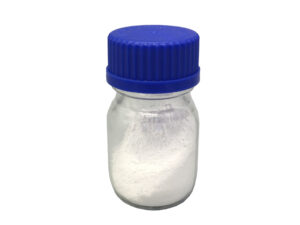
- Appearance: White to pale yellow crystalline solid (varies with sample and purity)
- Volatility: Relatively volatile for a metal halide; can sublime under suitable conditions
- Reactivity: Reacts with water and oxygen-containing species to give tantalum oxychlorides and HCl
- Stability: Stable under dry, inert atmosphere; hydrolyzes in the presence of moisture
Reactivity and typical applications
- As a Lewis acid: TaCl5 activates carbonyls and other substrates in various organic and inorganic transformations.
- As a precursor: Widely used to prepare organotantalum compounds (Ta–C, Ta–N, Ta–O frameworks) for research and catalytic applications.
- Catalysis: Employed as a catalyst or catalyst precursor in certain polymerization and halogenation processes, and in synthesis of tantalum-containing materials.
- Adduct chemistry: Forms adducts with donors such as THF, pyridine, phosphines, and other ligands, expanding the scope of accessible tantalum complexes.
Safety and handling
- TaCl5 is corrosive and moisture sensitive. It reacts with water to release corrosive HCl and to form tantalum oxychlorides.
- Handle under dry, inert atmosphere (for example, in a glovebox or using Schlenk techniques).
- Wear appropriate PPE: eye protection, gloves, and lab coat. Store in a tightly closed container, under inert gas if possible.
- Avoid contact with moisture and incompatible reagents; work in a well-ventilated area or under a fume hood.
Reviews
There are no reviews yet.