

Description
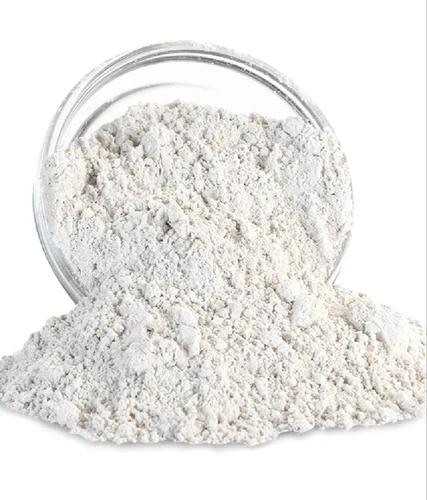
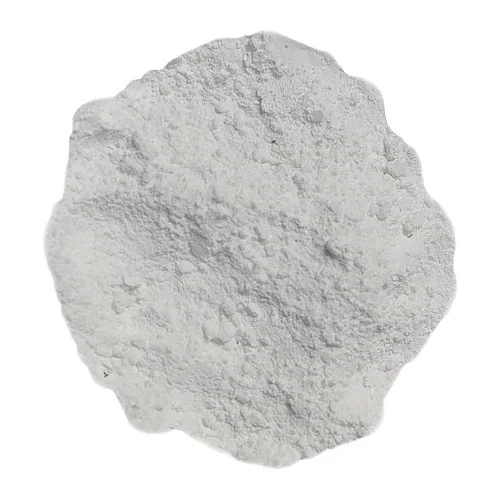
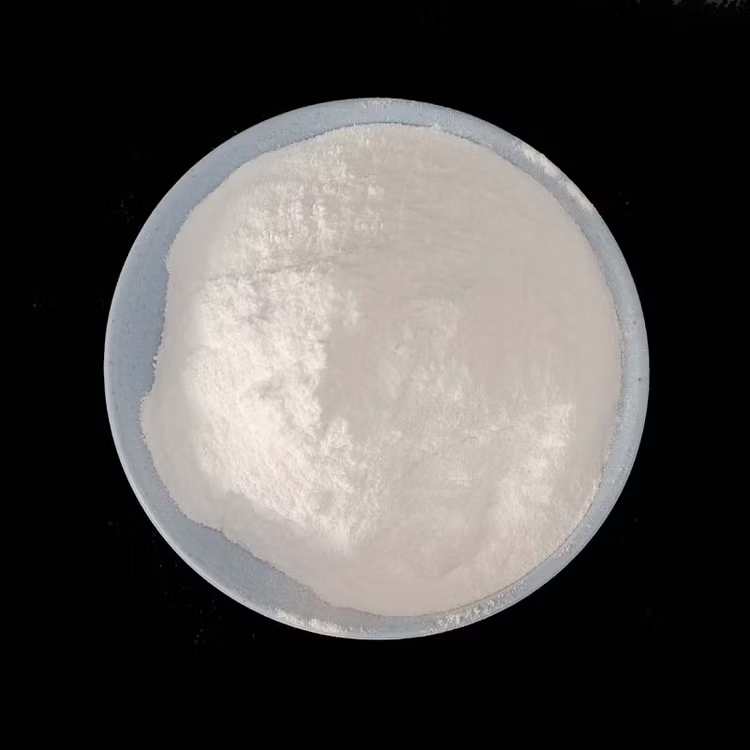
Polyvinyl Formaldehyde (Polyvinyl Formal, PVF)
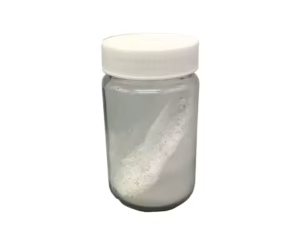
Polyvinyl formal is a type of poly(vinyl acetal) resin produced by the acetylation (crosslinking) of polyvinyl alcohol (PVA) with formaldehyde. It is commonly referred to as PVF. The formaldehyde units react with the hydroxyl groups on PVA to form acetal linkages, creating a crosslinked, thermosetting polymer.
How it’s made
- Starting material: Polyvinyl alcohol (PVA)
- Reagent: Formaldehyde (often as formaldehyde solution)
- Catalyst/conditions: Acidic medium and heat to promote acetal formation
- Result: A crosslinked PVF network that is typically insoluble and forms durable coatings and laminates
Key properties
- Crosslinked network: Gives high chemical resistance and mechanical strength
- Thermosetting behavior: Cures to a rigid, durable film or layer
- Film transparency: Often forms clear, glossy coatings
- Solvent resistance: Generally resistant to many common solvents after curing
- Aqueous compatibility: May retain some hydrophilic character due to residual acetals, but network is largely water-insoluble once cured
- Electrical insulation: Good dielectric properties, historically used in insulation applications
Common applications
- Coatings and varnishes: Protective coatings for metals and wood
- Laminates and adhesives: Used in layered materials and bonding applications
- Electrical insulation: Insulating coatings for wires and components
- Surface protection: Protective finishes in various industrial contexts
PVF vs related materials
- PVF vs PVB (polyvinyl butyral): PVF uses formaldehyde to form acetals, while PVB uses butyraldehyde. Both are poly(vinyl acetal) resins, but they differ in flexibility, processing, and applications.
- Other acetals: Similar chemistry with different aldehydes (e.g., acetaldehyde, butyraldehyde) leads to other poly(vinyl acetal) resins with distinct properties.
Practical notes
- The synthesis involves handling formaldehyde and acidic conditions, so proper safety measures are essential.
- PVF resins are typically processed and cured to achieve the desired level of crosslinking, which directly influences hardness, solvent resistance, and temperature stability.
- If you’re designing a coating or adhesive, consider the required curing conditions, adhesion to the substrate, and whether moisture exposure may affect performance.
Quick takeaway
Polyvinyl formal (PVF) is a crosslinked, thermosetting poly(vinyl acetal) resin derived from PVA and formaldehyde. It offers good film formation, chemical and solvent resistance, and is used mainly in coatings, laminates, and insulation applications. If you’re targeting a specific property or processing method, I can help tailor the overview or compare PVF to alternative materials.


Reviews
There are no reviews yet.