
Description
High-Entropy Oxide Ceramics: Unlocking a New Era of Advanced Materials
The quest for materials capable of withstanding extreme conditions and delivering unprecedented performance has always driven scientific innovation. Traditional ceramics, while offering high melting points and chemical stability, often suffer from brittleness and limited design flexibility. However, a revolutionary class of materials, High-Entropy Oxide Ceramics (HEOs), is emerging, promising to redefine the boundaries of material science and engineering.
What are High-Entropy Oxide Ceramics?
High-Entropy Oxide Ceramics are a subset of the broader family of High-Entropy Materials (HEMs). Their defining characteristic is the presence of at least five principal metallic elements in significant, near-equimolar concentrations, combined with oxygen. Unlike conventional ceramics that typically feature one or two dominant metallic elements (e.g., Al₂O₃, ZrO₂), HEOs embrace compositional complexity.
Despite this complex chemical recipe, a remarkable phenomenon occurs: the mix of diverse atomic sizes and valences often results in the formation of a single-phase crystalline structure, typically simple ones like rock-salt, fluorite, spinel, or perovskite. This counter-intuitive stability is attributed to “high configurational entropy.” The sheer number of ways the multiple elements can arrange themselves on the crystal lattice significantly lowers the system’s Gibbs free energy, stabilizing the single-phase solid solution over multiple competing phases. It’s the ultimate “cocktail effect” where the whole is far greater than the sum of its parts.
The Unique Advantages and Properties of HEOs
The high configurational entropy and the resulting “lattice distortion” from the diverse atomic sizes imbue HEOs with a suite of exceptional properties:
- Superior Mechanical Properties: HEOs often exhibit exceptional hardness, fracture toughness, and strength at high temperatures. The multiple elements hinder dislocation movement and crack propagation, leading to enhanced mechanical resilience.
- Remarkable Thermal Stability: High-entropy oxides often demonstrate extremely high melting points and excellent resistance to thermal shock. The inherent stability from entropy contributes to their structural integrity even under extreme heat.
- Low Thermal Conductivity: The highly disordered lattice structure with varying atomic masses and bond strengths effectively scatters phonons (heat-carrying vibrations). This “sluggish diffusion” makes HEOs excellent thermal insulators, ideal for applications like thermal barrier coatings.
- Novel Electrical and Dielectric Properties: The diverse range of elements and their interactions can lead to unique electrical behaviors, including tunable dielectric constants, improved ionic conductivity (making them promising for solid-state electrolytes), and even thermoelectric properties.
- Enhanced Chemical Stability and Reactivity: The multi-elemental nature can improve resistance to corrosion and oxidation. Furthermore, the numerous active sites and lattice distortions can catalyze a variety of chemical reactions, making HEOs promising for catalytic and photocatalytic applications.
- Radiation Resistance: Some HEO compositions have shown remarkable resistance to radiation damage due to their ability to absorb energy and self-heal defects through the complex lattice environment.
Challenges in Synthesis and Characterization
While the potential of HEOs is immense, their synthesis and characterization present unique challenges. Achieving precise stoichiometric control and ensuring single-phase formation across a multi-component system requires sophisticated processing techniques. Methods like solid-state reaction, sol-gel, co-precipitation, spray pyrolysis, and various thin-film deposition techniques are being explored.
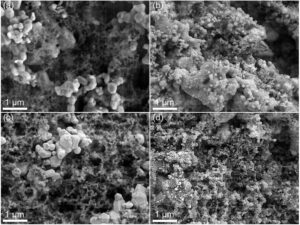
Characterization demands advanced tools such as X-ray diffraction (XRD), transmission electron microscopy (TEM), scanning electron microscopy (SEM) with energy-dispersive X-ray spectroscopy (EDX), and high-resolution spectroscopy to confirm phase purity, elemental distribution, and microstructural features.
Promising Applications
The extraordinary properties of High-Entropy Oxide Ceramics open doors to a vast array of high-performance applications:
- Aerospace and Energy: High-temperature structural components, thermal barrier coatings for gas turbines and jet engines, and heat exchangers.
- Solid Oxide Fuel Cells (SOFCs): As robust electrolytes, electrodes, and interconnect materials due to their ionic conductivity, high-temperature stability, and catalytic activity.
- Catalysis: Diverse active sites and tunable electronic structures make them promising for various industrial catalytic processes, including CO oxidation, oxygen evolution reactions, and environmental remediation.
- Electronics and Sensors: Dielectric materials, varistors, and gas sensors capable of operating in harsh environments.
- Nuclear Energy: Radiation-tolerant materials for nuclear reactors and waste storage.
- Biomedical Devices: Biocompatible and durable coatings for implants.
The Future Outlook
High-Entropy Oxide Ceramics represent a significant paradigm shift in materials design. Instead of searching for the ideal single element or binary compound, researchers are now exploring the vast combinatorial space of multi-element systems. The advent of computational materials science, including machine learning and artificial intelligence, is accelerating this discovery process, enabling the prediction of stable HEO compositions and their properties before complex experimental synthesis.
As research continues to unravel the fundamental mechanisms governing their behavior and synthesis techniques become more refined, HEOs are poised to revolutionize industries requiring materials that push the boundaries of extreme performance. They embody a future where the complexity of nature is harnessed to engineer materials with properties once thought impossible, truly unlocking a new era of advanced ceramics.


Reviews
There are no reviews yet.