

Description
Powering Tomorrow, Sustainably: The Promise of Green Electrolytes in Flow Batteries
The global energy transition is in full swing, driven by an urgent need to mitigate climate change and establish a resilient, decarbonized power grid. While renewable energy sources like solar and wind are rapidly expanding, their inherent intermittency poses a significant challenge. This is where energy storage steps in as the crucial enabler, and among the diverse solutions, flow batteries are emerging as a particularly promising candidate for long-duration, grid-scale applications.
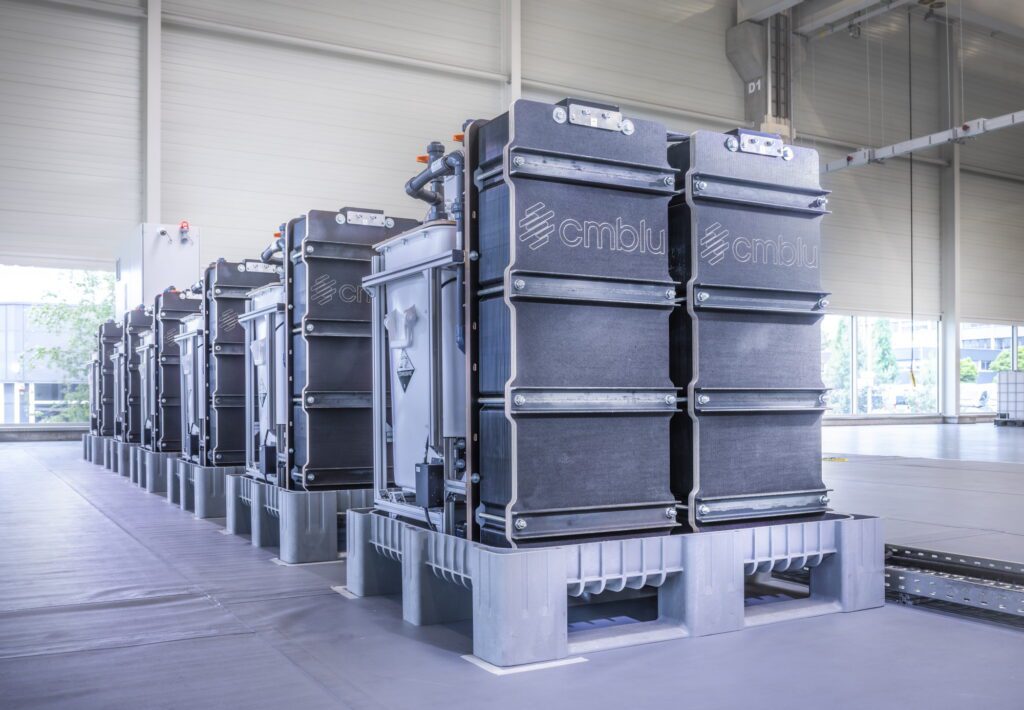
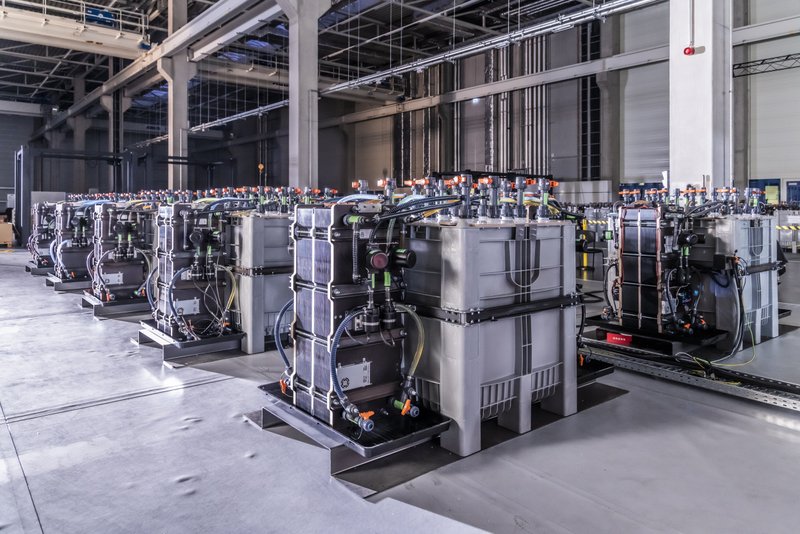
Unlike conventional batteries that store energy within solid electrode materials, flow batteries store energy in liquid electrolyte solutions contained in external tanks. This unique design allows for independent scaling of power (determined by the cell stack size) and energy capacity (determined by the volume of electrolyte), making them ideal for storing hours to days of electricity. They boast long lifespans, excellent cycling capabilities, and a high degree of safety.
However, even this promising technology faces a critical hurdle: the electrolytes themselves.
The “Green” Imperative: Why Current Electrolytes Fall Short
Traditionally, the most commercially advanced flow batteries, such as vanadium redox flow batteries (VRFBs), rely on vanadium-based electrolytes. While effective, vanadium presents several challenges:
- Scarcity and Cost: Vanadium is a relatively rare and expensive metal, with prices subject to market fluctuations and geopolitical factors. This significantly impacts the overall cost and scalability of VRFBs.
- Environmental Impact: Mining and processing vanadium can have substantial environmental footprints, including energy consumption and waste generation.
- Toxicity: Vanadium compounds can be toxic and require careful handling and disposal.
Other chemistries, like zinc-bromine flow batteries, also face issues with the toxicity and corrosiveness of bromine, raising safety and environmental concerns. The search for more sustainable, safer, and cost-effective alternatives has thus become a central focus of research and development in the flow battery field.
The Rise of Green Electrolytes
“Green electrolytes” are designed to address these limitations by leveraging materials that are abundant, non-toxic, environmentally benign, and ideally, sustainably sourced or even biodegradable. The goal is to create flow batteries that are not just high-performing, but also truly circular and environmentally responsible throughout their lifecycle.
Key categories of green electrolytes under active investigation include:
- Redox-Active Organic Molecules (RAOMs):
- What they are: These are organic compounds, often derived from elements like carbon, hydrogen, oxygen, and nitrogen, which can undergo reversible oxidation and reduction reactions to store and release energy. They can be synthesized from readily available precursors.
- Examples: Quinones (like those found in rhubarb or lignin), viologens, phenazines, and alloxazines are some of the most promising candidates.
- Advantages: Abundance of constituent elements, potential for low-cost synthesis, tunable electrochemical properties (allowing for optimization of voltage and solubility), and often non-toxic or biodegradable.
- Challenges: Ensuring long-term stability against degradation, achieving high energy density, and managing solubility in aqueous solutions.
- Earth-Abundant Inorganic Metal-Ion Electrolytes:
- What they are: Utilizing readily available and non-toxic metal ions as the active species in the electrolyte.
- Examples: Iron-based (e.g., iron-chromium, iron-ligand complexes), manganese, and even sulfur-based chemistries are being explored.
- Advantages: Extremely low cost, widespread availability, and generally lower toxicity compared to heavy metals.
- Challenges: Often lower operating voltages and energy densities compared to vanadium, and managing side reactions that can lead to capacity fade.
- pH-Neutral Aqueous Electrolytes:
- What they are: Many traditional flow batteries operate in highly acidic or alkaline environments, which requires expensive and robust materials for the battery’s components. Developing electrolytes that perform well at a neutral pH can significantly reduce material costs and improve safety.
- Advantages: Reduced corrosion, simpler material requirements for membranes and electrodes, enhanced safety.
- Challenges: Finding redox-active species that are stable and exhibit good electrochemical performance within this narrow pH range.
The Path Forward: Challenges and Opportunities
While the potential of green electrolytes is immense, several challenges remain before widespread commercialization:
- Energy Density: Many green electrolyte chemistries currently exhibit lower energy densities compared to vanadium, meaning larger tanks may be required for the same amount of energy storage. Research is focused on increasing solubility and voltage windows.
- Long-Term Stability: Ensuring these new molecules or ions remain stable and active for thousands of charge-discharge cycles without degradation is crucial for economic viability.
- Cost-Effectiveness at Scale: While raw materials might be cheaper, the manufacturing processes for new electrolyte formulations need to be scaled up efficiently and economically.
- System Integration: Developing compatible membranes, electrodes, and balance-of-plant components that work optimally with these novel chemistries.
Despite these hurdles, the momentum behind green electrolytes is undeniable. Breakthroughs in materials science, electrochemistry, and engineering are constantly pushing the boundaries. Collaborative efforts between academia, industry, and government are accelerating research and facilitating the transition from lab prototypes to real-world deployment.
Conclusion
Green electrolytes represent a critical leap forward in the evolution of flow battery technology. By moving beyond scarce and toxic materials, they promise to unlock a future where large-scale energy storage is not only efficient and reliable but also truly sustainable and environmentally benign. As the world increasingly electrifies and integrates more renewable energy, the development and deployment of these eco-friendly energy storage solutions will be a linchpin in building a cleaner, more resilient, and equitable energy future for all.



Reviews
There are no reviews yet.