
Description
Sulfur hexafluoride (SF6)
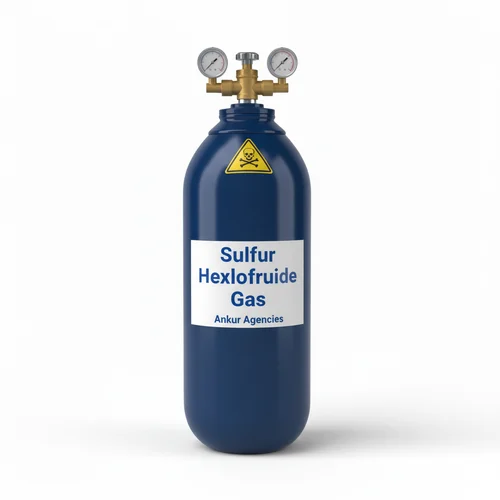
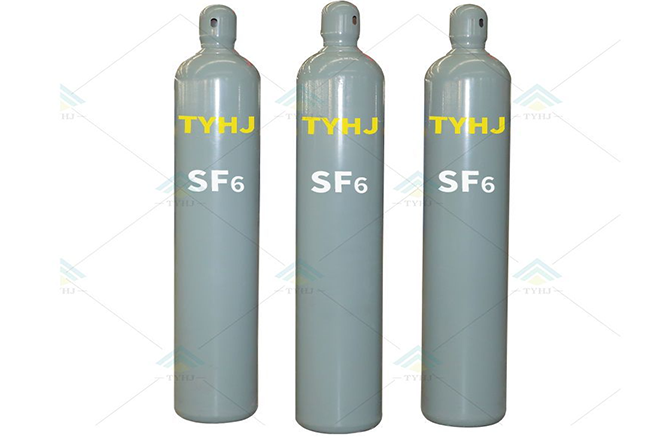
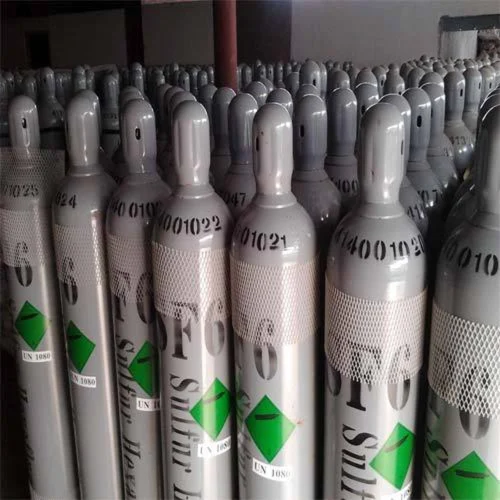
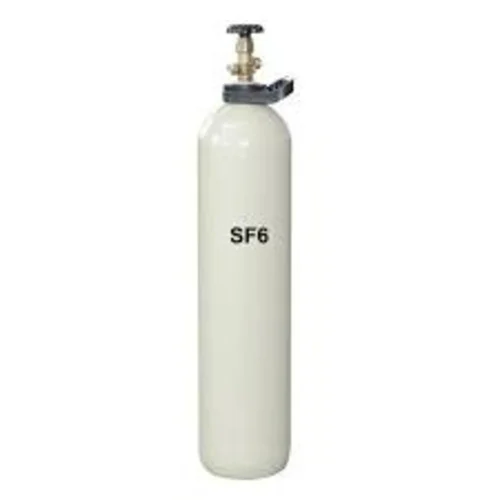
SF6 is a colorless, odorless, non-toxic, and non-flammable inert gas. It is most widely known for its use as an insulating and arc-quenching medium in high-voltage electrical equipment. The molecule has sulfur at the center surrounded by six fluorine atoms in an octahedral geometry.
Key properties at a glance
- Molecular formula: SF6
- Molar mass: 146.06 g/mol
- Density (gas, STP): about 6.2 g/L (heavy gas)
- Boiling point: −63.9 °C
- Dielectric strength: very high, making it an excellent insulator for electrical equipment
- Reactivity: chemically stable and non-reactive under many conditions; can hydrolyze in the presence of moisture to form corrosive byproducts
- Environmental impact: extremely potent greenhouse gas
Common uses
- Electrical insulation and arc quenching: used in gas-insulated switchgear, circuit breakers, and transformers
- Trace gas applications: sometimes used as a tracer gas for leak detection and flow visualization due to its detectability
- Medical and other niche uses: in some specialized medical imaging or research settings (less common)
Important safety and health considerations
- Toxicity: SF6 is not toxic at typical exposure levels, but it can act as an asphyxiant in enclosed or poorly ventilated spaces by displacing oxygen.
- Decomposition hazards: under arcing, SF6 can decompose to toxic sulfur fluorides (for example, SOF2, SO2F2). Adequate ventilation and proper handling procedures are essential in electrical equipment maintenance.
- Moisture sensitivity: SF6 can react with water to form corrosive byproducts; avoid moisture during handling and storage.
- Emergency planning: ensure detectors, ventilation, and training are in place for leak scenarios and that oxygen levels are monitored in confined spaces.
Environmental impact and regulations
- Global warming potential (GWP): SF6 has a very high GWP (approx. 23,500 over 100 years), contributing significantly to greenhouse gas emissions if released.
- Atmospheric lifetime: thousands of years; hence there is a strong push to recover, recycle, and minimize releases.
- Industry trend: there is ongoing development and deployment of SF6-free insulation alternatives in high-voltage equipment to reduce environmental impact.
Handling, storage, and disposal (practical tips)
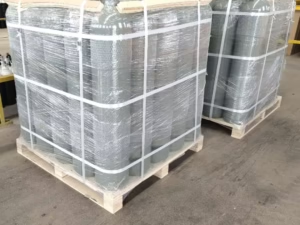
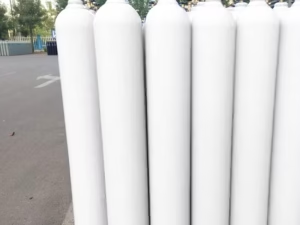
- Storage: keep cylinders upright, secured, and in a well-ventilated area away from moisture and heat sources.
- Handling: use proper regulators and leak-detection methods; never overfill containers and follow manufacturer guidelines.
- Ventilation: work in areas with good ventilation to prevent oxygen displacement in the unlikely event of a leak.
- Disposal/recovery: capture and recycle SF6 whenever possible; do not vent directly to the atmosphere. Approved recovery systems and disposal procedures should be followed.
Alternatives and future directions
- To address environmental concerns, researchers and manufacturers are developing SF6-free insulation technologies. These include alternative gas mixtures and dry-air or nitrogen-based insulation, as well as fluoroketone-based gases and other formulated blends. The goal is to maintain electrical performance while dramatically reducing greenhouse gas emissions.
If you’d like, I can tailor this to a specific angle:
- Technical specs for a particular SF6-containing device
- Safety procedure checklist for handling SF6
- A comparison table between SF6 and common SF6-free alternatives
- Environmental impact calculations or regulations in your region
Key takeaway: SF6 is an excellent insulator and arc quencher in high-voltage equipment but has a very high global warming potential, so careful handling, recovery, and ongoing exploration of SF6-free alternatives are important.

Reviews
There are no reviews yet.