

Description
The Invisible Threat: Unpacking the Science and Environmental Impact of Sulfur Hexafluoride (SF₆)
Sulfur hexafluoride (SF₆) is a synthetic greenhouse gas that, despite being largely unknown to the public, poses a significant threat to our planet. This colorless, odorless, and non-toxic gas boasts remarkable properties that make it indispensable in certain industries, but its extreme global warming potential demands urgent attention. Let’s delve into the properties, applications, and, crucially, the environmental impact of SF₆.
What is Sulfur Hexafluoride (SF₆)?
SF₆ is a highly stable chemical compound consisting of one sulfur atom and six fluorine atoms. This unique structure gives it exceptional dielectric properties, meaning it’s an excellent insulator of electricity. This characteristic is what makes it so valuable in various applications.
Uses of SF₆: A Double-Edged Sword
The remarkable insulating capabilities of SF₆ have led to its widespread adoption in several key industries:
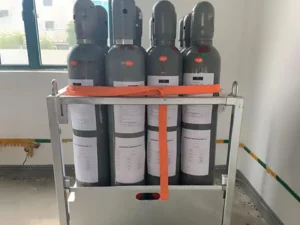
- Electrical Industry: This is where the vast majority of SF₆ is used. It serves as an insulating gas in high-voltage equipment, such as circuit breakers, switchgear, and transformers. Its ability to prevent electrical arcing is crucial for the safe and efficient transmission and distribution of electricity.
- Magnesium Production: In the magnesium industry, SF₆ acts as a protective gas, preventing oxidation and explosions during the melting process.
- Medical Applications: In specific medical procedures, such as retinal detachment surgery, SF₆ is used as a tamponade gas to help reattach the retina.
- Other Applications: SF₆ can also be found in specialized applications like leak detection, acoustic tracers, and even in the production of certain types of sneakers for improved cushioning.
While these applications highlight the utility of SF₆, the trade-off lies in its immense environmental impact.
The Greenhouse Goliath: Environmental Concerns
The primary concern surrounding SF₆ is its exceptionally high global warming potential (GWP). GWP is a measure of how much heat a greenhouse gas traps in the atmosphere relative to carbon dioxide (CO₂) over a specific time period. SF₆ boasts a GWP of 23,500 over a 100-year timescale. This means that one kilogram of SF₆ traps 23,500 times more heat than one kilogram of CO₂ over a century.
Adding to the problem is SF₆’s extraordinary atmospheric lifetime. Once released into the atmosphere, it can persist for up to 3,200 years, continuing to contribute to global warming for millennia.
Even small leaks from electrical equipment and other applications can have a significant impact due to the gas’s potency. While the overall emissions of SF₆ are currently lower than those of CO₂, its disproportionate warming effect makes it a critical target for mitigation efforts.
Mitigating the Threat: Finding Solutions and Alternatives
Recognizing the environmental challenges posed by SF₆, scientists, engineers, and policymakers are actively pursuing strategies to reduce its emissions and find viable alternatives:
- Improved Leak Detection and Prevention: Implementing more robust leak detection systems and improving maintenance practices in the electrical industry can significantly reduce fugitive emissions.
- Alternative Insulating Gases: Research and development efforts are focused on finding alternative insulating gases with lower GWPs. Some promising candidates include mixtures of nitrogen and oxygen, vacuum interrupters, and gases based on fluoroketones and hydrofluoroolefins (HFOs).
- Closed-Loop Systems: Implementing closed-loop systems for SF₆ handling in industrial processes can minimize losses and enable recycling.
- Regulation and Policies: Governments worldwide are implementing regulations and policies to restrict the use of SF₆, incentivize the adoption of alternatives, and promote responsible disposal of the gas.
The Future of SF₆: A Call for Vigilance
Sulfur hexafluoride presents a complex dilemma. Its unique properties make it essential in critical applications, particularly in the electrical industry. However, its extreme global warming potential and long atmospheric lifetime demand urgent action.
By raising awareness about the environmental impact of SF₆, promoting the adoption of existing mitigation strategies, and investing in research and development of viable alternatives, we can work towards a future where the benefits of this gas are balanced with the need to protect our planet. The challenge lies in finding innovative solutions that ensure a reliable and sustainable energy infrastructure while minimizing the environmental footprint of this powerful, yet potentially devastating, greenhouse gas.


Reviews
There are no reviews yet.