
Description
Selenium hexafluoride (SeF6)
Selenium hexafluoride is the hexafluoride of selenium, with the central selenium atom in the +6 oxidation state. It is the heavier analogue of sulfur hexafluoride (SF6) and, like SF6, adopts an octahedral geometry around the central atom. SeF6 is a highly reactive and toxic fluorinating agent that is typically handled under strict moisture control.
Structure and bonding
- Geometry: Octahedral around the selenium center (SeF6 with Oh symmetry).
- Bonding: Six polar Se–F bonds; fluorine is highly electronegative, contributing to the strong, covalent character of the bonds and the overall stability of the molecule under dry, inert conditions.
- Oxidation state: Selenium in the +6 oxidation state.
Physical properties (general notes)
- SeF6 is described as a colorless, volatile compound that is sensitive to moisture.
- The compound is a strong fluorinating agent and a powerful oxidizer.
- It is highly toxic and should be handled with appropriate safety precautions in a well-ventilated fume hood.
If you need precise physical data (boiling point, vapor pressure, etc.), I can look up the latest literature values or provide a range from standard inorganic data references.
Preparation and typical reactions
- Preparation (conceptual): SeF6 can be generated by direct fluorination of selenium or selenium-containing precursors with fluorine gas under controlled conditions. A representative, simplified view is:
- Se (or a selenium compound) + F2 → SeF6
- Alternative routes: Fluorination of selenium oxyfluorides or related intermediates with fluorine or fluoride sources is another pathway described in the literature.
- Reactivity with moisture: SeF6 is moisture sensitive and reacts with water or humid air, typically yielding selenium oxyfluorides and hydrofluoric acid (HF) or related products. This hydrolysis behavior underlines the need for dry handling.
- Other reactions: As a strong fluorinating agent, SeF6 can transfer fluorine to suitable substrates under appropriate conditions, though its use is largely in specialized inorganic synthesis rather than routine organic fluorination.
Safety and handling
- Hazards: SeF6 is toxic and corrosive. It reacts with moisture to form reactive fluorinating species and HF, which is highly hazardous.
- Handling: Work with SeF6 in a dry, inert atmosphere or within a well-ventilated fume hood. Use appropriate personal protective equipment (PPE) and equipment compatible with fluorinating agents.
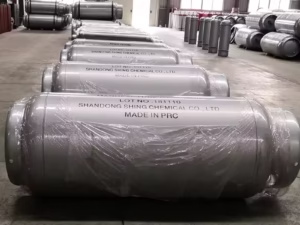
- Storage: Store in sealed, moisture-free containers appropriate for handling volatile fluorides; ensure compatibility with materials that resist fluorination and corrosion.
Applications and context
- Chemistry role: SeF6 serves as a fluorinating agent in niche inorganic synthesis and in studies of selenium fluoride chemistry.
- Comparison: It is less commonly used than SF6 in industry due to handling hazards and reactivity, but it remains of interest for researchers exploring selenium fluorides and related reaction chemistry.
Reviews
There are no reviews yet.