
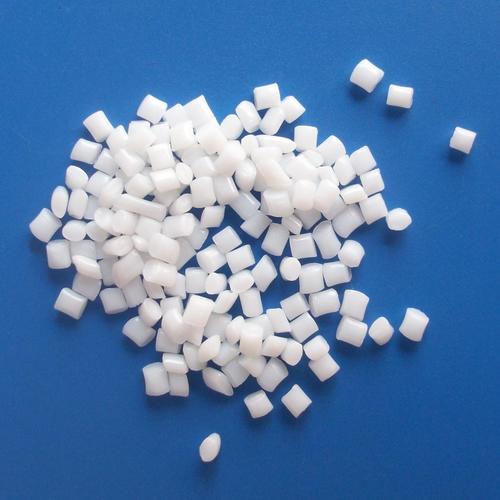
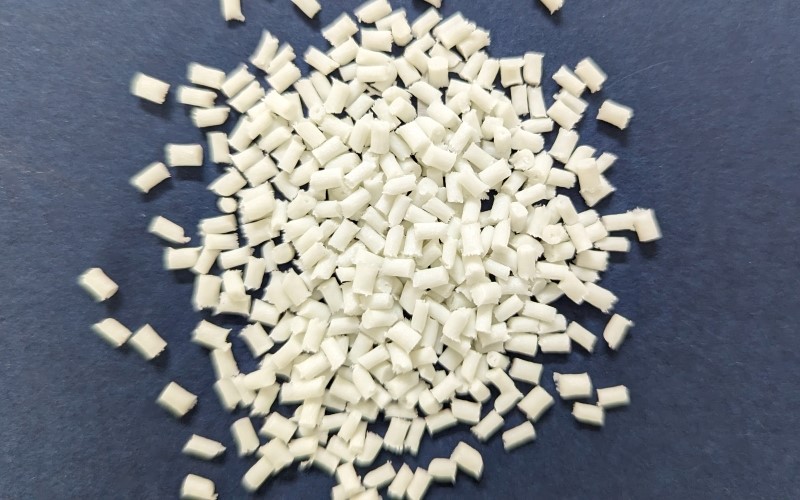
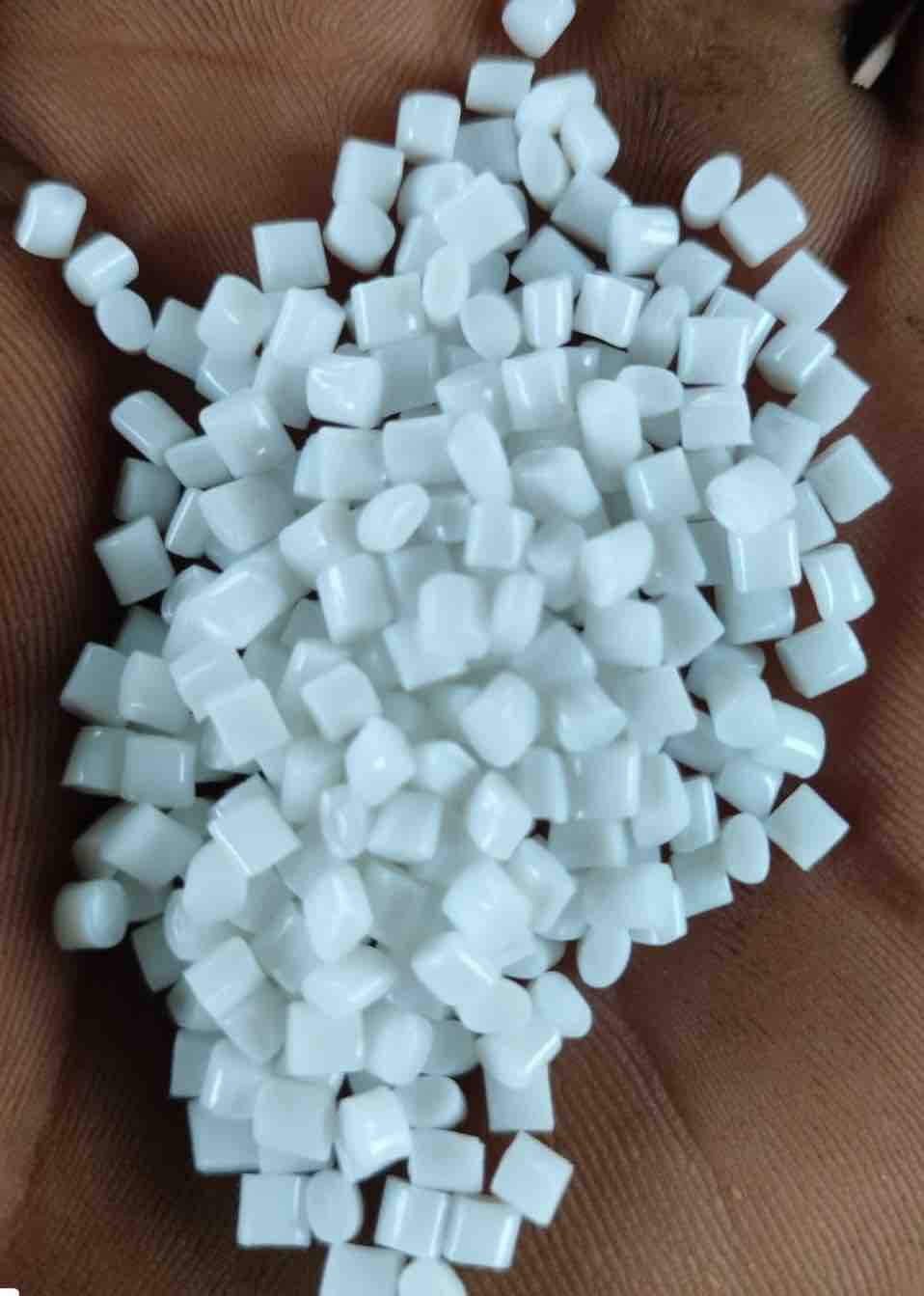
Description
1. What Exactly Is PBT?
| Property | Typical Range (PBT) |
|---|---|
| Chemical family | Polyesters (derived from terephthalic acid & 1,4‑butanediol) |
| Density | 1.31–1.35 g cm⁻³ |
| Glass transition (Tg) | 65–85 °C |
| Melting point (Tm) | 220–230 °C |
| Tensile strength | 45–70 MPa |
| Elongation at break | 30–70 % |
| Moisture uptake (24 h, 23 °C, 50 % RH) | ≤0.05 % (much lower than PA 6/66) |
| Dielectric strength | 30–45 kV mm⁻¹ |
PBT belongs to the same polyester family as PET (the bottle plastic) but differs in two key ways:
- Backbone Structure: PBT’s repeating unit includes a butylene segment (CH₂–CH₂–CH₂–CH₂) rather than the ethylene segment (CH₂–CH₂) found in PET. This longer aliphatic chain lowers the polymer’s crystallinity, giving it a lower melting point and more flexibility at ambient temperatures.
- Crystallinity & Moisture Sensitivity: PBT’s crystallinity (≈30 %) is modest, which translates to excellent dimensional stability and very low moisture absorption—critical for electrical and automotive parts that must retain tight tolerances after long exposure to humidity.
2. How Is PBT Made? (A High‑Level Overview)
- Monomer Production
- Terephthalic acid (TPA) is obtained from oxidation of para‑xylene (a petroleum by‑product).
- 1,4‑Butanediol (BDO) is made either via catalytic hydrogenation of succinic acid (bio‑based routes are emerging) or through traditional petroleum routes.
- Esterification / Transesterification
TPA reacts with BDO to form bis(4-hydroxybutyl) terephthalate (BHBT) and water (or methanol if dimethyl terephthalate is used). The reaction is typically carried out in a continuous reactor at 200–260 °C under reduced pressure to drive off the by‑product. - Polycondensation
The oligomers undergo a step‑growth polymerization under high vacuum (≈0.1 mbar) and temperatures of 260–280 °C. Catalysts such as titanium alkoxides or antimony trioxide accelerate chain growth and help control molecular weight. - Solid‑State Polymerization (SSP) (optional but common)
To push the intrinsic viscosity (IV) higher—improving mechanical properties—PBT pellets are heated just below the melting point (≈190 °C) under a nitrogen atmosphere for several hours. The solid‑state step adds a few extra repeat units without melting the polymer, yielding an IV of 0.7–1.2 dl/g (typical for engineering grades). - Compounding & Additive Masterbatches
Finally, the polymer is melt‑mixed with stabilizers, flame‑retardants, colorants, or glass‑fiber reinforcement. The resulting granules are ready for injection molding, extrusion, or 3‑D printing.
Sustainability Nugget: If the BDO is sourced from renewable sugars (bio‑BDO), the carbon footprint of PBT can drop by up to 30 %, making “green PBT” a realistic near‑term goal.
3. Key Performance Characteristics
| Feature | Why It Matters |
|---|---|
| Low Moisture Absorption | Keeps electrical insulation stable; prevents swelling in tight‑fit components. |
| High Dimensional Stability | Enables precision gears, connectors, and valve bodies that stay true over temperature swings. |
| Good Chemical Resistance | Resists fuels, oils, solvents, and detergents—ideal for automotive and household appliances. |
| Electrical Insulation | High dielectric strength and low dissipation factor make it perfect for connectors, circuit breakers, and smart‑home devices. |
| Heat Deflection Temperature (HDT) | 85–110 °C (dry) – sufficient for many under‑hood applications; can be boosted with glass fiber. |
| Processability | Low melt viscosity → fast cycle times in injection molding; compatible with standard processing equipment. |
| Recyclability | Thermoplastic nature allows mechanical recycling (re‑grinding, re‑extrusion) and, increasingly, chemical recycling (hydrolysis back to monomers). |
4. Real‑World Applications
4.1 Automotive & Transportation
| Component | PBT Advantage |
|---|---|
| Engine‑cover clips, fuel‑line brackets, and under‑hood fasteners | Heat resistance + chemical resistance to oils/fuels. |
| Electrical connectors, relay housings, and sensor casings | Low moisture uptake → stable dielectric properties. |
| Interior trim (dash panels, door handles) | Good surface finish, scratch resistance, and ability to be painted or textured. |
| Hybrid‑electric vehicle (HEV) battery enclosures | Low permeability to moisture and chemicals; can be reinforced with glass fiber for added stiffness. |
4.2 Consumer Electronics
- Smart‑phone and tablet bezels, keyboard keycaps, remote‑control housings, lens mounts for cameras.
- Why PBT? Smooth tactile feel, resistance to heat from prolonged use, minimal warping over time.
4.3 Electrical & Industrial
- Cable ties, wire harness clips, terminal blocks – benefit from the polymer’s outstanding electrical insulation.
- Motor winding insulations – withstand high temperatures and the cyclic stresses of rotating fields.
4.4 Household Appliances
- Dishwasher racks, washing‑machine hinges, coffee‑maker pumps – resistance to hot water, detergents, and mechanical wear.
4.5 Emerging Fields
| Emerging Area | PBT’s Role |
|---|---|
| Additive Manufacturing (FDM/FFF) | PBT filament offers low warping and better heat resistance than PLA, enabling functional prototypes and end‑use parts. |
| Medical Devices (e.g., inhaler housings, surgical instrument handles) | Biocompatibility (USP Class II) combined with sterilization tolerance (autoclave up to 121 °C). |
| Renewable Energy (wind turbine blade cores, solar‑panel frames) | When reinforced with carbon fiber, PBT can serve as a lightweight, corrosion‑resistant structural material. |
5. PBT vs. Its Close Cousins
| Property | PBT | PET (polyethylene terephthalate) | PA 6/66 (nylon) |
|---|---|---|---|
| Melting Point | 220–230 °C | 250–260 °C | 220–260 °C |
| Moisture Uptake | ≤0.05 % | 0.2–0.3 % | 2–4 % |
| Chemical Resistance | Excellent to oils/fuels | Good to acids, poor to bases | Moderate (some solvents) |
| Mechanical Stiffness (E) | 2.8–3.5 GPa | 2.5–3.5 GPa | 2.5–3.0 GPa |
| Typical Use Cases | Electrical, automotive, 3‑D printing | Bottles, films, fibers | Gears, bearings, high‑load parts |
| Processing Speed | Fast (low melt viscosity) | Moderate | Slower (higher melt viscosity) |
In short, choose PBT when you need a polyester that stays dry, stays dimensionally stable, and processes quickly. Choose PET for bottling or textiles, and nylon when you need superior wear resistance and toughness.
6. Challenges & Limitations
| Issue | Impact | Mitigation Strategies |
|---|---|---|
| Heat Deflection Temperature (HDT) Limits | Pure PBT may soften above ~100 °C, restricting high‑temperature applications. | Reinforce with glass or carbon fibers (up to 30 % loading) → HDT > 150 °C. |
| UV Degradation | Prolonged sun exposure can cause surface chalking. | Add UV stabilizers (Hindered Amine Light Stabilizers – HALS) or carbon black for UV‑blocking. |
| Flame Retardancy | Unmodified PBT is combustible (UL‑94 V‑2). | Incorporate halogen‑free flame retardants (e.g., phosphorous‑based) or nanocomposite additives (silica, graphene). |
| Recycling Infrastructure | Mixed‑plastic waste streams often separate PBT from PET, making collection harder. | Promote design‑for‑recycling (clear labeling) and develop chemical recycling loops (hydrolysis → terephthalic acid + butanediol). |
7. Sustainability: Is PBT “Green”?
7.1 Recyclability
- Mechanical Recycling: PBT can be shredded, washed, and re‑extruded with minimal loss of properties up to ~30 % recycled content.
- Chemical Recycling: Emerging hydrolysis and glycolysis processes can break PBT back into its monomers, enabling closed‑loop manufacturing.
7.2 Bio‑Based Alternatives
- Bio‑BDO: Companies such as Genomatica and Dupont (via their joint venture) have commercialized BDO from corn sugar. When paired with petro‑derived TPA, the polymer is partially renewable.
- Fully Bio‑Based PET (fPET) is already on the market; a similar pathway for PBT is plausible as bio‑BDO scales.
7.3 Life‑Cycle Assessment (LCA) Snapshot (2023 data)
| Metric | Conventional PBT | Bio‑BDO‑PBT (30 % bio) |
|---|---|---|
| CO₂e (kg per kg polymer) | 2.7 | 2.0 |
| Energy Consumption (MJ/kg) | 70 | 58 |
| Water Use (L/kg) | 130 | 110 |
While not a silver bullet, PBT’s durability translates into longer product lifespans, reducing the need for frequent replacements—a hidden sustainability win.
8. The Future: Where Is PBT Heading?
8.1 High‑Performance Composites
- Glass‑Fiber Reinforced PBT (GF‑PBT) is already standard, but continuous carbon‑fiber PBT is emerging for lightweight, high‑strength automotive and aerospace components. Expect tensile strengths exceeding 250 MPa.
8.2 Smart & Functional Materials
- Conductive PBT: By embedding silver‑nanowire or carbon‑nanotube networks, manufacturers are creating electro‑static discharge (ESD) shielding and integrated antenna components directly in the molded part.
- Shape‑Memory PBT: Modified with cross‑linked segments, the polymer can “remember” a high‑temperature shape—a niche for self‑assembling connectors.
8.3 Additive Manufacturing Advances
- PBT Filament with Built‑In Reinforcement (glass or carbon) enables high‑strength 3‑D‑printed functional parts that survive automotive under‑hood temperatures.
- Hybrid Inkjet‑Melt Deposition: Combining PBT with UV‑curable resins allows graded properties within a single printed part—a game‑changer for custom tooling.
8.4 Circular Economy Initiatives
- Industry consortia (e.g., European Plastics Platform) are piloting “PBT‑First” recycling streams, where post‑consumer PBT is collected separately, cleaned, and up‑cycled into high‑value automotive modules.
- Chemical Loop Recycling: New catalysts enable low‑temperature depolymerization (≈180 °C) of PBT back to BDO and TPA, drastically cutting energy use.
9. How to Choose the Right PBT Grade for Your Project
| Application | Recommended Grade | Typical Additives |
|---|---|---|
| Standard electrical housings | PBT‑GF (30 % glass fiber) | Flame retardant (halogen‑free), UV stabilizer (optional) |
| Consumer‑product snap‑fit parts | PBT‑U (unreinforced, high impact) | Color masterbatch, anti‑static agent |
| Automotive under‑hood fasteners | PBT‑GF (40–45 % glass fiber) | High‑temperature stabilizer, oil‑resistant additive |
| 3‑D‑printed functional prototypes | PBT‑Filament (0.5 mm, dry‑blended) | No filler (to maintain low warp), optional carbon fiber |
| Medical device housings (ISO 10993‑1) | PBT‑Medical grade (low extractables) | Biocompatibility‑certified stabilizers, sterilization‑grade additives |
Tip: Always perform a dry‑run—PBT is hygroscopic on a molecular level (though it absorbs very little water). A pre‑dry cycle at 120 °C for 3–4 h before extrusion or molding prevents hydrolytic degradation and ensures consistent melt flow.
10. Bottom Line: Why PBT Deserves a Spot on Your Materials Radar
- Performance‑Driven: Low moisture absorption, excellent dimensional stability, and high electrical insulation make it a reliable engineering thermoplastic.
- Process‑Friendly: Low melt viscosity → faster cycle times, lower energy consumption.
- Versatile: From automotive to 3‑D printing, PBT adapts through reinforcement, additives, and even bio‑based feedstocks.
- Sustainable Pathways: Mechanical and emerging chemical recycling, plus partial bio‑derived content, are moving PBT toward a


Reviews
There are no reviews yet.