
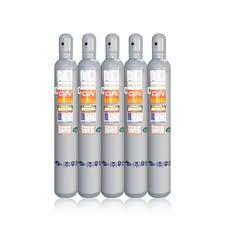
Description
Octafluorocyclobutane (C₄F₈): The Unsung Hero in Semiconductor Etching
In the intricate world of semiconductor manufacturing, where microscopic precision dictates the performance of our digital devices, the choice of materials is paramount. Among the vast array of chemicals employed, octafluorocyclobutane (C₄F₈), a fluorinated cyclic alkane, stands out as a crucial etch gas, silently enabling the creation of ever-shrinking and more powerful microchips.
C₄F₈, also known as perfluorocyclobutane, is a colorless, odorless, and non-flammable gas at room temperature. Its unique properties, arising from the strong carbon-fluorine bonds within its cyclic structure, make it particularly well-suited for etching processes in semiconductor fabrication.
Why C₄F₈ for Etching?
The etching process is critical for defining the intricate patterns and structures on silicon wafers that form the backbone of microchips. This involves selectively removing specific materials from the wafer surface while leaving others intact. C₄F₈ plays a vital role in this process for several key reasons:
- High Etch Selectivity: The controlled dissociation of C₄F₈ within a plasma environment allows for highly selective etching. By tuning the plasma parameters (power, pressure, gas mixtures), engineers can precisely target specific materials, such as silicon dioxide (SiO₂) or silicon nitride (Si₃N₄), while minimizing etching of the underlying silicon or other protective layers. This selectivity is crucial for achieving the sharp, well-defined features required for modern microchips.
- Effective Polymerization: When exposed to plasma, C₄F₈ fragments into reactive species, including fluorine radicals and fluorocarbon fragments. While fluorine radicals are responsible for etching, the fluorocarbon fragments play a crucial role in polymerizing on the sidewalls of the etched features. This polymer layer acts as a passivation layer, protecting the sidewalls from further etching and enabling the creation of high-aspect-ratio structures (deep, narrow features). This is essential for creating intricately connected transistors in modern microprocessors.
- Controllable Etch Rate: The concentration of C₄F₈ in the plasma, along with other parameters, directly influences the etch rate. This allows engineers to fine-tune the etching process to achieve the desired depth and shape of the etched features with remarkable precision.
- Relatively Low Global Warming Potential (GWP): While fluorinated gases are generally associated with high GWP, C₄F₈ has a lower GWP compared to some alternatives like SF₆ (sulfur hexafluoride). While still a concern, the industry is continuously working on optimizing its usage and exploring alternative gases with even lower environmental impact.
Applications in Semiconductor Manufacturing:
C₄F₈ is primarily used in:
- Dielectric Etching: Etching of dielectric materials like silicon dioxide, silicon nitride, and low-k dielectrics, which are used as insulators between different layers of transistors.
- Trench Etching: Creating deep trenches used for isolating transistors and other components on the chip.
- Contact and Via Etching: Forming vias and contacts that connect different layers of the microchip.
Challenges and Future Directions:
Despite its beneficial properties, C₄F₈ faces challenges related to its environmental impact and the increasing complexity of semiconductor fabrication. Research and development efforts are focused on:
- Reducing GWP and Enhancing Abatement Technologies: Developing advanced abatement technologies to capture and neutralize C₄F₈ emissions.
- Exploring Alternative Etch Gases: Investigating alternative gases with comparable performance but lower GWP.
- Optimizing Plasma Process Control: Improving plasma control to minimize the usage of C₄F₈ and maximize etch efficiency.
Conclusion:
Octafluorocyclobutane (C₄F₈) remains a critical material in semiconductor manufacturing, enabling the precise and controlled etching processes that are essential for creating advanced microchips. Its unique properties, including high etch selectivity, effective polymerization, and controllable etch rate, make it a valuable tool for defining the intricate patterns and structures that power our digital world. As the semiconductor industry continues to push the boundaries of miniaturization and performance, the role of C₄F₈, albeit with ongoing efforts to mitigate its environmental impact, will continue to be essential for shaping the future of technology.



Reviews
There are no reviews yet.