


Description
1. Product Overview
Industrial Safflower Oil Residue is a by-product generated during the industrial extraction and refining of safflower oil. This residue retains residual fatty compounds, organic solids, and valuable carbon-rich material, making it suitable for various downstream industrial applications. Its primary use is as a cost-efficient feedstock for biofuel production, industrial feedstock processing, and oleochemical manufacturing. The key value proposition lies in converting a low-cost secondary material into valuable energy and industrial inputs. Strategically, industrial safflower oil residue supports circular resource utilization and offers manufacturers a sustainable alternative to conventional raw materials.
2. Key Specifications & Technical Characteristics
- Chemical Composition:
- Residual fatty acids and triglycerides
- Organic plant solids and fiber content
- Trace proteins and natural carbohydrates
- Residual oil fractions from safflower processing
- Purity Level / Grade:
- Industrial-grade processing residue
- Residual oil content varies depending on extraction process
- Suitable for industrial conversion and processing applications
- Physical Characteristics:
- Form: Semi-solid paste, sludge, or compressed cake depending on processing method
- Color: Dark brown to black
- Texture: Dense fibrous material with residual oil content
- Moisture content: Variable depending on processing and storage conditions
- Bulk density: Source-dependent
- Packaging Options:
- Jumbo bulk bags (1 MT)
- Bulk container loading with protective liners
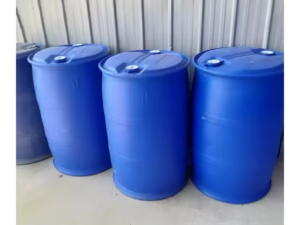
- Industrial drums for smaller shipments
- Shelf Life:
- Up to 6–12 months when stored in cool, dry, and sealed conditions
- Protected storage recommended to maintain material stability
3. Core Industrial Applications
Primary Industries:
- Biofuel and biodiesel production
- Oleochemical manufacturing
- Industrial feedstock processors
- Energy generation and biomass processing facilities
- Agricultural and industrial processing industries
Operational Use Cases:
- Feedstock for biodiesel and renewable energy production
- Raw material for industrial fatty acid recovery
- Biomass fuel input for industrial heating systems
- Blending component in industrial feedstock processing
Performance & Cost Advantages:
Industrial safflower oil residue offers a cost-effective alternative to primary vegetable oil feedstocks in energy and oleochemical applications. Its residual oil and organic carbon content provide efficient conversion potential for biofuel and industrial energy processes. Compared with higher-cost raw oils, it allows manufacturers to reduce input costs while maintaining process efficiency and production output.
4. Competitive Advantages
- Quality Consistency: Stable composition derived from controlled oil extraction processes
- Supply Reliability: Continuous availability from large-scale safflower oil processing operations
- Logistics Capability: Bulk handling and export-ready packaging solutions
- Price Competitiveness: Significantly lower cost compared to refined oil feedstocks
- Sustainability Benefits: Supports waste-to-value conversion and circular industrial supply chains
- Technical Documentation: Material specifications and logistics documentation available upon request
Positioned as a strategic secondary feedstock, Industrial Safflower Oil Residue enables industrial buyers to reduce production costs, diversify raw material sourcing, and strengthen sustainability performance across energy and chemical manufacturing operations.
5. Commercial & Supply Information
- Minimum Order Quantity (MOQ): BULK 20MT
- Loading Capacity (MT per container): Approximately 20–25 MT per 20’ container (depending on moisture content and packaging format)

Reviews
There are no reviews yet.