
Description
1. Product Overview
Glycerol Residue is a by-product generated during the refining and purification of glycerol, typically from biodiesel production, oleochemical processing, or soap manufacturing. It contains residual glycerol along with organic compounds, salts, and process-derived impurities, making it a valuable low-cost feedstock for multiple industrial processes. This material is widely utilized in energy generation, chemical processing, and fermentation-based industries where high-purity glycerol is not required. Its key value proposition lies in providing an economical carbon-rich raw material for industrial operations. In an era of circular manufacturing and resource optimization, Glycerol Residue plays a strategically important role in converting production by-products into valuable industrial inputs.
2. Key Specifications & Technical Characteristics
- Chemical Composition: Residual Glycerol, Organic Fatty Compounds, Methanol Traces (process-dependent), Salts, Water, and Minor Organic Impurities
- Typical Glycerol Content: 20–60% (varies by source and production method)
- Purity/Grade: Industrial Grade (Process Residue)
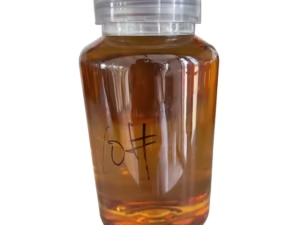
- Physical Form: Viscous liquid or semi-liquid
- Color: Dark brown to black
- Odor: Mild to moderate organic odor
- Density: Approximately 1.10 – 1.30 g/cm³
- Solubility: Partially to fully miscible in water depending on composition
- Viscosity: High viscosity due to glycerol and organic content
- Packaging Options: Bulk tanker, IBC totes (1000L), or industrial drums (200L)
- Shelf Life: Typically 6–12 months when stored in sealed containers under dry, controlled conditions
3. Core Industrial Applications
Bioenergy & Industrial Fuel
Widely used as a supplemental fuel or feedstock in industrial boilers and energy recovery systems. The organic content and calorific value make it suitable for controlled combustion applications.
Chemical Processing & Oleochemical Industry
Serves as a low-cost feedstock in processes where glycerol derivatives are produced or where organic carbon sources are required for chemical synthesis.
Fermentation & Bioprocessing
Utilized as an alternative carbon source in microbial fermentation processes for producing value-added chemicals, organic acids, and bio-based products.
Waste-to-Value Industrial Processing
Frequently incorporated into waste recovery systems where residual glycerol and organic compounds can be converted into energy or secondary chemical intermediates.
Compared with refined glycerol, Glycerol Residue provides a significant cost advantage for industrial users that prioritize functional carbon content over high-purity specifications, enabling efficient large-scale process economics.
4. Competitive Advantages
- Quality Consistency: Controlled sourcing from established biodiesel and oleochemical production streams ensures stable supply characteristics
- Supply Reliability: Generated continuously as a process residue from large-scale industrial operations
- Logistics Capability: Flexible bulk transport options including tanker loads, containerized IBCs, and drums for international distribution
- Price Competitiveness: Significantly lower cost than refined glycerol, making it highly attractive for industrial-scale applications
- Sustainability Benefits: Supports circular economy initiatives by repurposing industrial by-products and reducing waste streams
- Technical Documentation: Available specifications, safety documentation, and handling guidelines for industrial procurement and compliance
5. Commercial & Supply Information
- Minimum Order Quantity (MOQ): BULK 20 MT
- Loading Capacity: 20–24 MT per 20’ container depending on packaging configuration

Reviews
There are no reviews yet.