

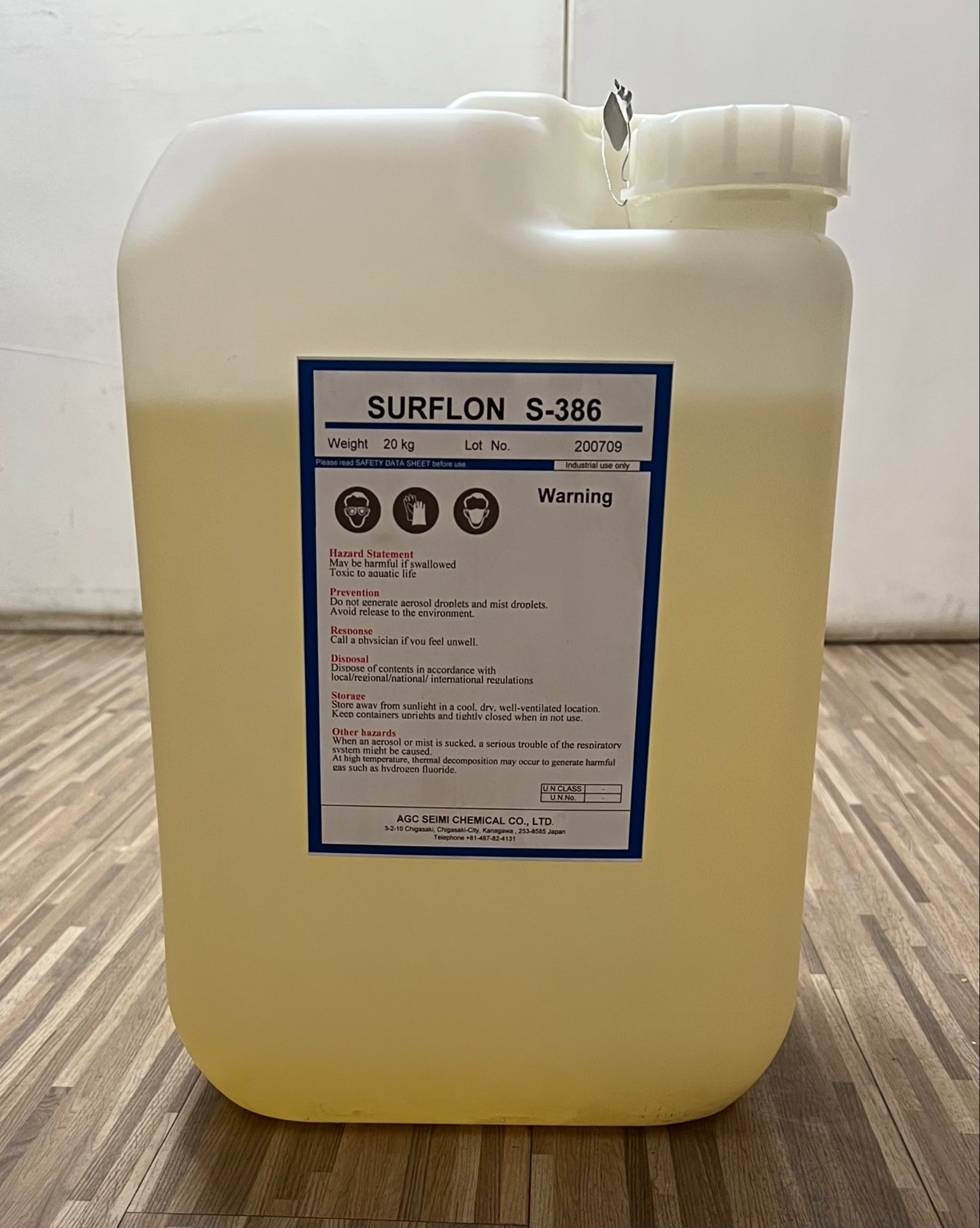

Description
Fluorosurfactants: Unpacking the Power and Peril of Super-Slick Chemistry
Imagine a substance so potent that just a tiny drop can radically alter the behavior of liquids, making water bead up like mercury or allowing oil to spread effortlessly. This is the domain of fluorosurfactants, a class of chemical compounds that represent the pinnacle of surface activity, offering unparalleled performance – but also raising significant environmental and health concerns.
What are Surfactants? (And Why Fluorinated Ones Are Special)
At their core, surfactants (surface active agents) are molecules with a split personality: one end is “hydrophilic” (water-loving) and the other is “hydrophobic” (water-fearing). This duality allows them to position themselves at the interface between two liquids (like oil and water) or between a liquid and air, effectively reducing the surface tension. This reduction in surface tension is why soap cleans, detergents foam, and paints spread smoothly.
Fluorosurfactants take this concept to an extreme. Their “water-fearing” tail is not just hydrophobic, but also “lipophobic” (oil-fearing). This is achieved by incorporating highly stable carbon-fluorine bonds into their molecular structure. The fluorine atoms create an incredibly low-energy surface, making these compounds exceptionally adept at repelling both water and oil simultaneously, a property known as “oleophobicity” and “hydrophobicity.”
The “Superpowers” of Fluorosurfactants
The unique chemistry of fluorosurfactants imbues them with a suite of remarkable properties:
- Extreme Surface Tension Reduction: They are unmatched in their ability to lower the surface tension of liquids, often to levels that no other class of surfactant can achieve. This allows liquids to spread more effectively, penetrate tiny spaces, or form incredibly stable foams.
- Oil and Water Repellency: This dual repellency is their defining characteristic. Surfaces treated with fluorosurfactants become resistant to almost any liquid spill.
- Chemical and Thermal Stability: The carbon-fluorine bond is one of the strongest in organic chemistry. This makes fluorosurfactants incredibly stable, resistant to heat, light, and chemical degradation, even in harsh environments.
- High Efficiency: Only minute quantities of fluorosurfactants are needed to achieve dramatic effects, making them highly cost-effective in many applications.
Where Are They Used? The Ubiquity of Performance
For decades, these “super-slick” chemicals found their way into a surprising array of products and industrial processes due to their superior performance:
- Firefighting Foams (AFFF): Aqueous Film-Forming Foams are perhaps their most famous application. Fluorosurfactants enable these foams to spread rapidly over fuel fires, forming a non-reignitable film that effectively extinguishes flames.
- Textile and Carpet Treatments: They are key ingredients in stain-resistant and water-repellent coatings like Scotchgard and Gore-Tex, providing durable protection against spills and moisture.
- Food Packaging: Used to create grease-resistant coatings for fast-food wrappers, pizza boxes, and microwave popcorn bags.
- Paints and Coatings: Improve flow, leveling, and anti-foaming properties, leading to smoother, more uniform finishes.
- Electronics and Semiconductors: Essential for precision cleaning and etching processes where absolute cleanliness and specific surface properties are critical.
- Adhesives and Sealants: Enhance wetting and bonding properties.
- Medical Devices: Used in some non-stick coatings and lubricants.
- Personal Care Products: Found in some cosmetics and dental floss for their smooth feel and water resistance.
The Dark Cloud: Persistent Environmental and Health Concerns
Despite their impressive performance, fluorosurfactants have become a focal point of intense scientific scrutiny and public concern. The very stability that makes them so effective is also their biggest drawback:
- “Forever Chemicals” (PFAS): Most fluorosurfactants belong to a larger family of chemicals known as Per- and Polyfluoroalkyl Substances (PFAS). The incredibly strong carbon-fluorine bond makes them virtually indestructible in the environment. They do not break down naturally, leading to their persistence in soil, water, air, and living organisms.
- Bioaccumulation: PFAS chemicals can accumulate in the human body and in animals over time, leading to potentially harmful levels. They have been detected globally, even in remote Arctic regions.
- Health Impacts: Extensive research has linked exposure to certain legacy PFAS compounds (like PFOA and PFOS, which are types of fluorosurfactants) to a range of adverse health effects, including:
- Increased risk of certain cancers (kidney, testicular).
- Thyroid disease.
- Immune system suppression.
- Developmental issues in children.
- Liver damage.
- Increased cholesterol levels.
- Widespread Contamination: Manufacturing sites, airports, military bases using AFFF, and landfills have all been identified as sources of widespread PFAS contamination in drinking water supplies.
The Shifting Landscape: Regulation and Alternatives
Growing awareness of the persistence and potential toxicity of PFAS has led to significant regulatory pressure worldwide. Major manufacturers have voluntarily phased out the production of long-chain PFAS compounds like PFOA and PFOS. However, “short-chain” PFAS alternatives, while generally less bioaccumulative, are still highly persistent and raise ongoing concerns.
The industry is now actively researching and developing fluorine-free alternatives (FFAFs) for applications like firefighting foams, and innovative non-fluorinated solutions for textiles, food packaging, and other uses. This shift reflects a global commitment to green chemistry – designing products and processes that minimize the use and generation of hazardous substances.
The Future of Surface Chemistry
Fluorosurfactants are a prime example of chemistry’s power to deliver extraordinary performance. Yet, they also serve as a stark reminder of the unintended consequences that can arise when environmental persistence is not fully considered. The future of surface chemistry lies in balancing innovation with responsibility, striving to create materials and solutions that are both highly effective and inherently sustainable, ensuring that groundbreaking performance does not come at the cost of planetary and public health.


Reviews
There are no reviews yet.