
Description
1. Product Overview
Antiozonants are specialized chemical additives designed to protect rubber and elastomeric materials from degradation caused by ozone exposure and atmospheric cracking. Widely used in tire manufacturing, industrial rubber goods, and automotive components, these additives significantly extend product lifespan under dynamic and static conditions. Their key value lies in enhancing durability, maintaining elasticity, and preventing premature failure in harsh environmental conditions. Strategically, antiozonants are essential for manufacturers seeking to improve product reliability, reduce maintenance costs, and meet stringent performance standards in global markets.
2. Key Specifications & Technical Characteristics
- Chemical Composition: Typically based on p-phenylenediamine (PPD) derivatives or wax-based protective compounds
- Purity Level / Grade: Industrial grade, typically ≥ 95% active content (varies by type)
- Physical Characteristics:
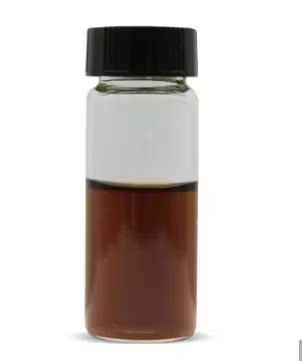
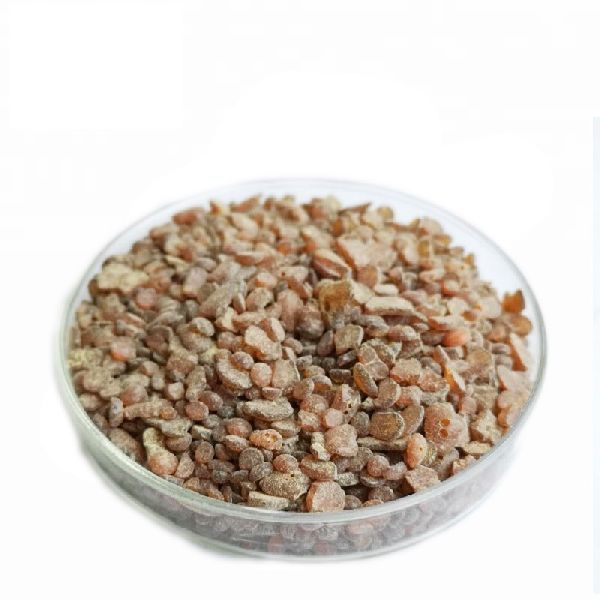
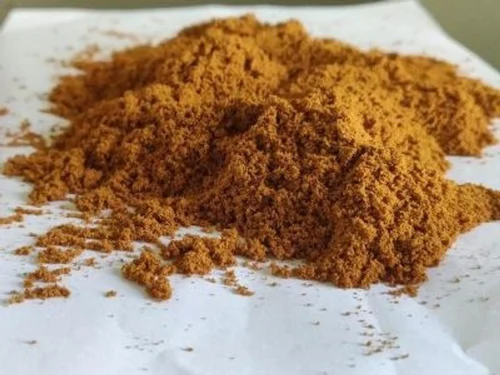
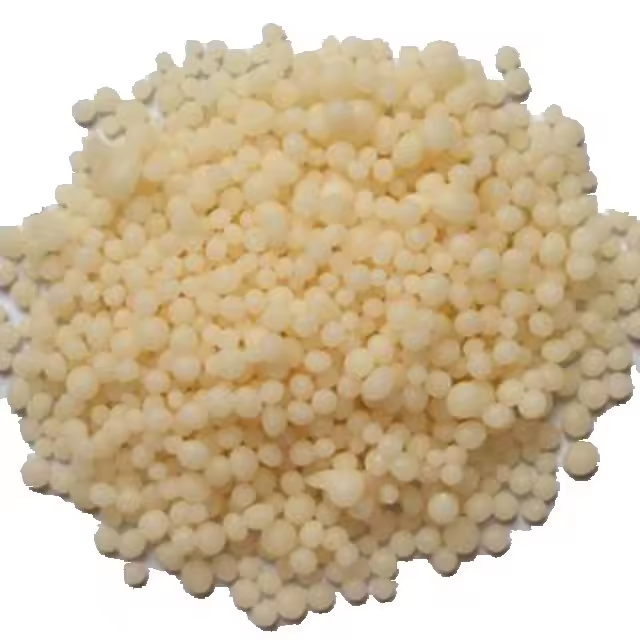
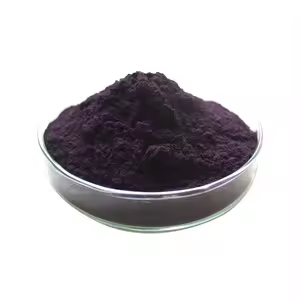
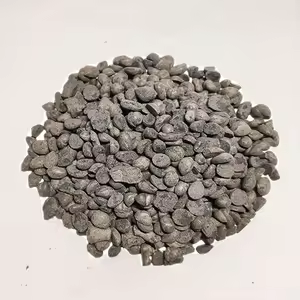
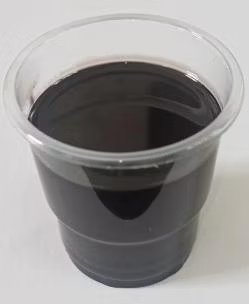
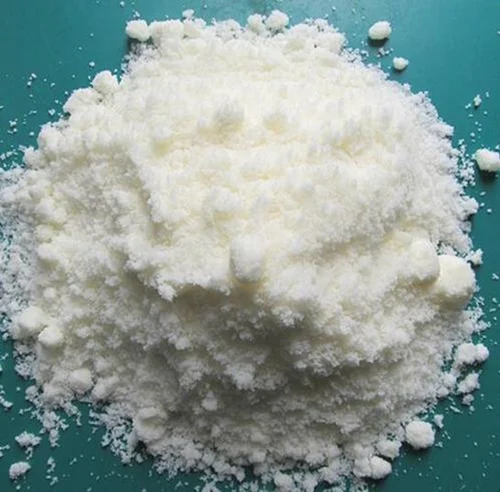
- Form: Powder, granules, flakes, or liquid
- Color: Dark brown to black (PPD types); off-white to yellowish (wax types)
- Solubility: Limited water solubility; compatible with rubber matrices
- Density: Approx. 1.0 – 1.3 g/cm³
- Packaging Options:
- 25 kg bags (kraft paper or polyethylene-lined)
- 500 kg – 1000 kg jumbo bags (FIBC)
- Shelf Life: 12–24 months when stored in cool, dry, and ventilated conditions
3. Core Industrial Applications
Antiozonants are critical in industries where rubber durability and environmental resistance are paramount:
- Tire Manufacturing: Protects sidewalls and treads from ozone cracking, especially under flexing conditions
- Automotive Components: Used in seals, hoses, belts, and gaskets to ensure long-term performance
- Industrial Rubber Goods: Applied in conveyor belts, rubber sheets, and molded parts exposed to outdoor environments
- Construction & Infrastructure: Enhances longevity of rubber-based expansion joints and sealing systems
Performance Advantages:
- Forms a protective barrier or reacts with ozone to neutralize its effects
- Extends service life of rubber products under both static and dynamic stress
- Reduces maintenance and replacement frequency
- Outperforms untreated rubber and basic stabilizers in ozone-rich environments
4. Competitive Advantages
- Consistent Quality: Controlled manufacturing processes ensure uniform dispersion and performance
- Reliable Supply Chain: Scalable production with stable global sourcing capabilities
- Logistics Efficiency: Flexible packaging and optimized bulk shipping solutions
- Cost Competitiveness: High performance-to-cost ratio, reducing lifecycle costs for end users
- Sustainability Considerations: Advanced formulations available with reduced environmental impact and regulatory compliance (e.g., low-staining, non-blooming types)
- Technical Support: Comprehensive product documentation, formulation guidance, and application expertise available
5. Commercial & Supply Information
- Minimum Order Quantity (MOQ): BULK 20 MT
- Loading Capacity:
- 20–22 MT per 20-ft container (depending on packaging and product form)


Reviews
There are no reviews yet.