
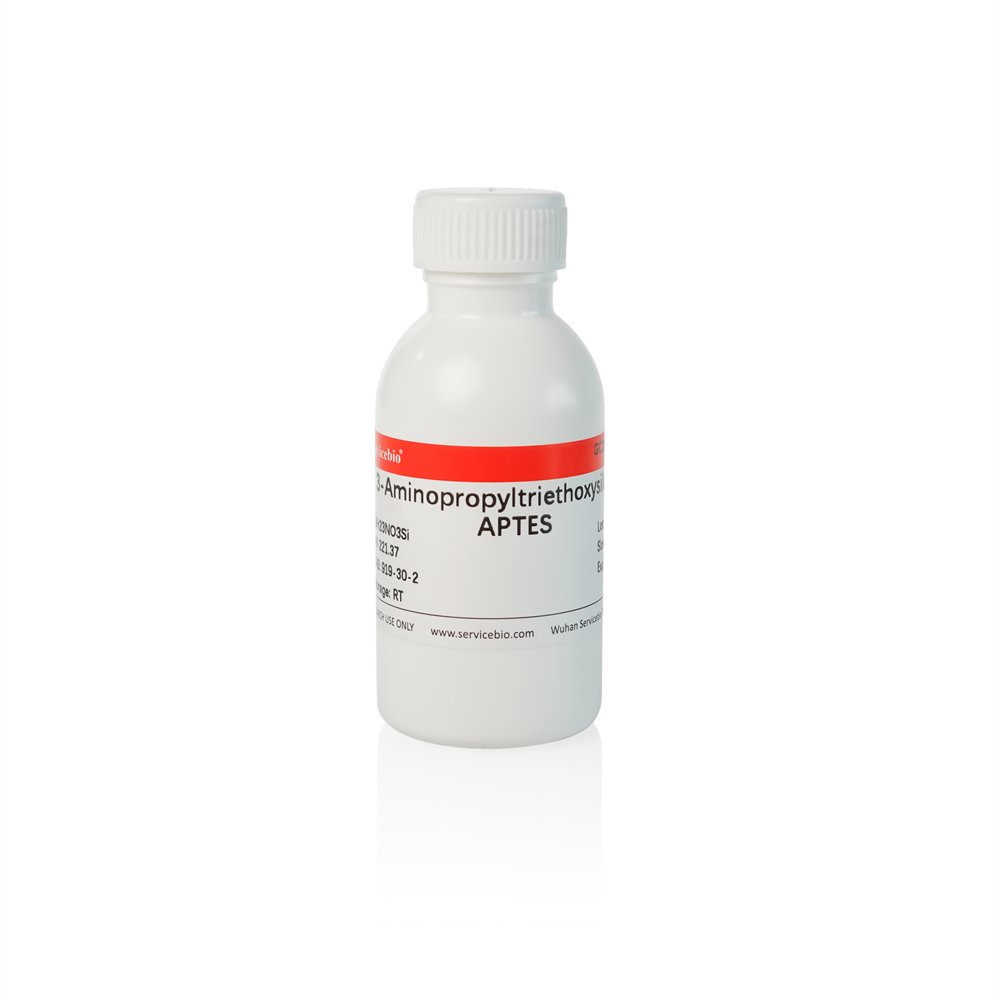
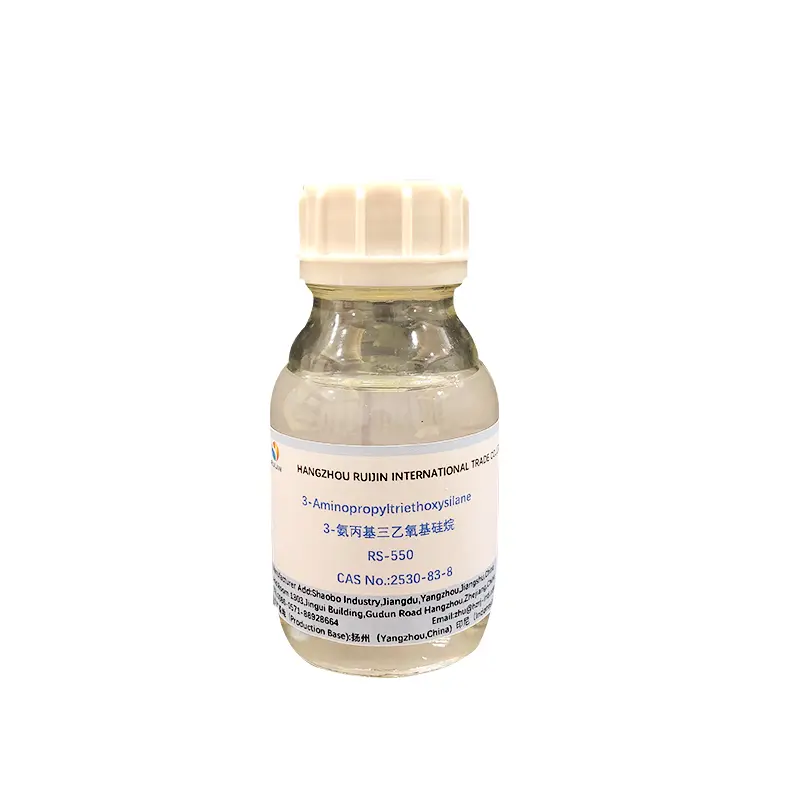
Description
3-Aminopropyltriethoxysilane: The Versatile Molecular Bridge for Enhanced Material Performance
In the vast realm of chemical compounds, some stand out for their ability to bridge seemingly disparate worlds. One such unsung hero is 3-Aminopropyltriethoxysilane, often abbreviated as APTES or APS. This remarkable organosilane serves as a crucial molecular link, transforming the performance and durability of countless materials across diverse industries.
What is 3-Aminopropyltriethoxysilane?
At its core, 3-Aminopropyltriethoxysilane is a bifunctional molecule, meaning it possesses two distinct reactive ends that allow it to interact with different types of materials. Its name reveals its structure:
- 3-Aminopropyl: This organic segment contains a primary amine (-NH2) group, which is highly reactive with organic resins, polymers, and biomolecules. It also provides basicity to the molecule.
- Triethoxysilane: This inorganic segment consists of a silicon atom bonded to three ethoxy (-O-CH2CH3) groups. These ethoxy groups are hydrolyzable, meaning they can react with water to form silanol (-Si-OH) groups, which readily bond with hydroxyl-rich inorganic surfaces like glass, metal oxides, and silica.
This unique combination of an organic amine functionality and an inorganic silane functionality makes APTES an indispensable silane coupling agent – a substance that creates a strong, durable bond between organic and inorganic materials that might otherwise struggle to adhere.
How Does it Work? The Molecular Bridging Mechanism
The magic of APTES lies in its ability to form a robust “molecular bridge” at the interface of different materials, typically a polymer matrix and an inorganic filler or substrate. The process involves a series of chemical reactions:
- Hydrolysis: When exposed to moisture (even atmospheric humidity), the ethoxy groups on the silane end hydrolyze, converting into reactive silanol groups (-Si-OH). This step is often accelerated by slight changes in pH or temperature.
- Condensation with Inorganic Surface: The newly formed silanol groups (-Si-OH) then react with hydroxyl groups present on the surface of inorganic materials (e.g., glass fibers, metal particles, silica powder, ceramic substrates). This reaction forms strong, stable covalent siloxane bonds (Si-O-M, where M is the inorganic material).
- Reaction with Organic Matrix: Simultaneously, the amino group (-NH2) on the organic end of the APTES molecule is free to react with various functional groups present in organic polymers or resins. These can include epoxy rings, isocyanates, carboxylic acids, aldehydes, or even simply inter-diffuse and create strong physical entanglement.
The result is a seamless, highly integrated interface where the strength of the inorganic material is synergistically combined with the flexibility and workability of the organic polymer, leading to dramatically improved composite properties.
Key Applications and Impact
The versatility of 3-Aminopropyltriethoxysilane makes it a workhorse in a broad spectrum of industries:
- Composites: APTES is widely used as a surface treatment for glass fibers, carbon fibers, and mineral fillers (like silica, talc, or kaolin) in resin systems. It enhances the adhesion between the fibers/fillers and the polymer matrix (e.g., epoxy, polyester, phenolic resins), leading to stronger, tougher, and more durable composite materials with improved mechanical properties and hydrolytic stability (resistance to water degradation).
- Adhesives and Sealants: As a primer or additive, APTES significantly improves the adhesion of adhesives and sealants to difficult-to-bond inorganic substrates such as glass, metals, ceramics, and concrete. This is critical in construction, automotive, and electronics applications where strong, long-lasting bonds are essential.
- Coatings: In paints, varnishes, and protective coatings, APTES can enhance adhesion to diverse substrates, improve scratch resistance, increase corrosion protection, and make surfaces more receptive to subsequent layers.
- Electronics Encapsulation: It is used in semiconductor packaging and electronic device encapsulation to improve the adhesion of molding compounds to chips and lead frames, enhancing reliability and preventing moisture ingress.
- Dispersing Agent: APTES can be used to modify the surface of inorganic fillers, making them more compatible and dispersible within organic polymer matrices. This reduces clumping, improves processing, and leads to more homogenous materials.
- Biomedical Applications: In the biomedical field, APTES is used for the functionalization of surfaces of implants and medical devices, allowing for the covalent attachment of biomolecules like proteins, antibodies, or DNA, which can guide cell growth or improve biocompatibility.
- Textiles: It can impart water repellency, improved hand feel, and better dye uptake on certain fabrics.
- Sol-Gel Chemistry: APTES is a common precursor in sol-gel processes for creating hybrid organic-inorganic materials with tunable properties.
Advantages and Benefits
The widespread use of APTES stems from its numerous benefits:
- Enhanced Adhesion: Creates strong, durable covalent bonds between dissimilar materials.
- Improved Mechanical Properties: Leads to increased tensile strength, flexural strength, impact resistance, and modulus in composites.
- Increased Durability: Enhances resistance to water, chemicals, and environmental degradation.
- Better Wetting and Dispersion: Improves the compatibility of fillers with polymers, reducing viscosity and improving processing.
- Versatility: Adaptable to a wide range of inorganic substrates and organic polymer systems.
Handling and Safety
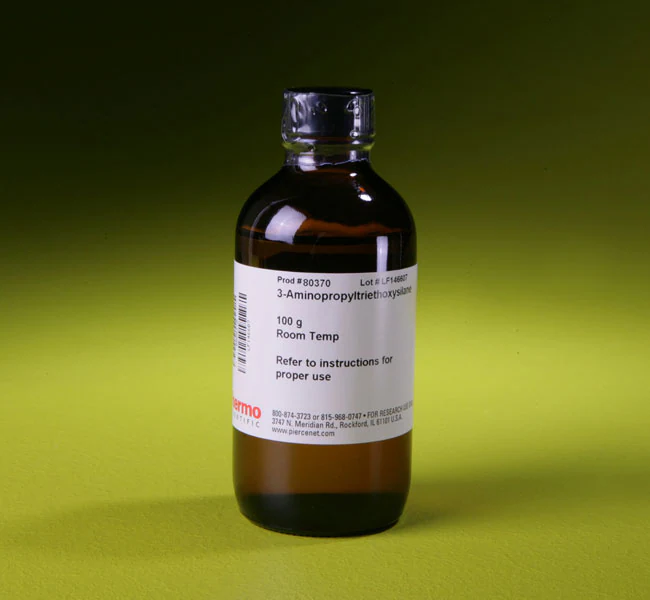
Like many industrial chemicals, 3-Aminopropyltriethoxysilane requires careful handling. It is typically a colorless to pale yellow liquid with an amine odor. Key considerations include:
- Irritant: Can cause irritation to the skin, eyes, and respiratory tract.
- Flammable: The ethoxy groups can make it flammable.
- Hydrolytic Stability: Must be stored in sealed containers to prevent exposure to moisture, which will cause it to hydrolyze.
- Ventilation and PPE: Proper ventilation and personal protective equipment (gloves, safety glasses, protective clothing) are essential during handling.
Conclusion
3-Aminopropyltriethoxysilane is far more than just a chemical; it is a fundamental enabler in modern materials science. Its unique bifunctional nature allows it to act as a molecular bridge, forming strong and durable connections between the organic and inorganic worlds. From the robust structures of advanced composites to the intricate components of electronic devices, APTES silently yet powerfully enhances performance, extends lifespan, and unlocks new possibilities in material design, making it an indispensable component in countless cutting-edge technologies.


Reviews
There are no reviews yet.