
Description
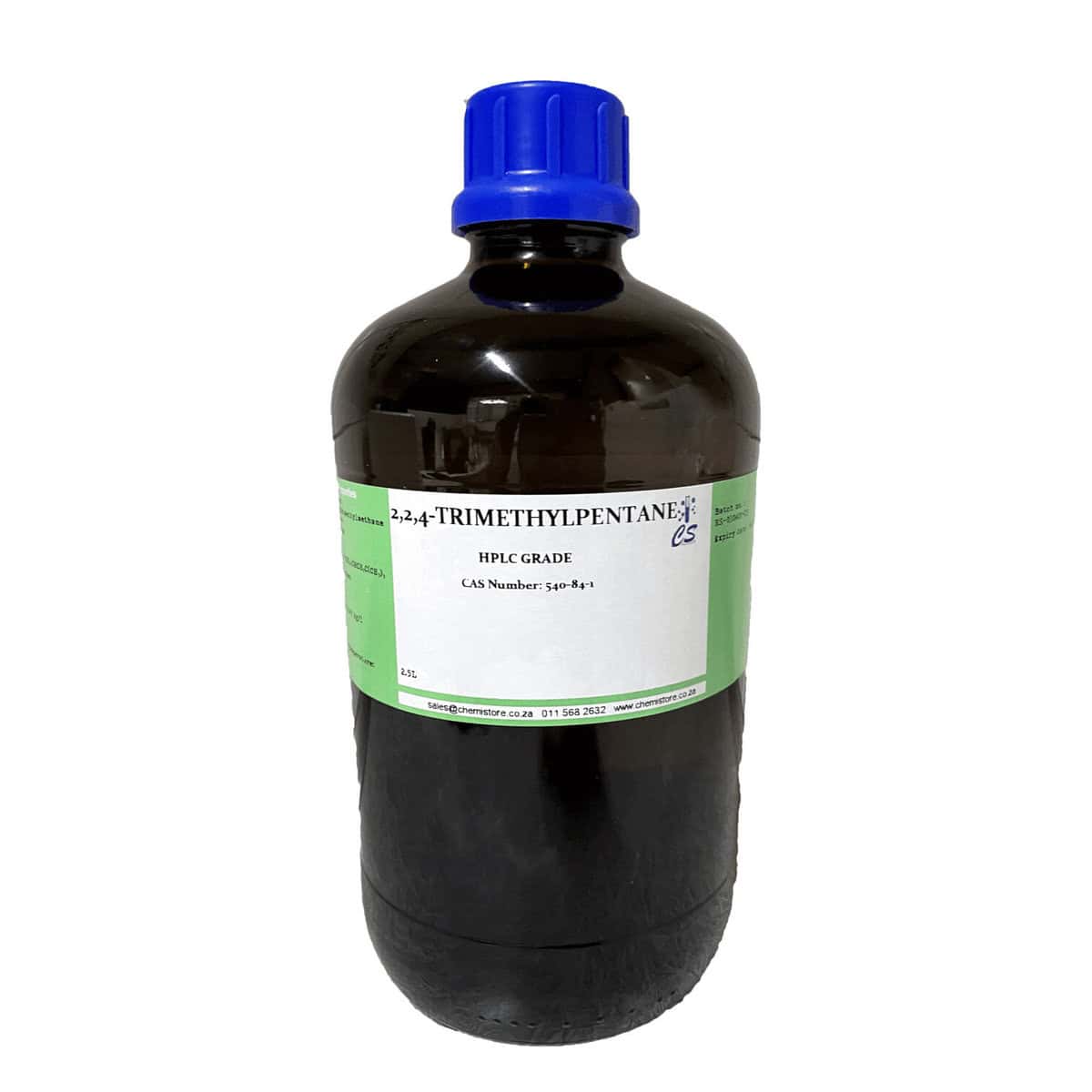
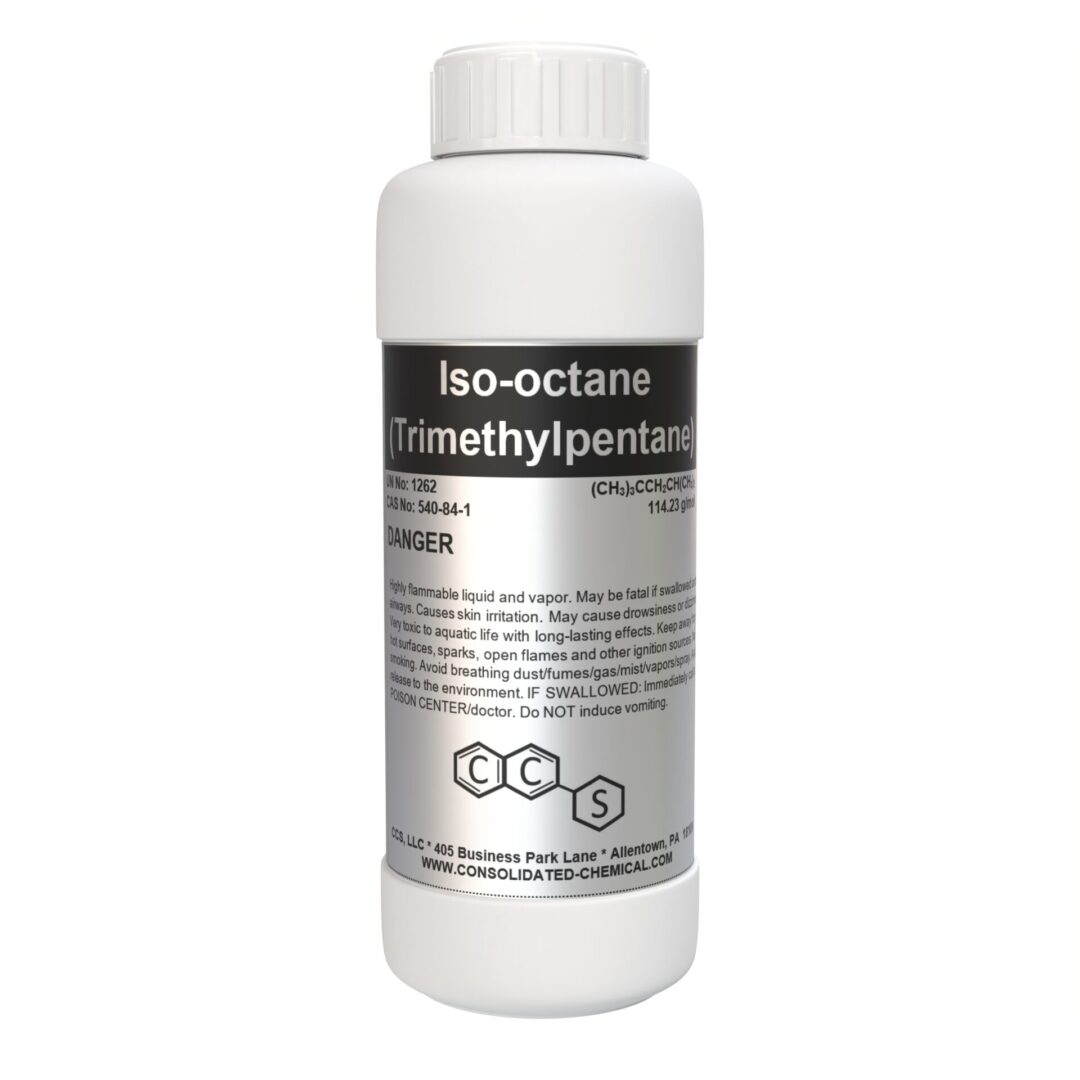
2,2,4-Trimethylpentane is a branched alkane also known as iso-octane. It is one of the isomers of octane and is famously used as the standard reference fuel for octane ratings.
- Molecular formula: C8H18
- Molar mass: 114.23 g/mol
- IUPAC name: 2,2,4-trimethylpentane
- Common name: iso-octane
- Key role: defines the octane rating of 100 on the standard scale
Structure and nomenclature
- The main chain is a pentane (five carbons).
- Substituents:
- Two methyl groups at carbon 2
- One methyl group at carbon 4
- A condensed structural representation is:
- CH3-C(CH3)2-CH2-CH(CH3)-CH3
This arrangement yields eight carbons in total (hence “octane” in its common name) and a highly branched structure.
Physical properties (typical)
- State at room temperature: liquid
- Boiling point: around 99 °C
- Density: roughly 0.69 g/mL at 25 °C
- Solubility: essentially insoluble in water; soluble in nonpolar solvents
- Safety: flammable; handle with appropriate precautions (avoid ignition sources, use in well-ventilated areas)
Octane rating and use
- Octane rating: defined as 100 for iso-octane under standard test conditions
- Practical significance: used as the high-octane reference fuel against which other gasoline components are measured. Gasoline blends are rated by comparing their tendency to knock to the iso-octane standard and to n-heptane (which is rated 0).
Related notes
- Iso-octane is one of several isomers of octane. Its high resistance to knocking is what gives it the 100 octane rating.
- In refining and fuel formulation, a mix of various isomers is used to achieve a target octane value and combustion characteristics.
Takeaway
2,2,4-Trimethylpentane (iso-octane) is the quintessential high-octane reference compound for gasoline quality, with the octane number of 100 and a branched C8H18 structure that maximizes resistance to knocking.


Reviews
There are no reviews yet.