


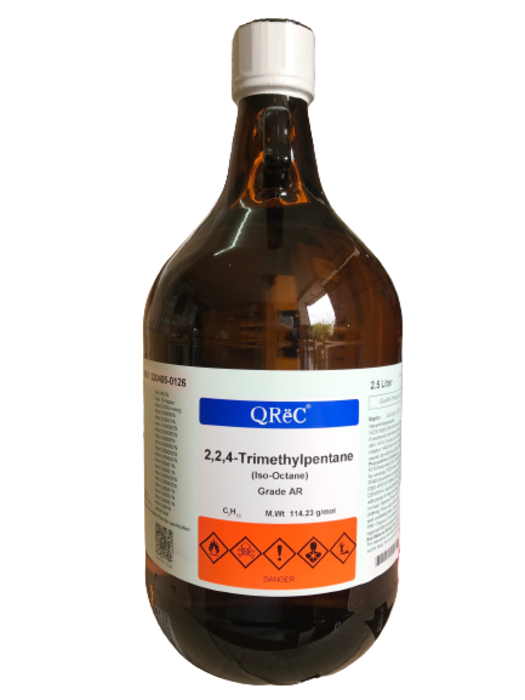
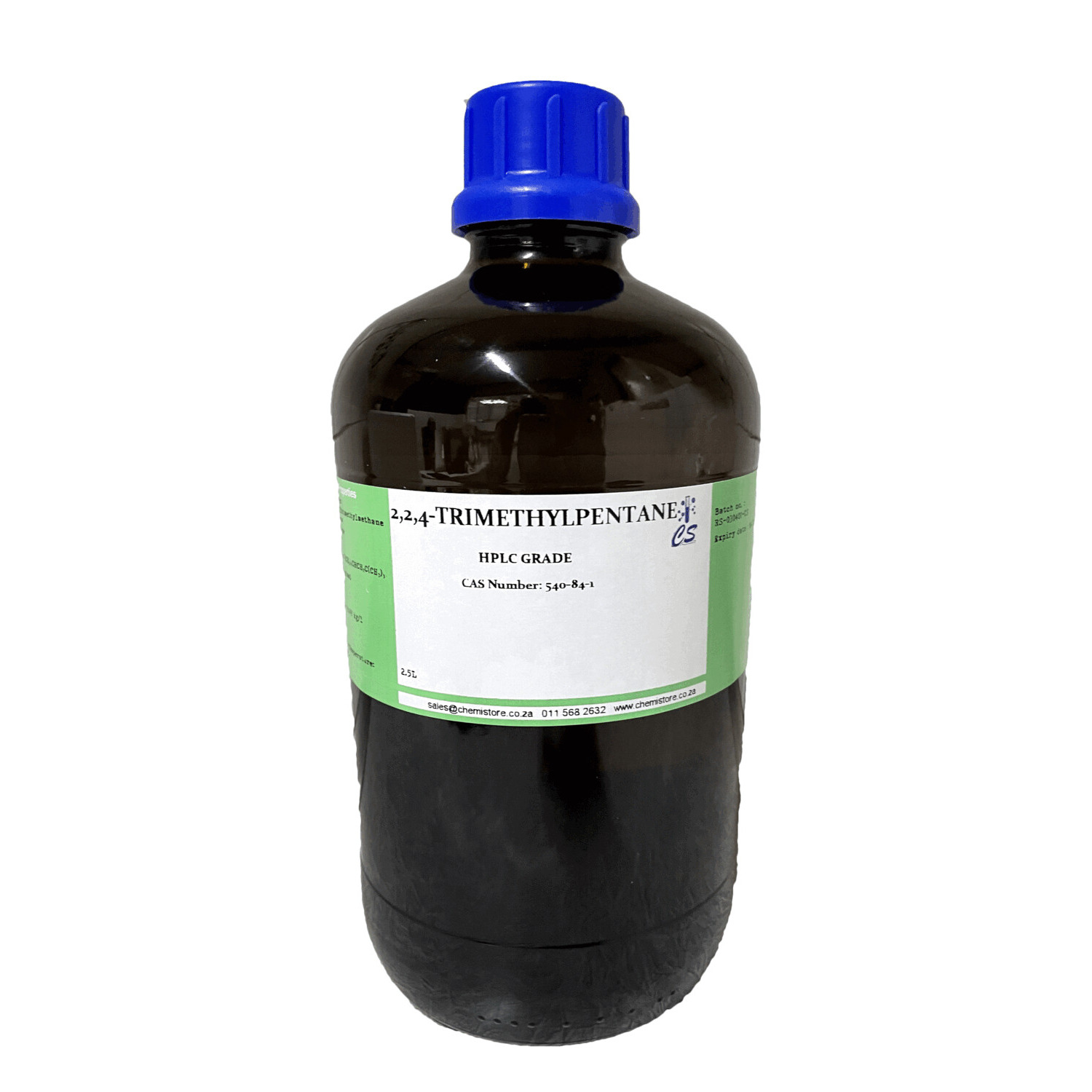
Description
2,2,4-Trimethylpentane (Iso-octane): The Benchmark of Fuel Quality
In the intricate world of internal combustion engines, one molecule stands out as the ultimate benchmark for fuel quality: 2,2,4-Trimethylpentane, more commonly known as iso-octane. While its name may sound complex, its role is elegantly simple and fundamentally critical to the performance and longevity of the vehicles we rely on every day.
What is 2,2,4-Trimethylpentane?
Chemically, iso-octane is a branched-chain alkane with the molecular formula C8H18. It is one of 18 different structural isomers of octane (meaning it has the same atoms but a different arrangement). Its distinctive branched structure, as opposed to a straight chain, is key to its desirable combustion properties.
Physically, iso-octane is a colorless, volatile liquid with a characteristic gasoline-like odor. It is highly flammable, as expected from a hydrocarbon used as fuel.
The Heart of the Matter: Octane Rating
The primary reason iso-octane holds such a prominent position in the automotive industry is its direct correlation with the octane rating of gasoline. The octane rating is a measure of a fuel’s resistance to “engine knocking” or “pre-ignition” – an abnormal combustion phenomenon that can severely damage an engine.
In a normal internal combustion engine, the air-fuel mixture is compressed and then ignited by a spark plug. The flame front then spreads smoothly across the combustion chamber. However, if the fuel has a low octane rating, it can spontaneously combust under high compression and heat before the spark plug fires. This uncontrolled, rapid combustion creates a shockwave, leading to a metallic “pinging” or “knocking” sound – hence the term. Prolonged knocking can cause overheating, piston damage, and overall engine failure.
This is where iso-octane comes in:
- The 100-Point Reference: By international agreement, 2,2,4-Trimethylpentane (iso-octane) is assigned an octane number of 100. It is highly resistant to knocking under typical engine conditions.
- The 0-Point Contrast: The opposite end of the scale is represented by n-heptane (a straight-chain alkane), which is highly prone to knocking and is assigned an octane number of 0.
- Creating the Scale: Gasoline’s octane rating is determined by comparing its knocking resistance to a mixture of iso-octane and n-heptane. For example, a gasoline with an octane rating of 95 performs like a mixture that is 95% iso-octane and 5% n-heptane.
The more branched or aromatic a hydrocarbon molecule is, the more resistant it typically is to knocking, which is why iso-octane with its multiple branches is such an effective anti-knock reference.
Beyond the Benchmark: Other Applications
While its primary claim to fame is its role in fuel, iso-octane also finds niche applications as:
- A Solvent: Its nonpolar nature makes it an effective solvent for nonpolar substances like fats, oils, and greases in laboratory and industrial settings.
- A Chemical Intermediate: It can serve as a building block in the synthesis of other organic compounds.
Production of Iso-octane
Iso-octane is primarily produced in petroleum refineries through processes that rearrange the molecular structure of other hydrocarbons. A common method is the isomerization of other C8 alkanes (like n-octane) or through alkylation, where smaller molecules (like isobutane and butenes) are combined to form branched hydrocarbons like iso-octane.
Safety and Environmental Considerations
Like all hydrocarbons, iso-octane is a highly flammable liquid and must be handled with care. Its vapors can form explosive mixtures with air. Inhalation of high concentrations can cause dizziness and nausea. Environmentally, as a volatile organic compound (VOC), its emissions contribute to air pollution, though its role as a fuel component means its combustion products (carbon dioxide and water) are the primary environmental concern.
Conclusion
From the roar of a race car engine to the subtle hum of a commuter vehicle, 2,2,4-Trimethylpentane – iso-octane – plays a silent yet fundamental role. It is the invisible standard against which fuel quality is measured, ensuring engines run efficiently, reliably, and without the damaging effects of knocking. Its simple purpose belies its profound impact on modern transportation and industry, solidifying its place as a cornerstone of hydrocarbon chemistry.


Reviews
There are no reviews yet.