

Description
1. Product Overview
Ruthenium acetylacetonate is a high-purity organometallic precursor essential for chemical vapor deposition (CVD) and atomic layer deposition (ALD) of ruthenium thin films. Its primary industrial use lies in advanced semiconductor manufacturing, specialty catalysis, and next-generation electronics, where uniform, conductive, and adhesive metal layers are critical. The key value proposition is exceptional thermal stability, consistent volatilization, and low impurity profile—directly enabling yield improvement and process reliability. As global demand for sub-5nm nodes and DRAM capacitors intensifies, securing a dependable, high-grade Ru(acac)₃ supply is a strategic lever for supply chain resilience and technological leadership.
2. Key Specifications & Technical Characteristics
-
Chemical composition: Ruthenium(III) acetylacetonate, Ru(C₅H₇O₂)₃
-
Purity grade: ≥99.9% (trace metals basis); available in 99.99% (4N) for leading-edge ALD applications
-
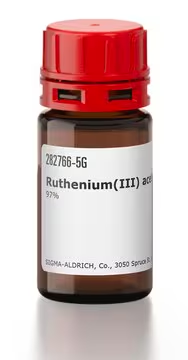
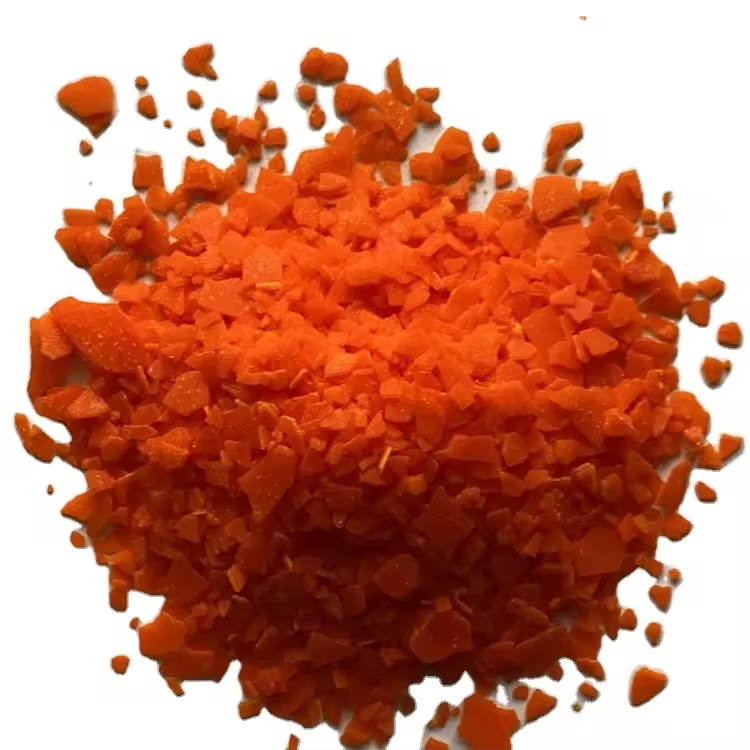
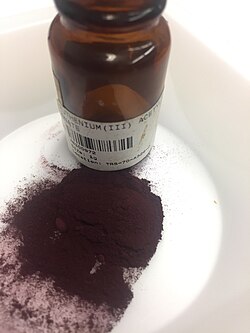
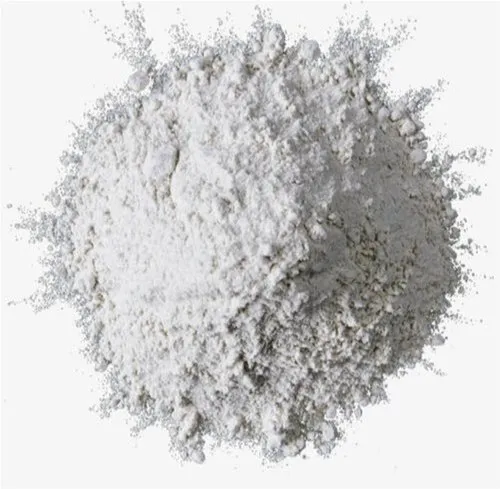
Physical form: Dark violet to black crystalline powder
-
Melting point: 260–263°C (decomposes without residue)
-
Particle size: Customizable (standard 20–50 µm; fine micronized <10 µm available)
-
Bulk density: Approx. 0.6–0.8 g/cm³
-
Metal content: ~21.5% Ru by weight
-
Packaging options: Vacuum-sealed 1 kg, 5 kg aluminum-lined bags; 10 kg and 25 kg HDPE drums with inert gas purge; custom IBCs for bulk orders
-
Shelf life: 24 months when stored below 30°C in original sealed container under dry, inert atmosphere
3. Core Industrial Applications
-
Semiconductor fabrication (front-end & back-end): ALD/CVD of Ru liners and seed layers for Cu interconnects and DRAM electrodes – outperforms PVD alternatives via superior step coverage (>95% on high-aspect-ratio features) and reduced defect density.
-
Thin-film resistors & heaters: Production of stable, low-resistivity Ru films in MEMS and sensor devices – provides better adhesion to oxide substrates than Pt or Ir precursors.
-
Heterogeneous catalysis: Synthesis of supported Ru nanoparticles for hydrogenation, ammonia decomposition, and CO₂ methanation – enables higher turnover frequency (TOF) due to controlled nucleation from single-source precursor.
-
Advanced data storage: Deposition of Ru underlayers for perpendicular magnetic recording (PMR) media – reduces grain size variation and enhances magnetic anisotropy versus sputtered films.
Why better than alternatives: Direct liquid injection (DLI)-compatible thermal stability, minimal carbon incorporation in films, and batch-to-batch reproducibility eliminate process drift.
4. Competitive Advantages
-
Quality consistency: ISO 9001:2025 certified production; each lot validated by ICP-MS (trace metals), TGA (residual solvents), and XRD (phase purity). Certificate of Analysis (CoA) with full traceability included.
-
Supply reliability: Dual-sourced raw ruthenium from conflict-free, audited refineries. Buffer stock maintained across three regional hubs (NA, EU, APAC) to guarantee 98% on-time-in-full (OTIF) delivery.
-
Logistics capability: Temperature-controlled packaging with real-time data loggers; DG-classified (UN 3466) compliant with IATA/IMDG for seamless cross-border shipping.
-
Price competitiveness: Long-term offtake agreements with ruthenium refiners enable stable quarterly pricing formulas – protecting buyers from spot metal volatility.
-
Sustainability & documentation: Full REACH and TSCA compliance; available with Product Carbon Footprint (PCF) data per ISO 14067; zero-halogen process residues. Technical datasheets, safety data sheets (SDS), and CVD/ALD process recipes provided on request.
5. Commercial & Supply Information
-
Minimum order quantity (MOQ): 1 kg (sample qualification); 10 kg (standard industrial lot)
-
BULK 20MT loading capacity: Ruthenium acetylacetonate is a high-value, low-density specialty chemical – standard consolidated shipments use 20 kg net per fiber drum.
-
20MT equivalent: 1,000 drums × 20 kg = 20,000 kg net
-
Loading per 20ft container: Up to 12,000 kg net (600 drums) due to density and stacking limits. Full 20MT volume requires multi-container coordination (typical for quarterly supply agreements).
-

Reviews
There are no reviews yet.