
Description
1. Product Overview
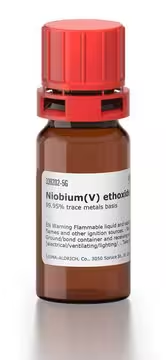
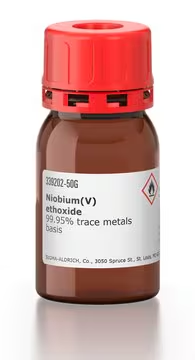
Niobium ethoxide (Nb(OC₂H₅)₅) is a high-purity metal alkoxide serving as the premier precursor for niobium-based thin films, nanoparticles, and advanced ceramic materials. Its primary industrial use lies in the production of lithium niobate (LiNbO₃) and niobium oxide (Nb₂O₅) layers for electronics, optics, and energy storage systems. The key value proposition is exceptional hydrolytic sensitivity combined with controlled decomposition, enabling atomic-level deposition uniformity that directly enhances device performance. Strategically, it is critical for manufacturers transitioning to next-generation 5G filters, high-refractive-index optical coatings, and solid-state battery components—supply security of this compound directly impacts yield and miniaturization roadmaps.
2. Key Specifications & Technical Characteristics
-
Chemical composition: Niobium(V) ethoxide, Nb(OC₂H₅)₅ (CAS 3236-82-6)
-
Purity grade: Standard 99.95% trace metals basis; ultra-high purity (99.999%) available for semiconductor applications
-
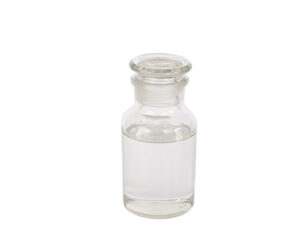
Physical form: Clear pale-yellow to amber liquid
-
Density: ~1.35 g/cm³ at 20°C
-
Boiling point: 140–142°C at 0.1 mmHg (decomposes before atmospheric boiling)
-
Sensitivity: Hydrolyzes rapidly in moist air → requires inert atmosphere handling
-
Metal content: ~20–21% Nb by weight
-
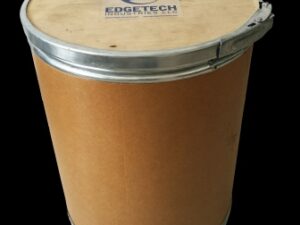
Packaging options: 1L, 5L, 20L stainless steel bubblers; 200L drum with PTFE-lined cap; custom cylinders for CVD/ALD direct-to-tool feed
-
Shelf life: 12 months from date of analysis when stored under dry nitrogen at 0–25°C
3. Core Industrial Applications
-
Advanced electronics (5G/6G RF filters): Used to deposit lithium niobate thin films for surface acoustic wave (SAW) and bulk acoustic wave (BAW) filters. Outperforms solid-state synthesis via lower annealing temperatures (450°C vs. >700°C), preserving underlying CMOS circuitry.
-
Optical coatings & waveguides: Enables high-refractive-index layers (n ~ 2.2–2.4) with <0.5% scattering loss. Beats sputtering targets in step coverage on 3D-structured glass and polymer substrates.
-
Solid-state battery electrolytes: Produces Nb-doped LLZO (Li₇La₃Zr₂O₁₂) with 2x higher ionic conductivity than undoped versions. Cost advantage over hafnium alkoxides at comparable electrochemical stability.
-
Catalyst supports: Forms mesoporous Nb₂O₅ with acid site density >0.3 mmol/g – superior thermal stability (up to 800°C) vs. silica or titania in biomass conversion.
4. Competitive Advantages
-
Quality consistency: Lot-to-lot variation < ±2% in Nb assay (verified by ICP-OES and NMR), ensuring repeatable film thickness across multi-ton annual purchases.
-
Supply reliability: Dedicated manufacturing line with 72-hour emergency dispatch from regional hubs (US, EU, Asia); on-site nitrogen-blanketed storage guarantees zero hydrolysis defects.
-
Logistics capability: UN-compliant packaging with real-time hazmat tracking; temperature-controlled cross-dock reduces transit degradation to <0.1% per 1,000 km.
-
Price competitiveness: Direct-from-kiln pricing – 15–20% below specialty chemical distributors at 20 MT contract volumes, with volume-based rebates.
-
Sustainability: Closed-loop ethanol recovery in production (reduces virgin solvent use by 60%); full REACH and TSCA compliance documentation included.
-
Technical support: Free process optimization guide (CVD/ALD parameter mapping) + batch certificate with moisture and residual chloride analysis.
5. Commercial & Supply Information
-
Minimum order quantity (MOQ): 5 kg (lab/R&D qualification); 500 kg (industrial pilot); 20 MT (full production contract)
-
BULK 20 MT loading capacity per container:
-
Standard ISO tank container (20 ft): 20 MT net (one full shipment)
-
Alternatively: 80 × 200L drums (net ~16 MT per 20 ft container – lower density due to packaging volume)
-
-
Lead time (20 MT): 28 days from order confirmation + 14 days ocean freight (FOB manufacturing port)
Reviews
There are no reviews yet.