
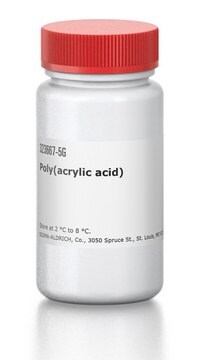
Description
1. What Exactly Is Polyacrylic Acid?
Polyacrylic acid (PAA) is a water‑soluble, linear polymer composed of repeating acrylic acid units:
[ \text{–[CH}_2\text{–CH(COOH)]–}_n ]
- Acrylic acid is a simple monomer (CH₂=CH–COOH).
- Polymerisation links thousands of these monomers into a long chain, giving the material its “poly‑” prefix.
- The carboxylic acid groups (–COOH) on each repeat unit confer the polymer’s hallmark hydrophilicity and pH‑responsive behavior.
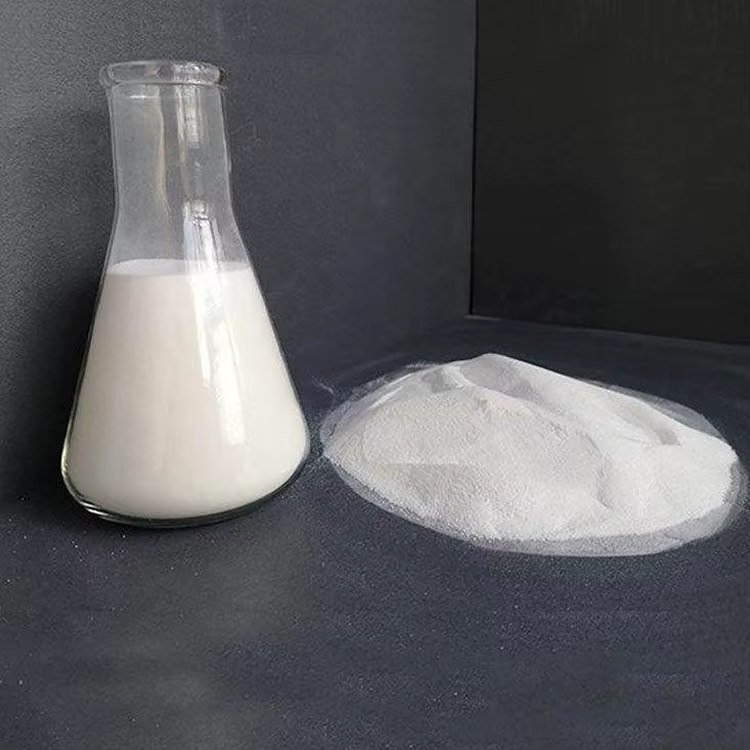
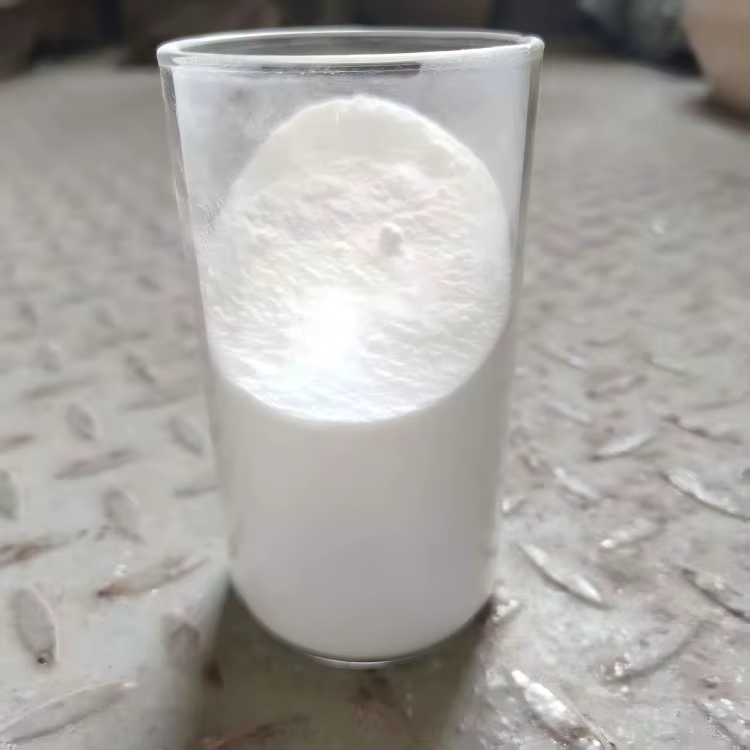
In its pure, un‑neutralized form PAA is a white, powdery solid that swells dramatically in water, forming a viscous, gel‑like solution. When the acid groups are neutralized with a base (e.g., sodium hydroxide), you get sodium polyacrylate, the classic “super‑absorbent polymer” (SAP) used in diapers and adult incontinence products.
2. The Chemistry Behind the Magic
| Feature | Why It Matters | Typical Value |
|---|---|---|
| Molecular weight (Mw) | Controls viscosity, swelling, and mechanical strength. | 10 k–10 M g·mol⁻¹ (commercial grades span a wide range) |
| Degree of neutralization | Determines charge density → water uptake, viscosity, and compatibility with other ingredients. | 0 % (acid) to ~100 % (fully neutralized) |
| Polydispersity index (PDI) | Measure of chain‑length uniformity; lower PDI → more predictable performance. | 1.2–4 (typical) |
| pKa of –COOH groups | ~4.5 – means the polymer is largely deprotonated above pH ≈ 5, turning into a polyelectrolyte. | — |
The pKa ≈ 4.5 is a key design lever. Below this pH the polymer is largely neutral (–COOH) and less soluble; above it, the carboxyl groups lose a proton, become negatively charged (–COO⁻), and strongly attract water molecules via electrostatic hydration. This switchable solubility underpins many of PAA’s applications.
3. How Is Polyacrylic Acid Made?
- Monomer Production
- Acrylic acid is produced industrially by the oxidation of propylene (the “ox‑prop” process) or by the acetylene route.
- Polymerisation
- Free‑radical polymerisation is the workhorse. A water‑soluble initiator (e.g., potassium persulfate) creates radicals that open the C=C double bond of acrylic acid, linking monomers into a chain.
- The reaction can be run in solution (water) or in bulk (neat monomer) under controlled temperature (50–80 °C).
- Neutralisation (optional)
- To obtain sodium polyacrylate or other salts, the polymer slurry is partially or fully neutralised with a base (NaOH, KOH, NH₃).
- Drying & Milling
- The product is spray‑dried or drum‑dried into a free‑flowing powder, then milled to the desired particle size.
Industry tip: Modern plants often incorporate continuous reactors and real‑time NIR spectroscopy to keep the molecular weight distribution tight, maximizing performance while reducing waste.
4. Key Physical & Chemical Properties
| Property | Typical Range | Application Insight |
|---|---|---|
| Water absorption (g water / g polymer) | 30–500 (depends on neutralisation, cross‑linking) | Super‑absorbents in hygiene products, wound dressings |
| Viscosity (100 % solids, 25 °C) | 10–10,000 mPa·s | Thickeners in cosmetics, paints, adhesives |
| Swelling ratio (dry → wet) | 100–10,000 % | Soil conditioners, drug‑delivery hydrogels |
| Thermal stability | Degradation onset ~250 °C | Processing in extrusion or melt‑compounding |
| pH responsiveness | Strongly expands above pH ≈ 5 | Controlled release systems, sensor gels |
| Biodegradability | Generally non‑biodegradable in its high‑MW form, but can be engineered with degradable linkages (e.g., hydrolyzable esters) | Eco‑friendly packaging, agricultural mulches |
The ability of PAA to bind water up to several hundred times its own weight is why it’s the go‑to polymer for anything that needs to stay dry…or stay wet (think hydrogel wound dressings).
5. Real‑World Applications
5.1 Super‑Absorbent Polymers (SAPs) – The Diaper Hero
- How it works: Cross‑linked sodium polyacrylate forms a three‑dimensional network that locks water in “gel pockets.”
- Performance: A single gram can absorb up to 300 g of saline solution—roughly the weight of a small apple.
- Beyond diapers: Adult incontinence pads, pet litter, agricultural water‑retention granules.
5.2 Water Treatment & Heavy‑Metal Capture
- Mechanism: The anionic –COO⁻ groups chelate metal cations (Pb²⁺, Cu²⁺, Cd²⁺).
- Forms: Beads, membranes, or flocculants (often combined with iron salts).
- Impact: Cost‑effective removal of toxic metals from industrial effluents, meeting stricter EU/US discharge limits.
5.3 Cosmetics & Personal Care
- Moisturising gels & serums: PAA stabilizes oil‑in‑water emulsions, gives a silky slip, and provides a “film‑forming” effect that reduces transepidermal water loss.
- Hair‑care conditioners: The polymer’s slight negative charge smooths the positively charged keratin cuticle, improving combability.
- Low‑irritation: Because it’s a weak acid, PAA is generally well‑tolerated even on sensitive skin.
5.4 Pharmaceutical & Biomedical Uses
| Use | Why PAA? |
|---|---|
| Controlled‑release tablets | pH‑dependent swelling controls drug dissolution in the gastrointestinal tract. |
| Wound dressings | Hydrogel forms maintain a moist environment, absorb exudate, and can be loaded with antimicrobial agents. |
| Tissue engineering scaffolds | When combined with biodegradable polymers (PLA, PLGA), PAA imparts hydrophilicity and cell‑adhesion cues. |
5.5 Adhesives, Sealants & Coatings
- Water‑based adhesives: PAA acts as a tackifier and viscosity modifier, enabling rapid bonding of paper, cardboard, and non‑porous substrates.
- pH‑curable coatings: In automotive clear coats, PAA‑based dispersants keep pigment particles evenly distributed until the coating is baked.
5.6 Food & Agriculture
- Food‑grade PAA (E‑263) is used as a sequestrant and texture enhancer in baked goods, sauces, and dairy.
- Soil conditioners: When mixed with compost, PAA‑based granules improve water retention, reducing irrigation needs by up to 30 % in arid climates.
6. Safety, Toxicology, and Environmental Footprint
| Aspect | Details |
|---|---|
| Acute toxicity | Low (LD₅₀ > 2 g kg⁻¹ in rats). Main irritation risk is the acidic nature; proper neutralisation mitigates this. |
| Skin/eye irritation | May cause mild irritation in the unneutralised acid form; neutralised salts are generally non‑irritating. |
| Biodegradability | Conventional high‑MW PAA is resistant to microbial degradation. However, “hydrolytically degradable PAA” (incorporating ester linkages) shows >80 % degradation in 6 months under composting conditions. |
| Regulatory status | Listed as GRAS (Generally Recognized As Safe) for food applications in the U.S.; approved for cosmetics by the EU’s SCCS. |
| Environmental advantage | Compared with starch‑based super‑absorbers, SAPs derived from PAA have a lower land‑use footprint and can be recycled (e.g., recovered from used diapers for agricultural use). |
Pro tip: When selecting a PAA grade for “green” projects, look for low‑ionic‑strength, high‑purity variants and verify that the manufacturer has a closed‑loop water‑recovery system to minimise wastewater.
7. Emerging Trends & Future Directions
- Smart Hydrogels – By copolymerising acrylic acid with temperature‑responsive monomers (e.g., N‑isopropylacrylamide), researchers are creating “dual‑responsive” gels that swell only under the right combination of pH and temperature. Applications include self‑healing wound dressings and drug‑release capsules that trigger in inflamed tissue.
- Nanocomposite SAPs – Embedding nanoclay or graphene oxide into the polymer network dramatically boosts absorption capacity while improving mechanical strength. Early prototypes aim at high‑performance flood‑control barriers.
- Biodegradable Alternatives – Companies are exploring poly(lactic acid)‑grafted acrylic acid or poly(β‑amino ester)‑based PAA analogues that retain water‑binding ability but break down after a set period, opening doors for single‑use medical devices with a truly compostable end‑of‑life.
- Carbon‑capture Materials – Functionalising PAA with amine groups has shown promise for CO₂ adsorption from flue gases, leveraging the polymer’s high surface area and strong ionic interactions.
- Digital Manufacturing – 3‑D printing of PAA‑based inks is becoming feasible. By tuning rheology with rheology modifiers (e.g., xanthan gum), engineers can print custom‑shaped hydrogel scaffolds for personalized medicine.
8. Quick FAQ
| Question | Answer |
|---|---|
| Is polyacrylic acid the same as acrylic acid? | No. Acrylic acid is the monomer (a single small molecule). Polyacrylic acid is the polymer formed by linking many acrylic acid units together. |
| Do I need to wear gloves when handling PAA powder? | For the unneutralised acid form, it’s advisable to wear gloves and eye protection because it can cause mild irritation. Neutralised salts are generally safe but still handle as a dust. |
| Can I dissolve PAA in alcohol? | PAA is water‑soluble but only sparingly soluble in most organic solvents. A small amount may dissolve in ethanol if the polymer is partially neutralised. |
| What’s the difference between PAA and sodium polyacrylate? | Sodium polyacrylate is the neutralised, ionic form of PAA (all –COOH groups converted to –COONa). It exhibits the classic super‑absorbent behavior. |
| Is PAA recyclable? | Yes—used SAPs can be washed, dried, and ground into a filler for concrete or mixed with soil conditioners. Full chemical recycling (depolymerisation) is still under development. |
9. Bottom Line: Why Polyacrylic Acid Deserves a Spot in Your Science Toolbox
- Versatility: From ultra‑absorbent diapers to pH‑responsive drug carriers, PAA’s chemistry can be tuned by simply adjusting its molecular weight, degree of neutralisation, or by copolymerising with other monomers.
- Performance: Its high water‑binding capacity, strong ionic interactions, and ability to form transparent gels make it hard to replace in many high‑value applications.
- Economic & Environmental Balance: While the polymer itself isn’t biodegradable, modern production methods and recycling strategies keep its carbon footprint competitive with natural alternatives. Emerging degradable grades promise even greener pathways.
If you’re designing a new product—whether it’s a next‑generation facial serum, a low‑cost water‑purification filter, or a smart hydrogel for tissue engineering—polyacrylic acid is a polymer that can often be the first‑stop solution. Its chemistry is simple enough to be understood in an undergraduate lab, yet sophisticated enough to enable cutting‑edge technologies.
Want to Experiment?
| Lab‑Scale Test | Materials | Procedure (quick) |
|---|---|---|
| Swelling Capacity | PAA powder (neutralised to Na‑PAA), distilled water | Weigh 0.1 g of polymer, add 10 mL water, stir 5 min, filter, weigh the swollen gel. |
| pH‑Responsive Viscosity | 5 % w/w PAA solution, buffer solutions pH 3–9, viscometer | Measure viscosity at each pH; note the sharp increase above pH 5. |
| Metal‑Ion Chelation | 1 % PAA solution, CuSO₄ aqueous solution (0.1 M) | Mix equal volumes, stir 30 min, filter, analyze filtrate by atomic absorption to quantify Cu²⁺ removal. |


Reviews
There are no reviews yet.