
Description
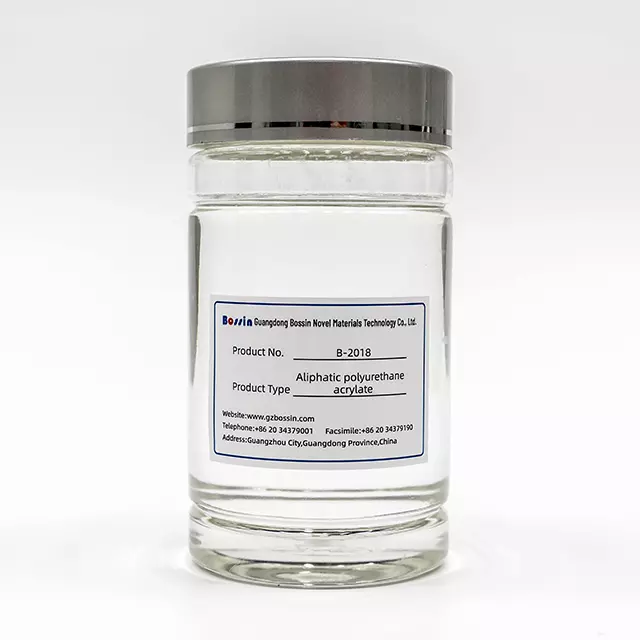
Urethane Acrylate Oligomers: The Versatile Backbone of Advanced Cured Materials
In the world of advanced materials, where performance, efficiency, and environmental responsibility converge, urethane acrylate oligomers stand out as a class of highly versatile and indispensable chemical entities. These unique hybrid molecules serve as the foundational building blocks for a vast array of high-performance coatings, inks, adhesives, and 3D printing resins, primarily characterized by their rapid, energy-efficient, and solvent-free curing mechanisms.
What are Urethane Acrylate Oligomers?
To understand their significance, let’s break down the name:
- Oligomer: This term refers to a molecule made up of a few (oligo-) repeating units. Unlike full polymers, oligomers have a relatively low molecular weight but are large enough to exhibit specific properties and participate in further polymerization. They are typically viscous liquids at room temperature.
- Acrylate: This denotes the presence of acrylate functional groups (CH₂=CH-COO-). These are highly reactive double bonds that readily undergo free-radical polymerization when exposed to ultraviolet (UV) light, electron beam (EB) radiation, or in some cases, heat with initiators. This is the “curing” mechanism that transforms the liquid oligomer into a solid, cross-linked network.
- Urethane: This refers to the urethane linkage (-NH-CO-O-) present in the backbone of the oligomer. These linkages are formed by the reaction of isocyanates with hydroxyl-containing compounds (polyols). The urethane segment imparts specific mechanical properties, such as toughness, flexibility, and chemical resistance, to the final cured material.
In essence, urethane acrylate oligomers are macromolecules featuring a urethane-rich backbone terminated or functionalized with reactive acrylate groups. This unique chemical architecture allows them to combine the desirable properties of polyurethanes with the fast curing capabilities of acrylates.
Key Properties and Advantages
The tailored design of urethane acrylate oligomers offers a compelling set of advantages:
- Rapid Curing (UV/EB Curing): This is arguably their most significant benefit. Curing occurs in seconds or even milliseconds, leading to higher production speeds, reduced energy consumption (compared to thermal curing), and a smaller manufacturing footprint.
- Excellent Mechanical Properties: Thanks to the urethane backbone, cured materials exhibit outstanding toughness, abrasion resistance, impact strength, and scratch resistance. They can be formulated to be highly flexible or very rigid.
- Superior Adhesion: Urethane acrylate formulations often show excellent adhesion to a wide variety of substrates, including plastics, metals, wood, and paper.
- Chemical and Water Resistance: The cross-linked polymer network provides good resistance to solvents, water, and various chemicals.
- Low VOCs (Volatile Organic Compounds): UV/EB curable systems are typically 100% solids, meaning they contain little to no solvents, contributing to a safer working environment and lower environmental impact.
- Versatility in Formulation: The properties of urethane acrylate oligomers can be fine-tuned by varying the type of polyol, isocyanate, molecular weight, and number of acrylate functionalities, allowing for customized performance.
Diverse Applications
The unique combination of properties makes urethane acrylate oligomers indispensable across numerous industries:
- Coatings:
- Wood Coatings: For flooring, furniture, and cabinetry, offering excellent scratch and abrasion resistance.
- Automotive Refinish: Durable and fast-drying topcoats.
- Industrial Coatings: Protective layers for machinery, pipes, and concrete.
- Plastic Coatings: Enhancing scratch resistance and aesthetics for electronic devices, automotive interiors, and consumer goods.
- Packaging Coatings: Providing protective and decorative surfaces for food and beverage packaging.
- Inks:
- Printing Inks: Used in offset, flexographic, gravure, and digital printing for their fast cure, vibrant colors, and durability on various substrates.
- Adhesives:
- Pressure Sensitive Adhesives (PSAs): For labels and tapes.
- Structural Adhesives: For bonding various materials in assembly operations, offering high bond strength and rapid processing.
- 3D Printing (Additive Manufacturing):
- SLA (Stereolithography) and DLP (Digital Light Processing) Resins: Urethane acrylates are key components in photopolymer resins, enabling the creation of highly detailed, durable, and flexible parts with excellent mechanical properties.
- Electronics:
- Conformal Coatings: Protecting printed circuit boards from moisture and contaminants.
- Encapsulants: For protecting delicate electronic components.
- Other Applications:
- Optical Fiber Coatings: Providing protection and flexibility for communication cables.
- Dental Materials: Components in restorative composites and bonding agents.
Future Outlook
The demand for urethane acrylate oligomers is continually growing, driven by the increasing need for high-performance, sustainable, and efficient material solutions across industries. Ongoing research focuses on developing bio-based urethane acrylates, oligomers with even lower viscosity for easier processing, and those offering enhanced specific properties like extreme flexibility, improved outdoor weathering, or superior chemical resistance.
In conclusion, urethane acrylate oligomers represent a cornerstone of modern material science, enabling the creation of products that are not only high-performing and durable but also contribute to more sustainable manufacturing processes. Their unique chemistry provides an unparalleled balance of properties, making them truly versatile workhorses in the chemical industry.



Reviews
There are no reviews yet.