
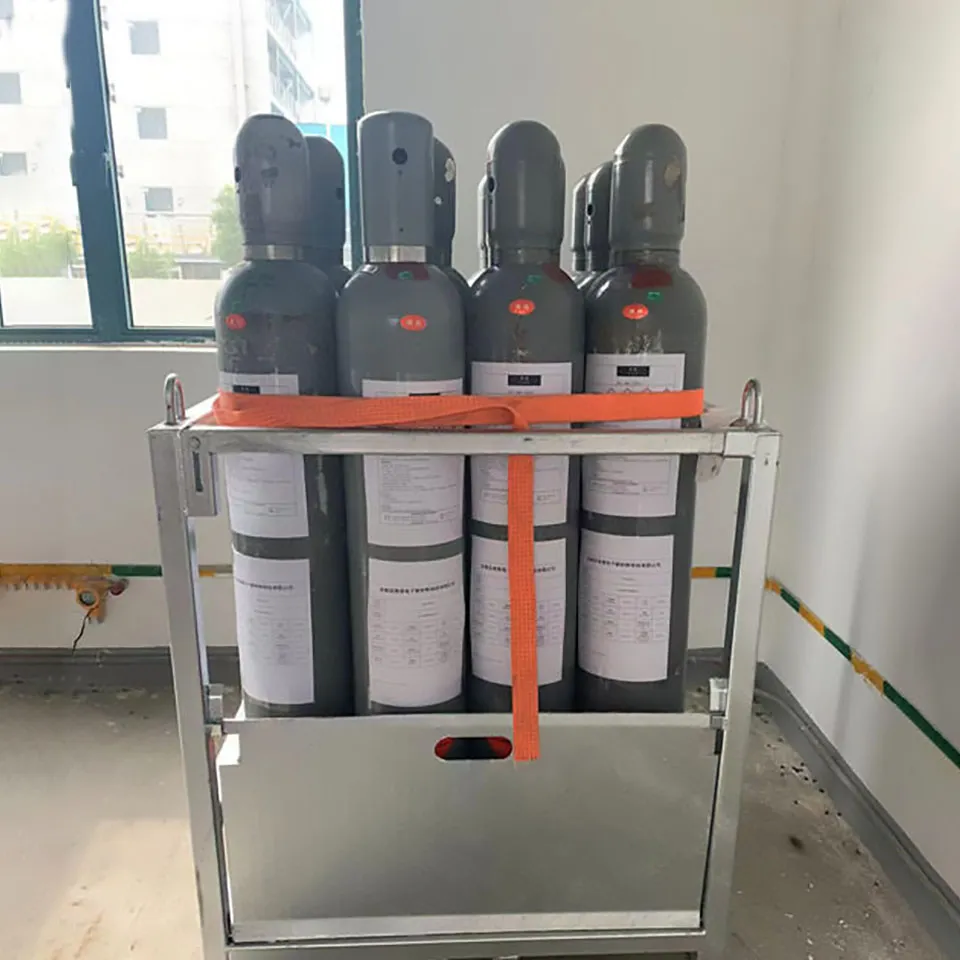
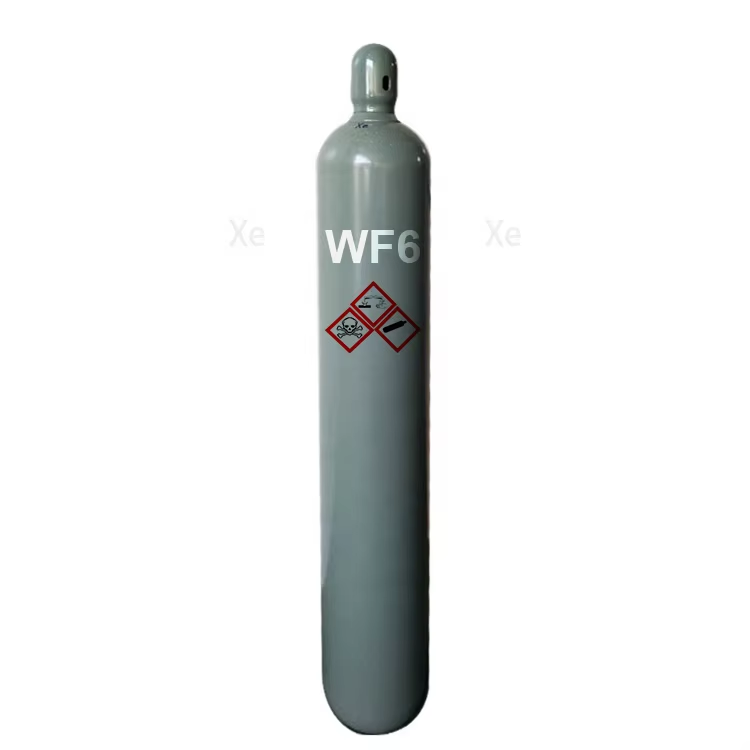
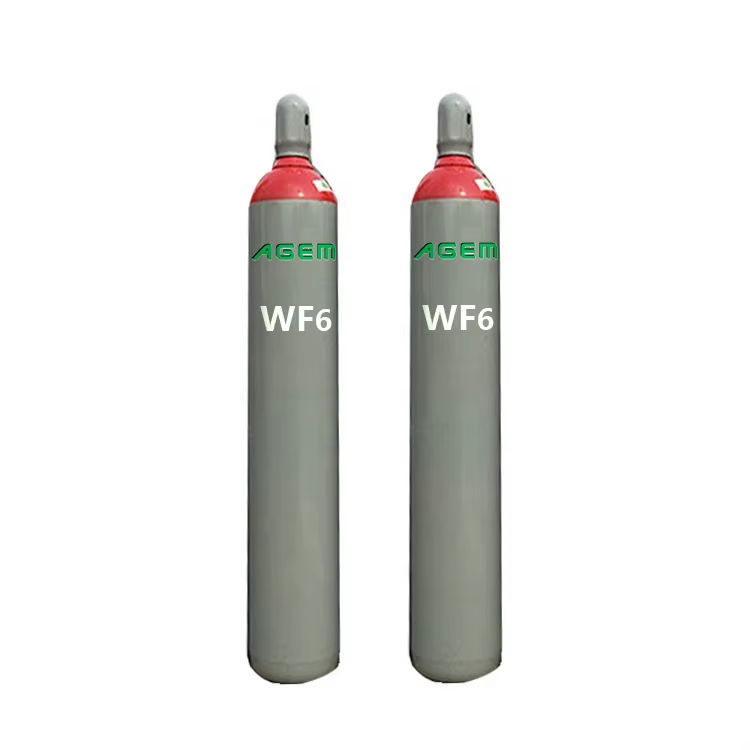
Description
Tungsten Hexafluoride (WF₆) in Atomic Layer Deposition: A Cornerstone for Advanced Microelectronics
In the relentless pursuit of smaller, faster, and more powerful electronic devices, the precision deposition of thin films has become an art form. Among the most critical materials in modern microfabrication is tungsten (W), renowned for its low resistivity, high melting point, and excellent electromigration resistance. When it comes to depositing ultra-thin, highly conformal tungsten films, Atomic Layer Deposition (ALD) stands out, with Tungsten Hexafluoride (WF₆) as its quintessential precursor.
The Power of Tungsten and the Precision of ALD
Tungsten is indispensable in semiconductor manufacturing for various applications:
- Interconnects and Vias: Filling the tiny holes and trenches that connect different layers of circuitry.
- Gate Electrodes: Although less common in the latest high-k metal gate stacks, W was historically used and remains relevant in some processes.
- Contact Layers: Providing low-resistance connections to silicon.
- Diffusion Barriers: Preventing intermixing between different material layers.
ALD is a thin-film deposition technique celebrated for its ability to produce highly conformal films with atomic-level thickness control. It operates on a self-limiting, sequential process:
- A precursor (e.g., WF₆) is pulsed into the reaction chamber and adsorbs onto the substrate surface until it’s saturated (a monolayer forms).
- Excess precursor is purged out.
- A co-reactant (e.g., a reducing agent) is pulsed in and reacts only with the adsorbed precursor, forming a stable film.
- Byproducts are purged. This cycle is repeated to build up the desired film thickness, layer by atom layer.
WF₆ and the Chemistry of ALD Tungsten
WF₆ is the most widely adopted and studied tungsten precursor for ALD due to its high volatility, stability, and reactivity. The most common ALD tungsten processes using WF₆ involve a reducing agent. Here are the primary chemistries:
- WF₆ + SiH₄ (Silane): This is the most common and robust process.
- First Half-Cycle: WF₆ molecules adsorb onto the surface.
- Second Half-Cycle: SiH₄ reacts with the adsorbed WF₆, reducing it to metallic tungsten and forming volatile byproducts like SiF₄ and HF. The silicon from silane is also incorporated into the film, typically as a small percentage of WSiₓ.
- Advantages: Good nucleation, high growth per cycle (GPC), relatively low resistivity.
- WF₆ + H₂ (Hydrogen):
- First Half-Cycle: WF₆ adsorbs.
- Second Half-Cycle: H₂ reduces the adsorbed WF₆.
- Advantages: Produces purer tungsten films (less Si incorporation).
- Challenges: Often requires higher deposition temperatures (typically >350°C to 400°C) and can have poorer nucleation on some surfaces compared to SiH₄, leading to longer incubation periods.
- WF₆ + B₂H₆ (Diborane):
- Can offer lower deposition temperatures than H₂ processes, with some boron incorporation into the film.
- WF₆ + Si₂H₆ (Disilane) or GeH₄ (Germane):
- These can offer lower temperature options or different film properties, but are less common than SiH₄.
Advantages of Using WF₆ for ALD Tungsten
- High Volatility and Purity: WF₆ is a highly volatile gas at room temperature, making it easy to deliver to the reaction chamber in a pure form.
- Chemical Reactivity: Its high reactivity facilitates the reduction to metallic tungsten, forming dense and uniform films.
- Conformality: The self-limiting nature of ALD, combined with the ideal properties of WF₆, results in exceptionally conformal films, crucial for coating high aspect ratio features (e.g., via holes with ratios >100:1).
- Thickness Control: ALD offers unparalleled control over film thickness, enabling atomic-level precision, which is vital for nanometer-scale devices.
- Industry Standard: WF₆ has been extensively studied and optimized, making it a well-understood and reliable precursor in industrial settings.
Challenges and Considerations
Despite its widespread use, WF₆-based ALD of tungsten presents certain challenges:
- Fluorine Etching: A significant concern is the potential for fluorine species (from WF₆ itself or HF byproducts) to etch underlying silicon or silicon oxide layers. This can lead to interface defects, rough films, and even device degradation. Strategies to mitigate this include:
- Using thin nucleation layers (e.g., TiN, AlN) to provide a stable surface for W deposition.
- Optimizing process parameters (temperature, pulse times).
- Employing specific surface pre-treatments (e.g., SiH₄ pre-treatment to passivate the surface).
- Deposition Temperature: While ALD generally operates at lower temperatures than CVD, WF₆-based W ALD often still requires temperatures in the range of 250-400°C. For ever more heat-sensitive substrates and architectures, this can be a limitation.
- Byproduct Management: The gaseous byproducts like HF and SiF₄ are corrosive and require careful handling and exhaust management.
- Film Purity (Si incorporation): While Si incorporation from SiH₄ can sometimes be beneficial for adhesion, for the purest metallic tungsten films, H₂-based processes are preferred, albeit with the mentioned temperature and nucleation trade-offs.
Future Outlook
Research continues to push the boundaries of WF₆-based ALD. Efforts are focused on:
- Developing lower temperature processes to enable integration with more fragile, next-generation materials.
- Exploring novel surface activation techniques to improve nucleation and reduce incubation times.
- Fine-tuning the chemistry to minimize fluorine etching and control film stress.
- Expanding its application beyond traditional semiconductors, into areas like MEMS/NEMS, advanced packaging, and even catalysis.
In conclusion, Tungsten Hexafluoride remains an indispensable precursor for Atomic Layer Deposition of tungsten. Its unique properties, combined with the precision of ALD, enable the fabrication of the advanced microelectronic devices that power our digital world. While challenges persist, ongoing innovation ensures WF₆ will continue to be a cornerstone material in the ever-evolving landscape of nanotechnology.


Reviews
There are no reviews yet.