
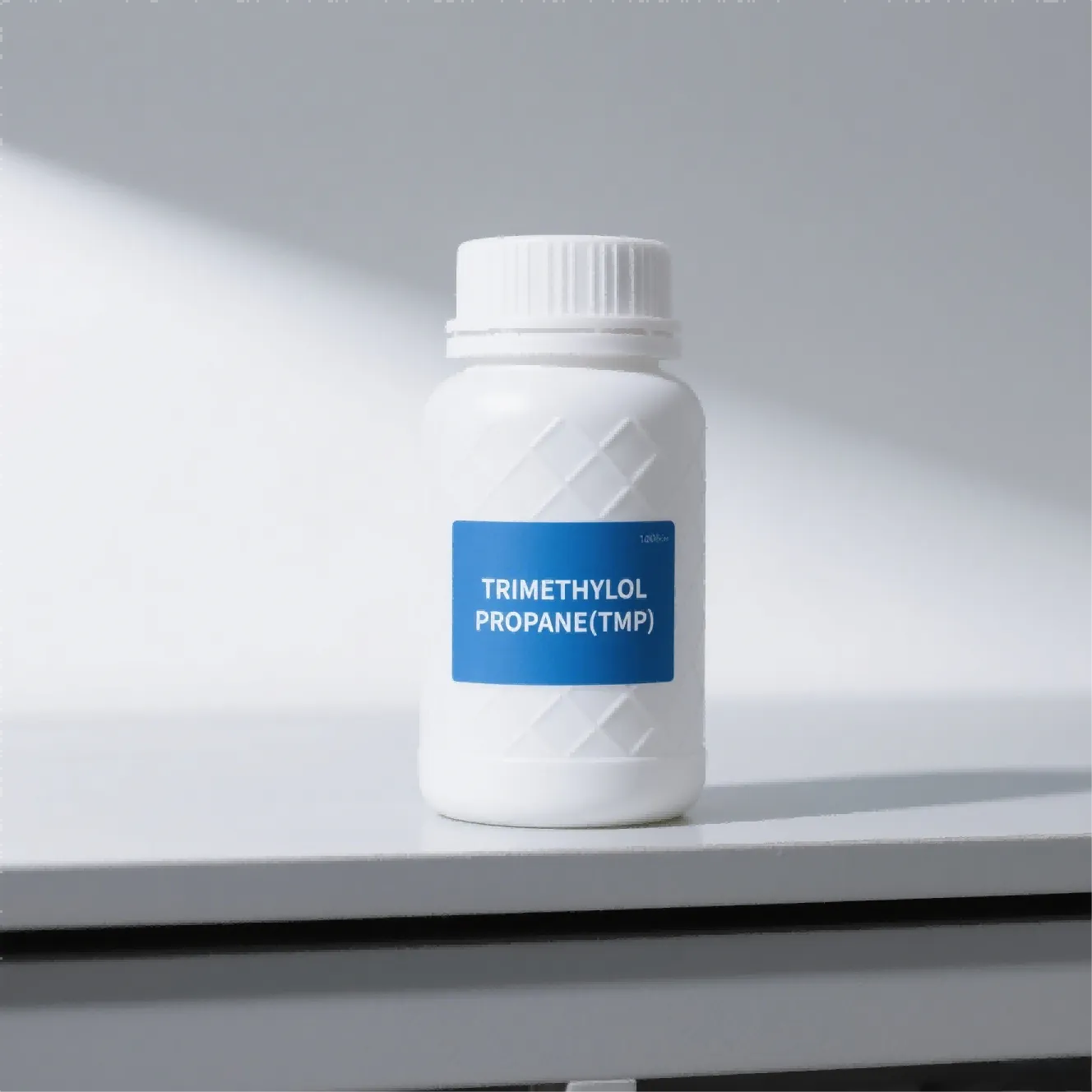
Description
1. What Exactly Is Trimethylolpropane?
- Chemical formula: C₇H₁₆O₃
- Molecular weight: 148.20 g mol⁻¹
- Structure: A three‑armed (tri‑functional) alcohol with the backbone — CH₂‑C(CH₂OH)₃. Picture a central carbon attached to three hydroxyl (–OH) groups and a single methyl group.
Because it packs three hydroxyl groups into a compact, low‑viscosity liquid, TMP can react simultaneously at three sites, making it a tri‑functional monomer. That trifunctionality is the secret sauce that lets chemists cross‑link polymers, tune flexibility, and build complex networks with relative ease.
2. How Is TMP Produced?
Commercial TMP is typically synthesized through a two‑step condensation of propylene oxide (PO) with acetone or isobutyraldehyde:
- First addition – One molecule of PO adds to the carbonyl carbon of acetone, forming a mono‑hydroxy intermediate.
- Second addition – Two more equivalents of PO attack the remaining carbonyl carbon, delivering the three hydroxyl arms.
The overall reaction can be written as:
Acetone + 3 Propylene Oxide → Trimethylolpropane + 3 Water
Catalysts (often alkaline like NaOH or KOH) and temperature control (80‑140 °C) are essential to steer the reaction toward TMP rather than unwanted side products such as dimethylolpropane or higher oligomers. Modern plants recycle the evolved water and unreacted propylene oxide, giving TMP a relatively low carbon‑footprint for a petrochemical derivative.
3. Key Physical & Chemical Traits
| Property | Typical Value | Why It Matters |
|---|---|---|
| Appearance | Clear, low‑viscosity liquid (≈ 0.9 cP at 25 °C) | Easy to handle, mix, and incorporate into formulations |
| Boiling Point | 230 °C (decomposes) | Stable under most processing temperatures |
| Solubility | Miscible with water, most organic solvents | Enables formulation in both aqueous and solvent‑based systems |
| Reactivity | Three primary –OH groups; reacts with acids, isocyanates, epoxy groups, alkylation agents | Grants TMP its “cross‑linking” capability |
| Safety | Low toxicity (LD₅₀ ≈ 2 g kg⁻¹, oral, rat) | Safe for consumer‑grade products when formulated correctly |
These properties make TMP a workhorse for chemists who need a multifunctional, low‑viscosity, and relatively benign building block.
4. TMP in Action: Real‑World Applications
4.1. Polyurethane (PU) Foams & Elastomers
The –OH groups of TMP react with di‑isocyanates (e.g., MDI, TDI) to form cross‑linked polyurethane networks. Because TMP adds three link points, it boosts foam rigidity, improves thermal stability, and increases the compressive strength of automotive seat cushions, insulation panels, and high‑load elastomers.
4.2. Alkyd Resins & Coatings
TMP is widely used in alkyd resin synthesis—the backbone of many paints and varnishes. By reacting TMP with fatty acid‑derived polyols, formulators achieve:
- Higher curing speed (thanks to more reactive sites)
- Enhanced hardness and chemical resistance
- Lower viscosity, which simplifies spray application
4.3. Spray‑On Polyurea & Polyaspartic Coatings
In fast‑cure floor systems, TMP‑based polyols dramatically cut pot‑life while delivering a tough, UV‑stable topcoat. The result? Commercial warehouses can be back in service within hours instead of days.
4.4. Plasticizers & Flame Retardants
TMP can be esterified with long‑chain acids to produce plasticizers that soften PVC without the migration issues of phthalates. Additionally, TMP can be nitrated or phosphorylated, yielding flame‑retardant additives for textiles and electronic housings.
4.5. Cosmetic & Personal Care
Because TMP is non‑irritating and blends well with oils and water, it shows up in emollient blends, hair‑conditioning polymers, and UV‑filter stabilizers. Its tri‑functionality helps form networked silicone‑like gels that give creams a silky feel.
4.6. Advanced Materials – 3D‑Printing Resins & Aerogels
Researchers have leveraged TMP’s three hydroxyl groups to create high‑cross‑link density photopolymerizable resins for stereolithography (SLA). In aerogel chemistry, TMP‑derived siloxane networks deliver lightweight, fire‑resistant insulation panels.
5. Environmental & Safety Considerations
| Issue | Current Status | Outlook |
|---|---|---|
| Raw Material Source | Derived from petrochemical propylene oxide (usually from oil or natural gas) | Emerging biobased PO routes (e.g., from glycerol via epoxidation) could make TMP greener |
| VOC Emissions | TMP itself is low‑volatile; emissions stem from downstream solvents or curing agents | Formulating with water‑borne systems reduces VOC footprint |
| Toxicology | Low acute toxicity; not classified as a carcinogen or reproductive toxin | Safe for consumer products when formulated within regulated limits |
| End‑of‑Life | Incorporated into cross‑linked polymers that are not readily biodegradable | Recycling and mechanical reprocessing of TMP‑based PU foams is growing, especially in automotive waste streams |
Overall, TMP enjoys a favorable safety profile, and its environmental impact is largely dictated by the broader life‑cycle of the products it helps create.
6. Future Trends: Where Is TMP Heading?
- Bio‑Based Propylene Oxide – Companies are developing catalytic routes to PO from renewable glycerol or glucose, which could deliver a fully bio‑derived TMP in the next decade.
- Smart Coatings – TMP‑based networks are being functionalized with self‑healing or anti‑microbial agents, opening doors for medical‑grade paints and marine antifouling layers.
- High‑Performance Elastomers – By integrating TMP with fluorinated di‑isocyanates, chemists are creating ultra‑low‑temperature elastomers for aerospace and cryogenic applications.
- Circular Economy – New depolymerization technologies are capable of breaking down TMP‑cross‑linked PU back to its monomeric components, enabling true chemical recycling.
These innovations suggest that TMP will remain a cornerstone of polymer chemistry, even as the industry pivots toward sustainability.
7. Bottom Line: The Tiny Molecule With a Big Impact
Trimethylolpropane may lack the glamour of a celebrity chemist or the headline‑grabbing buzz of a “nanomaterial,” but its tri‑functional nature, low viscosity, and compatibility make it indispensable across a spectrum of products—from the paint on your walls to the foam in your car seat. Understanding TMP gives us a glimpse into how a single, modest‑looking molecule can orchestrate complex chemistries that shape everyday life.


Reviews
There are no reviews yet.