

Description
Silica Nanoparticles (SiO2 NPs): A concise overview
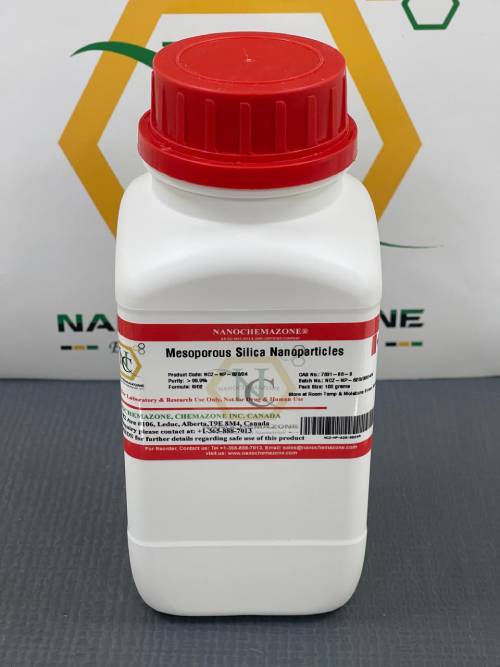
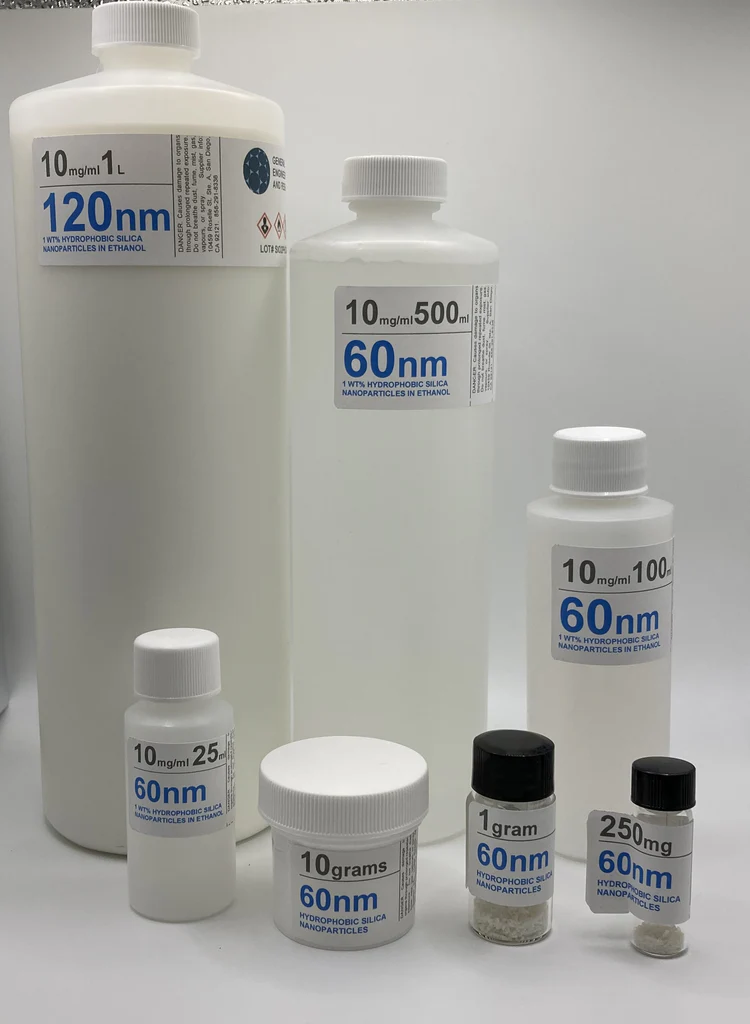
Silica nanoparticles are tiny particles composed of silicon dioxide that have sizes typically in the 1–100 nanometer range. They can be spherical or irregular in shape and can be either non-porous or porous (for example, mesoporous silica like MCM-41 or SBA-15).
Key properties
- Chemical inertness: Generally resistant to many chemical environments.
- High surface area: Especially for porous variants, offering many surface sites for functionalization.
- Tunable surface chemistry: Surface silanol groups (Si–OH) can be modified with various organosilanes to introduce different functionalities.
- Versatile porosity: Non-porous silica is dense; porous forms have controllable pore sizes for hosting molecules.
- Biocompatibility considerations: Silica is often considered relatively biocompatible, but safety depends on size, dose, surface treatment, and exposure route.
Synthesis and functionalization (high level)
- Non-porous silica NPs: Often produced by controlled hydrolysis and condensation of silane precursors (for example, tetraethyl orthosilicate, TEOS) in alcohol-water-ammonia mixtures to form uniform spheres.
- Mesoporous silica NPs: Use surfactant templates to create regular pore structures (larger surface area and pore volumes).
- Surface modification: Silanization with organosilanes (for example, APTES) introduces amino groups or other functionalities to enable further conjugation with drugs, dyes, or targeting ligands.
- Notes on safety and practice: Detailed synthesis conditions require specialized laboratory training and safety infrastructure. If you’re planning experiments, consult up-to-date protocols and safety guidelines.
Common characterization techniques
- Size and morphology: Transmission electron microscopy (TEM) or scanning electron microscopy (SEM) for shape and size.
- Hydrodynamic size: Dynamic light scattering (DLS) for particle size distribution in suspension.
- Surface area: Brunauer–Emmett–Teller (BET) analysis for surface area and porosity (porous variants show high surface areas).
- Crystal structure: X-ray diffraction (XRD) to confirm amorphous nature or crystalline features.
- Chemical analysis: Fourier transform infrared spectroscopy (FTIR) and thermogravimetric analysis (TGA) to assess surface groups and organic content.
Representative applications
- Drug delivery and biomedical imaging: Non-porous or hollow silica nanoparticles for carrying therapeutic molecules; surface functionalization improves targeting and circulation time.
- Catalysis and sensing: Porous silica provides high surface area and pore confinement for catalysts and sensor materials.
- Coatings and cosmetics: Enhances mechanical properties, UV protection, and stability; silica nanoparticles are used in some sunscreens and coatings.
- Adsorption and separation: Porous silica can adsorb dyes, heavy metals, or gases for purification processes.
Safety, health, and environmental considerations
- Inhalation risk: Nanoparticles can pose respiratory hazards; use appropriate containment and personal protective equipment in laboratory settings.
- Biocompatibility varies: Toxicity can depend on particle size, dose, surface chemistry, and exposure route; surface modification can mitigate or alter interactions with cells and tissues.
- Environmental fate: Nanoparticles may persist or interact with ecosystems; proper waste handling and disposal are important.
- Regulatory landscape: Regulations differ by region and application (eg, cosmetics vs medical devices vs industrial use). Always check local guidelines and standards.
Quick comparison: non-porous vs porous silica nanoparticles
| Type | Porosity | Typical size range | Common uses | Surface characteristics |
|---|---|---|---|---|
| Non-porous silica NPs | Essentially solid | ~5–200 nm | Imaging, coatings, drug carriers, fillers | Dense surface with silanol groups; easy for functionalization |
| Mesoporous silica NPs | Ordered pores | ~50–200 nm (often larger due to porosity) | Drug loading and release, catalysis supports, adsorption | High surface area; tunable pore size; versatile functionalization |
If you want to dive deeper
Consider focusing on one of these areas and I can tailor the information:
- A. Synthesis strategies (high level) and how size and porosity are controlled
- B. Surface functionalization chemistries and examples of conjugated molecules
- C. Characterization workflows for quality control in a lab
- D. Specific applications in medicine, catalysis, or environmental science
- E. Safety and regulatory considerations for a particular region or product type
Summary
Silica nanoparticles offer a flexible platform with tunable size, porosity, and surface chemistry. Their wide range of applications—from biomedicine to catalysis and coatings—comes with important considerations around safety, environmental impact, and compliance. If you share your context or the aspect you’re most interested in, I can provide a more focused overview or practical guidance.


Reviews
There are no reviews yet.