
Description
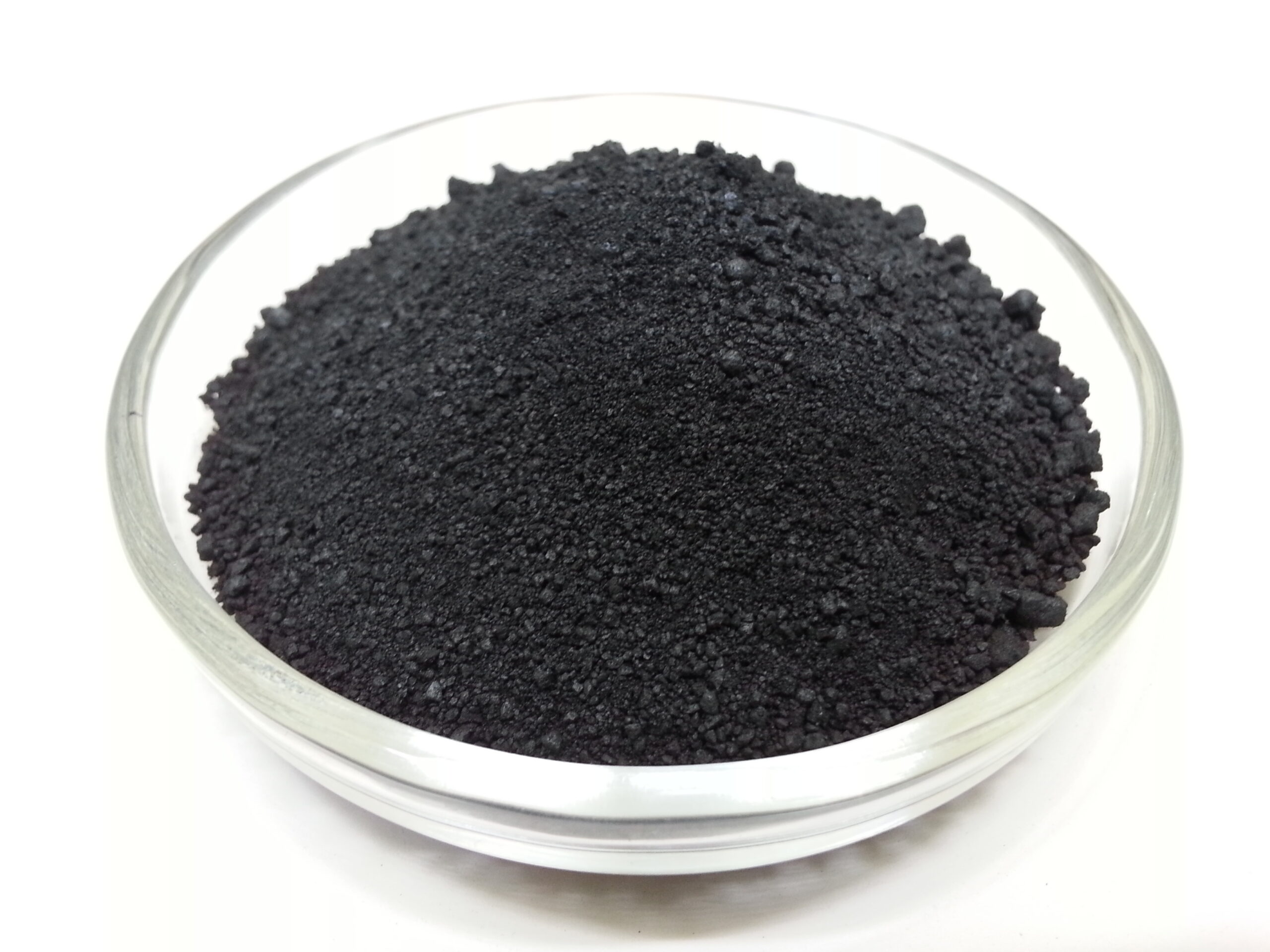
Ruthenium(III) chloride (RuCl3)
Overview
Ruthenium(III) chloride, with the formula RuCl3, is a versatile inorganic compound used as a starting material for many ruthenium complexes. The common oxidation state is +3. In solid form it is typically obtained as a hydrated material (RuCl3·xH2O) and is often used as such in the lab. In solution, RuCl3 readily hydrolyzes to form aquated ruthenium species such as [Ru(H2O)6]3+.
Key properties
- Formula: RuCl3 (often as RuCl3·xH2O)
- Molar mass: approximately 207.43 g/mol for anhydrous RuCl3
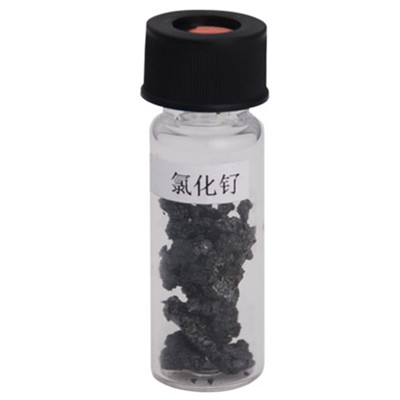
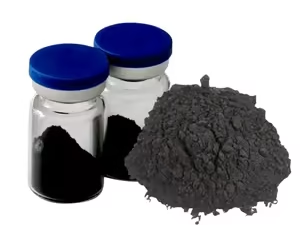
- Color: red-brown solid
- Solubility: soluble in water and some polar solvents; in water it forms the hexaaquaruthenium(III) cation [Ru(H2O)6]3+
- Oxidation state: +3 (common), though ruthenium can adopt other oxidation states in bound complexes
- Stability: hygroscopic and moisture sensitive; hydrolyzes in water to form various Ru(III) aqua complexes; solid can be stored under appropriate conditions but is reactive with air and moisture
Structure
- In the solid state RuCl3 often forms a polymeric network of RuCl6 octahedra.
- In aqueous solution, RuCl3 converts to aquated species such as [Ru(H2O)6]3+, which then participate in ligand binding to form coordination complexes.
Common uses
- Starting material for ruthenium complexes: widely used to prepare many Ru(II) and Ru(III) coordination compounds by ligation with di- or polydentate ligands (for example bipyridine, terpyridine, phosphines, etc.).
- Catalysis and materials: precursor for catalysts in hydrogenation, oxidation, C–H activation, and other transformations; important in the synthesis of photoredox and electroactive ruthenium complexes.
- Dye-sensitized and photochemical applications: precursors to complexes like [Ru(bpy)3]2+ and related systems used in dyes and solar cell research.
Handling and safety
- Hazards: RuCl3 is a toxic, irritant heavy-metal compound. Handle with care to avoid inhalation, ingestion, or skin/eye contact.
- Personal protective equipment: use gloves, eye protection, and work in a well-ventilated area or fume hood.
- Storage: store in a dry, closed container, away from incompatible materials. RuCl3 is hygroscopic and can hydrolyze with moisture.
- Waste disposal: dispose as heavy-metal-containing waste according to your institution’s hazardous waste guidelines.
Availability and preparation (general notes)
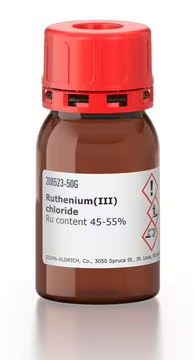
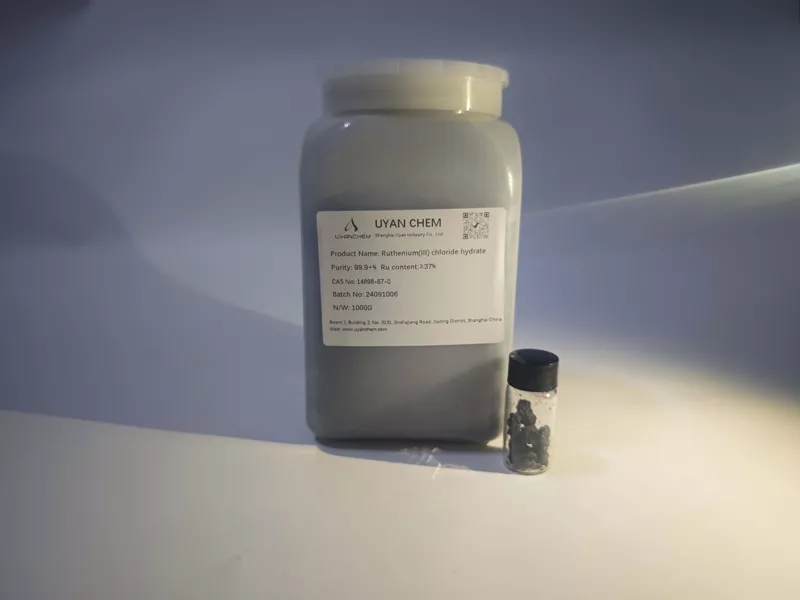
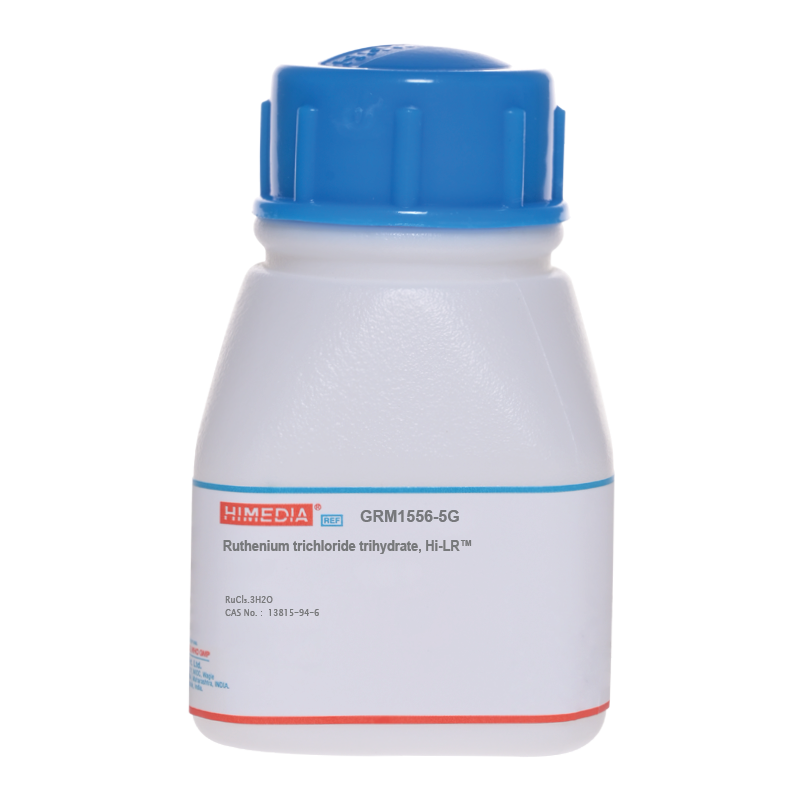
- RuCl3 is commonly sold as the hydrated form RuCl3·xH2O or in a stabilized anhydrous form. In practice, many laboratories use RuCl3·xH2O directly, adjusting conditions as needed for subsequent ligand binding.
- Anhydrous RuCl3 is less common and more moisture-sensitive; it may require inert atmosphere handling for some applications.
Quick example of a typical use (conceptual)
- To prepare a classic Ru(II) bipyridine complex such as [Ru(bpy)3]2+, RuCl3 can be used as the ruthenium source along with excess bipyridine ligands under appropriate heating in polar solvents. The resulting complex, when isolated as the chloride salt, is a well-known photoredox-active species used in catalysis and light-driven applications. Note that specific conditions vary by procedure and should be taken from a trusted inorganic synthesis reference.
Summary
- RuCl3 is a foundational ruthenium compound used as a flexible starting material for a wide range of ruthenium complexes.
- It is typically used in hydrated form, is moisture sensitive, and must be handled with care due to toxicity.
- Its primary value lies in enabling the synthesis of diverse Ru(II)/Ru(III) complexes for catalysis, electrochemistry, and materials science.
If you have a specific application in mind (for example, preparing a particular ruthenium complex or performing a certain catalytic reaction), tell me your goal and I can tailor the information, including general guidance on ligand choices and typical considerations.
Reviews
There are no reviews yet.