


Description
1. Product Overview
Pre-Engineered Steel Structures Modular — Buildings are precision-designed structural systems manufactured off-site and delivered as ready-to-assemble modular components for rapid construction of industrial, commercial, and infrastructure facilities. These buildings utilize high-strength structural steel frameworks engineered to meet specific load, climate, and operational requirements. The key value proposition lies in significantly reduced construction timelines, predictable project costs, and superior structural reliability compared to conventional building methods. Strategically, pre-engineered steel structures have become a preferred solution in global industrial development due to their scalability, cost efficiency, and ability to accelerate project deployment.
2. Key Specifications & Technical Characteristics
- Material Composition:
- Structural carbon steel (primary frames, columns, and rafters)
- Galvanized or coated steel secondary members (purlins, girts, bracing)
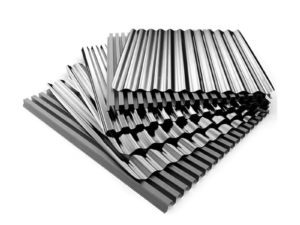
- Optional insulated metal panels or sandwich panels for cladding
- High-strength bolted connections and fasteners
- Grade / Material Standards:
- Structural steel grades typically equivalent to ASTM A36, ASTM A572, or international equivalents
- Galvanized steel coatings for corrosion resistance (commonly Z120–Z275 or equivalent)
- Custom engineering compliant with international building codes and load specifications
- Physical Characteristics:
- Modular prefabricated structural components
- Surface finish: Primed, galvanized, or powder-coated
- Color options for roofing and wall panels available
- Engineered load-bearing capacity for wind, seismic, and snow conditions
- Precision-fabricated components for bolt-together assembly
- Packaging Options:
- Bundled steel members and panels for containerized shipment
- Protective wrapping and palletized accessory components
- Containerized transport in 20’ or 40’ containers
- Shelf Life:
- Long-term structural durability when stored under dry, protected conditions prior to installation
3. Core Industrial Applications
Primary Industries:
- Industrial manufacturing
- Warehousing and logistics
- Oil and gas infrastructure
- Mining operations
- Commercial and infrastructure development
- Agriculture and processing facilities
Operational Use Cases:
- Industrial warehouses and logistics hubs
- Manufacturing plants and fabrication facilities
- Aircraft hangars and heavy equipment storage
- Cold storage and processing buildings
- Agricultural processing and storage facilities
Performance & Cost Advantages:
Pre-engineered steel buildings outperform traditional construction methods by reducing material waste, shortening construction timelines, and minimizing on-site labor requirements. The modular design ensures precise engineering tolerances and consistent structural performance. Buyers benefit from faster project commissioning, predictable costs, and scalable expansion capability as operational needs grow.
4. Competitive Advantages
- Quality Consistency: Factory-controlled fabrication ensures precise engineering standards and structural reliability
- Supply Reliability: Large-scale manufacturing capability supporting global industrial projects
- Logistics Capability: Containerized shipping and modular packaging simplify international transport and installation
- Price Competitiveness: Lower lifecycle and construction costs compared to conventional reinforced concrete or on-site steel fabrication
- Sustainability Benefits: Recyclable steel components, reduced construction waste, and improved energy efficiency with insulated panels
- Technical Documentation: Complete engineering drawings, structural calculations, installation manuals, and compliance documentation available
Positioned as a strategic infrastructure investment, pre-engineered modular steel buildings enable organizations to accelerate industrial expansion while maintaining cost discipline, structural integrity, and long-term operational flexibility.
5. Commercial & Supply Information
- Minimum Order Quantity (MOQ): BULK 20MT
- Loading Capacity (MT per container): Approximately 20–25 MT per 20’ container (depending on structural components and packaging configuration)



Reviews
There are no reviews yet.