
Description
Polyglycolic acid (PGA)
Polyglycolic acid, or PGA, is a biodegradable aliphatic polyester derived from glycolic acid. It is widely used in biomedical applications due to its rapid hydrolytic degradation and good biocompatibility. In medical practice you’ll commonly encounter PGA in resorbable sutures and as a component in tissue engineering scaffolds.
Key points at a glance
- Chemical nature: synthetic polymer of glycolic acid (poly(glycolic acid)).
- Biodegradation: hydrolyzes in aqueous environments to glycolic acid, which is metabolized in the body.
- Biocompatibility: generally well tolerated; byproducts are naturally processed in metabolic pathways.
- Primary medical uses: resorbable sutures, temporary implants, and scaffolds for tissue engineering.
Chemical structure and synthesis
- Structure: repeating unit is the diester linkage derived from glycolic acid, giving a linear polyester with the repeating backbone –O–CH2–CO–.
- Synthesis routes:
- Ring-opening polymerization of glycolide (the cyclic dimer of glycolic acid) to form PGA with controllable molecular weight.
- Step-growth (condensation) polymerization of glycolic acid, though this is less common for medical-grade PGA due to processing challenges.
- Copolymerization: PGA is often blended or copolymerized with other monomers (for example with lactic acid to form PLGA) to tune degradation rate and mechanical properties.
Properties and behavior
- Physical characteristics: PGA is a relatively crystalline, stiff polymer with high mechanical strength initially.
- Degradation: degrades by hydrolysis of ester bonds, leading to glycolic acid as a byproduct. The degradation and loss of mechanical strength occur progressively, enabling temporary support before absorption.
- Processing considerations:
- Sensitive to moisture; dry handling is important during fabrication.
- Sterilization methods such as gamma irradiation and ethylene oxide are used, but irradiation can cause some chain scission and property changes.
- Often used in braided or braided-coated suture forms for improved handling and knot security.
- Advantages in biomedicine:
- Rapid resorption suitable for short-term support.
- High initial tensile strength among resorbable polyesters.
- Limitations:
- Degrades relatively quickly; not ideal where long-term mechanical support is needed.
- Brittle or stiff nature can be a consideration in some applications.
- Local acidity from glycolic acid release can influence surrounding tissues if degradation is very rapid.
Common applications
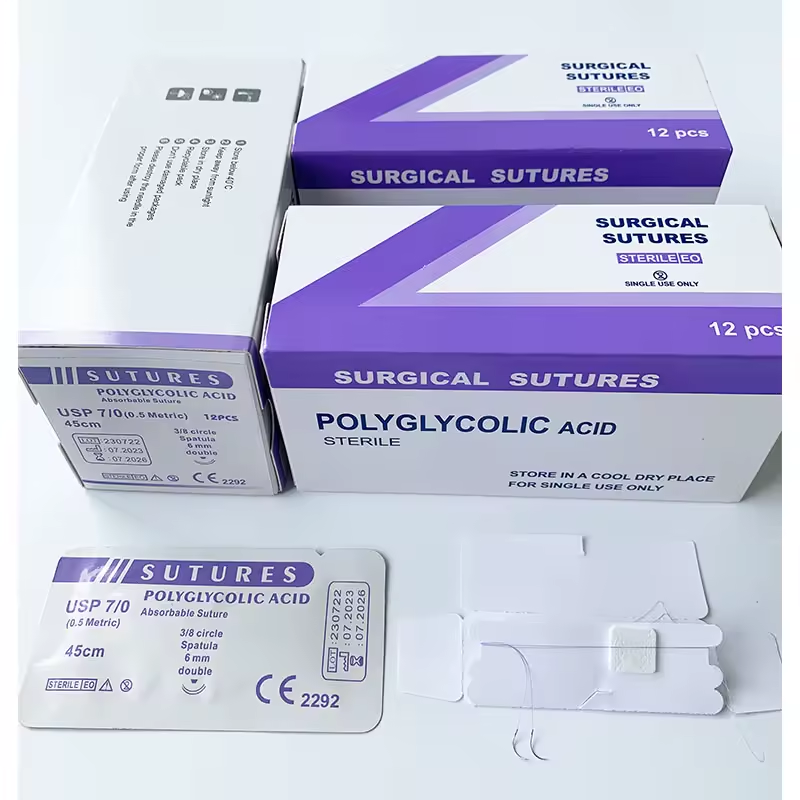
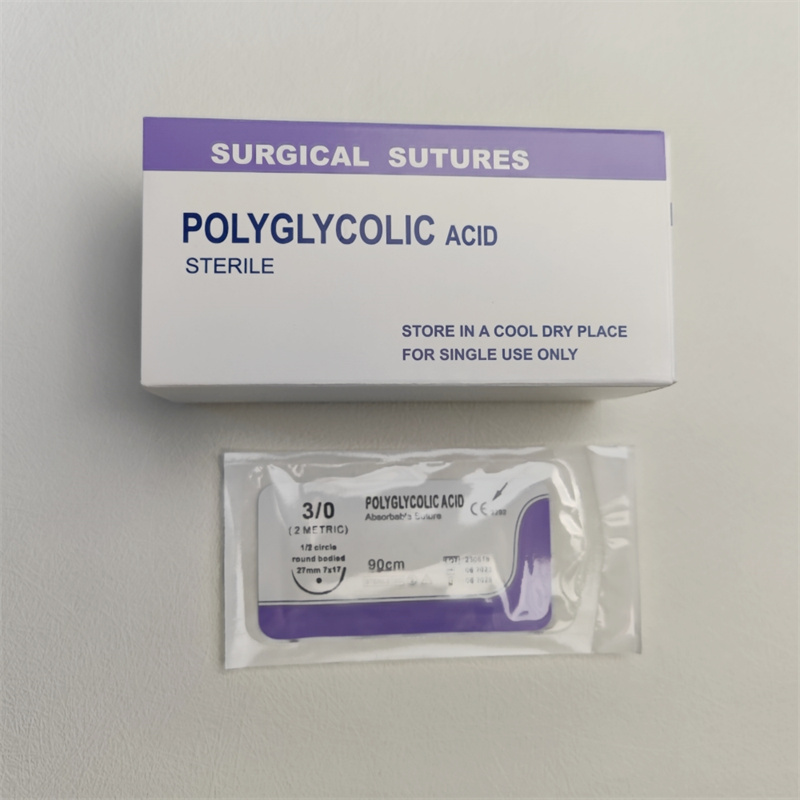
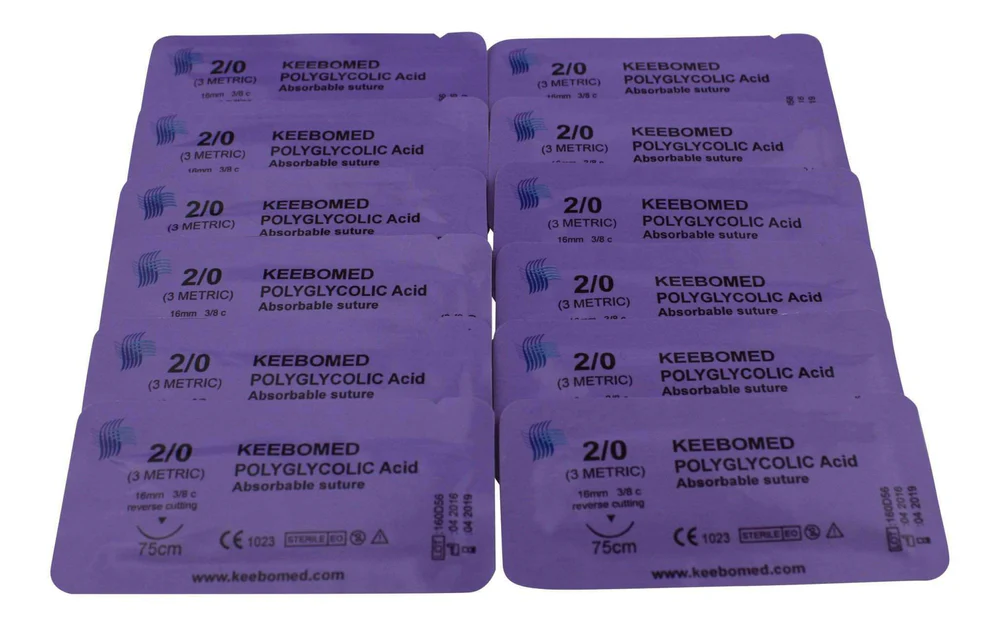
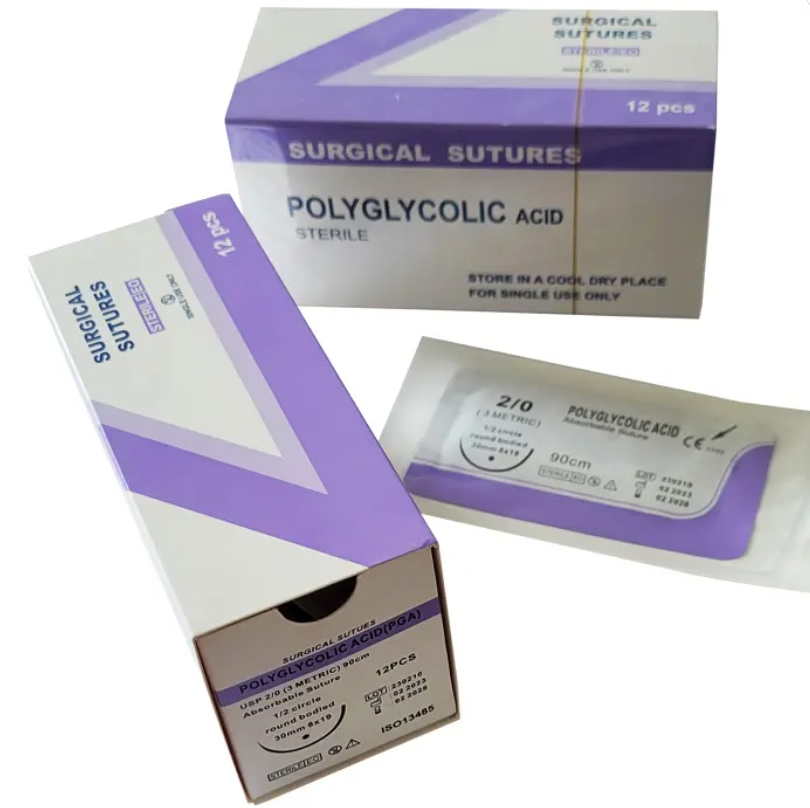
- Resorbable sutures: PGA sutures such as Dexon have been widely used for their initial strength and predictable absorption.
- Tissue engineering scaffolds: used as temporary scaffolds that provide structure during early tissue regeneration and then degrade.
- Drug delivery and protein delivery systems: PGA-based particles or matrices can be used for controlled release.
- Temporary implants and meshes: where temporary support is needed during healing.
Comparative quick reference
| Property / parameter | PGA | PLA | PLGA | PCL |
|---|---|---|---|---|
| Biodegradability | Yes, hydrolysis | Yes | Yes | Yes |
| Degradation rate (relative) | Fast | Moderate | Tunable via ratio | Slow |
| Mechanical strength (initial) | High for resorbable sutures | Moderate | Variable | Lower modulus, more flexible |
| Typical medical use | Resorbable sutures, implants | Resorbable and nonresorbable options | Tunable resorbable systems | Long-term implants, drug delivery |
| Copolymer options | Often used with other monomers | Commonly copolymerized | PLGA is a copolymer of PLA and PGA | Often blended with others to adjust properties |
Note: The table highlights general trends. Specific products vary by grade, molecular weight, crystallinity, and processing.
Practical considerations and limitations
- When selecting PGA for a medical application, consider the desired duration of mechanical support and the acceptable rate of degradation in the target tissue.
- If a slower or more tunable degradation is required, PGA can be blended or copolymerized with lactic acid to form PLGA, or used in composites with other materials.
- Processing requires careful moisture control and appropriate sterilization planning to preserve mechanical properties.
- For non-medical applications, PGA is less commonly used due to its rapid hydrolytic breakdown and processing challenges compared with other polymers.
Summary / key takeaway
Polyglycolic acid (PGA) is a biodegradable, biocompatible polymer primarily employed in short-term biomedical applications such as resorbable sutures and temporary scaffolds. Its rapid hydrolysis provides timely support followed by resorption, making it suitable where long-term permanence is not desired. For tailored degradation rates or mechanical performance, PGA is often used in copolymers or blends with other polymers.
If you want deeper details on a specific aspect (e.g., exact degradation timelines in different tissues, or processing parameters for PGA-based sutures), tell me which area you’re most interested in and I can tailor the information.



Reviews
There are no reviews yet.